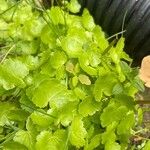
Hydrocotyle americana
American Marsh-Pennywort · American marshpennywort · American Water Pennywort · Marsh Pennywort · Navelwort
Description
Source: leafsnapHydrocotyle americana, commonly known as American marsh pennywort, is a perennial aquatic plant in the family Apiaceae. Native to North and South America, it typically thrives in wetlands, marshes, ponds, and slow-moving streams. The plant has a creeping growth habit with stems that can extend up to one meter in length. Its leaves are round or kidney-shaped with scalloped edges and are clustered at the ends of the stems. The flowers of Hydrocotyle americana are small and white or greenish-white, blooming from June to August on long stalks that rise above the water's surface. The plant produces a fruit known as an achene, which is a small, dry, seed-like structure. Hydrocotyle americana plays a crucial role in wetland ecosystems by providing habitat for various aquatic animals, including fish, turtles, frogs, insects, and birds. Additionally, it helps stabilize soil along waterways, reducing erosion caused by water currents. For centuries, indigenous people have used Hydrocotyle americana for its medicinal properties. It has anti-inflammatory benefits that can help treat skin conditions such as eczema and psoriasis when applied topically. In summary, Hydrocotyle americana is an ecologically significant aquatic plant with essential roles in wetland ecosystems and a history of medicinal use by indigenous peoples across North America.
Care Guide
💧 Water Every 7 days
American marshpennywort thrives in humid, damp environments, making it perfect for marshes. To ensure optimal growth, it requires weekly watering, which helps replenish its water reserves during the rainy season. Being an evergreen plant, American marshpennywort can flourish outdoors all year round.
What do I do if I give my American marshpennywort too much or too little water?
Both overwatering and underwatering can harm the health of your American marshpennywort plant, but overwatering is more common. If this species gets too much water, its stems and leaves may wilt and turn yellow. Overwatering for a long time can also lead to diseases like root rot, mold, and mildew, which can be fatal for your plant. Underwatering is less likely for the American marshpennywort because it can tolerate drought fairly well. However, underwatering is still possible, and in such cases, you'll notice the leaves becoming brittle and brown. It's important to recognize the signs of overwatering early when caring for your American marshpennywort. Some diseases caused by overwatering, like root rot, may be irreversible if you delay intervention. If you see early signs of overwatering, reduce your watering schedule immediately. You might also want to check the soil quality where your plant is growing. If the soil doesn't drain well, replace it with a loose, well-draining potting mix. On the other hand, if you notice signs of insufficient watering, simply water more regularly until the symptoms subside.
What is the most effective method for watering my American marshpennywort plant?
To properly care for the American marshpennywort, use filtered water at room temperature. Tap water may contain harmful particles that can negatively affect this plant's health. Avoid using cold water as it can shock the plant, which prefers a warm environment. Additionally, do not water the plant from above to prevent problems with its foliage. Instead, saturate the soil with filtered room temperature water until it is completely soaked. This will benefit the plant by keeping the roots moist and aiding their spread through the soil to gather necessary nutrients.
How frequently do I need to water my American marshpennywort?
If your American marshpennywort is planted in a pot, the best way to check if it needs water is by sticking your finger into the soil. If the top two to three inches are dry, it's time to water it. If you have your American marshpennywort planted in the ground, you can use the same method to test the soil. Once the top few inches have dried, it's time to water. Typically, during spring and early fall, watering once a week is sufficient. However, in extremely hot weather, you may need to water twice or more per week. However, it's important to note that mature, well-established American marshpennywort plants can tolerate drought conditions.
How much water does my American marshpennywort plant require?
When watering your American marshpennywort, don't hold back. Make sure the first two to three inches of soil are dry before giving it a thorough watering. Completely soak the soil, making sure water flows through the drainage holes at the bottom of the pot. If you don't see excess water draining, you may have not given enough water. However, be careful not to let water accumulate in the soil as it can harm the plant. On the other hand, if water doesn't drain properly, it could indicate poorly draining soil, which is bad for the plant's health. If the plant is outside, one inch of rain per week is sufficient.
How should I water my American marshpennywort when it is growing at different stages?
The water needs of the American marshpennywort can change depending on different growth stages. In the first few years of its life or when it is just transplanted, it requires more water than usual. During these stages, the plant focuses its energy on growing new roots, which need more moisture to support future growth. However, after a few seasons, the plant will need less water. Another growth stage that requires more water is when the plant is blooming. Flower development uses a significant amount of moisture, so additional watering may be necessary during this time.
☀️ Light Full sun
Floating pennywort does best in locations with abundant sunlight. This species, native to environments where sun exposure is plentiful, grows well primarily under those conditions. Insufficient light can lead to reduced growth, while excessive exposure, however, does not significantly threaten the plant.
What are the sunlight requirements for American marshpennywort?
American marshpennywort thrives in full sun, requiring more than 6 hours of sunlight daily, but can also grow well in partial sun, with about 3-6 hours of sunlight. It's important to monitor the movement of sunlight through your garden to ensure that your plants receive the ideal balance of light and shade for optimal growth. Originally from environments with abundant sunlight, the marshpennywort’s health can decline if it receives too little or too much light, leading to wilting or hampered growth.
How do artificial lights support the growth of American marshpennywort indoors?
Indoor American marshpennywort plants benefit significantly from artificial lighting, especially when natural sunlight is insufficient. Artificial lights, such as LED lights, can be customized to provide specific wavelengths needed for optimal plant growth. Full sun plants require 30-50W/sq ft, partial sun plants need 20-30W/sq ft, and full shade plants should have 10-20W/sq ft of artificial light. The light source should be placed 12-36 inches above the plant, mimicking natural sunlight exposure for 8-12 hours per day. This can promote faster, healthier growth during winter or in less sunny locations.
What symptoms indicate inadequate light exposure in American marshpennywort?
Symptoms of inadequate light in American marshpennywort include smaller new leaves, leggy or sparse growth, faster leaf drop, halted or slow new growth, lighter-colored new leaves, and signs of chlorosis or yellowing due to insufficient sunlight. Excessive light can cause sunscald, leaf curling, wilting, and leaf scorching. These symptoms signal that the plant's light conditions need to be adjusted for healthier growth.
What solutions can help improve light conditions for American marshpennywort?
For indoor American marshpennywort, improving light conditions can involve gradually moving the plant to a sunnier location, ensuring at least 6 hours of direct sunlight through a south-facing window, or using artificial lighting like desk lamps or professional grow lights for at least 8 hours daily. Outdoors, it's crucial to gradually acclimate plants to sunnier spots to avoid sunburn and consider reducing obstructions like pruning trees that block sunlight. Transplanting smaller plants during their dormant period to a well-lit location can also promote healthier growth. Note that parts of the plant affected by previous poor light conditions may not recover, but new growth should be healthy with improved lighting.
🌡️ Temperature 5–37.8°C
Floating pennywort is native to temperate areas where temperatures range from 41 to 100.4 °F (5 to 38 ℃). It prefers to thrive within that temperature span. Seasonal temperature adjustments may be necessary to replicate its native environment.
What is the native environment of American marshpennywort?
American marshpennywort, botanically known as Hydrocotyle americana, thrives in environments where the temperature ranges from 41 to 77 °F (5 to 25 °C). It prefers cooler climates and is highly cold-tolerant, making it well-suited for areas within this temperature range.
How should I care for American marshpennywort during extreme seasonal changes?
To care for American marshpennywort during extreme seasonal changes, it is essential to monitor and adjust the temperature accordingly. Although the plant is highly cold-tolerant and does not require additional frost protection measures during winter, it is recommended to water the plant generously before the first freeze in autumn. This ensures the soil remains moist and enters a frozen state to prevent drought and water scarcity for the plant during winter and early spring.
What should I do if the winter temperature drops below -30°C?
If the winter temperature drops below -30°C, American marshpennywort may not show any noticeable changes during winter but could experience a decrease in sprouting or even no sprouting during springtime. In such cases, it is advised to remove any parts of the plant that have failed to sprout in spring, as this can help promote healthier growth in the warmer months.
How does American marshpennywort react to high temperatures?
American marshpennywort is not tolerant of high temperatures. When the temperature exceeds 25°C, its growth will stop, and the plant becomes more susceptible to rot. To manage this, you should trim away any sunburned and dried-up parts of the plant. Moving the plant to a location that provides shade from the midday and afternoon sun or using a shade cloth can protect it. Additionally, watering the plant in the morning and evening to keep the soil moist can help prevent damage from high temperatures.
💨 Humidity
🪴 Soil
🌱 Fertilizer
For American marshpennywort, apply a balanced fertilizer at half strength once a month during the growing season. This helps to promote healthier foliage and stronger roots while avoiding root burn. In winter, reduce fertilization to once every two months. Always water the American marshpennywort before fertilizing to maintain its vitality and prevent nutrient sensitivity.
🪴 Pot & Repot
✂️ Pruning
The American marshpennywort has round, coin-shaped leaves and benefits from pruning in the spring. By trimming away dead foliage, you can encourage healthy growth and prevent the plant from spreading too much. Always clean your tools to avoid spreading disease, as pruning stimulates dense growth and helps control the plant's invasiveness in moist areas.
🌿 Propagating
🐛 Diseases & pets
☠️ Toxicity
Characteristics
- Plant Type
- Herb
- Life Cycle
- Perennial
- Genus
- Hydrocotyle
- Family
- Araliaceae
- Hardiness Zone
- 5-11
- Mature Height
- 20 cm to 34 cm
- Mature Spread
- 14.94 m
- Leaf Color
- Green, Variegated
- Leaf Type
- Evergreen, Semi-evergreen
- Flower Color
- White
- Flower Size
- 2.54 cm
- Bloom Time
- Summer, Early fall, Mid fall
- Planting Time
- Spring, Summer, Autumn
- Harvest Time
- Late summer, Fall, Early winter
- Native Area
- Colombia, Cuba, Mexico, Guatemala, Bolivia, Venezuela, Peru, Nicaragua, Ecuador, Costa Rica, Panama