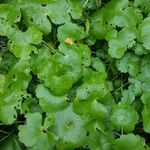
Hydrocotyle sibthorpioides
Lawn marshpennywort · Creeping Charlie · Lawn pennywort · Lawn water pennywort · Lawn Marsh-Pennywort
Description
Source: leafsnapHydrocotyle sibthorpioides, commonly known as marsh pennywort or creeping marshwort, is a perennial herbaceous plant in the Apiaceae family. Native to Asia, it thrives in wetlands, swamps, and shallow water bodies. This plant has a creeping habit with long stems that can grow up to 50 cm in length. The small, round leaves with scalloped edges are arranged in clusters at the ends of these stems. The flowers of Hydrocotyle sibthorpioides are small and either white or pinkish-white, blooming from June to August on short stalks above the leaves. The plant produces a small achene as its fruit, each containing a single seed. Historically, Hydrocotyle sibthorpioides has been used medicinally for its anti-inflammatory properties, making it effective in treating skin conditions such as eczema, psoriasis, and acne. Additionally, it has served as an herbal remedy for digestive issues like indigestion. This plant is an excellent choice for water gardens or bog gardens due to its ability to thrive in wet conditions. It also makes an attractive ground cover when planted en masse along pond edges or streamsides. Overall, Hydrocotyle sibthorpioides is a versatile herbaceous perennial with both medicinal and aesthetic value, making it an excellent addition to any garden setting where moisture levels remain high throughout most of the year.
Care Guide
💧 Water Every 7 days
Lawn marshpennywort thrives in moist environments and prefers consistently damp soil, making it flourish best under these conditions. To ensure healthy growth, the plant should be watered weekly, taking into account any natural rainfall. This is particularly important during the peak growing season when its water needs are higher. While it has a moderate tolerance for drought, regular watering is essential for optimal growth.
How should I water my Lawn marshpennywort to keep it healthy?
To properly water the Lawn marshpennywort, it is recommended to use filtered water at room temperature. Tap water can contain harmful particles, so filtering it is best. The water should be at room temperature or slightly warmer to avoid shocking the plant, as it is used to a warm environment. It is important to avoid overhead watering, as it can cause issues with the foliage. Instead, water the plant by applying filtered room temperature water directly to the soil until it is completely soaked. This helps to moisturize the roots and promote their growth, allowing them to collect necessary nutrients from the soil.
What should I do if I give my Lawn marshpennywort too much or too little water?
Taking care of your Lawn marshpennywort requires finding the right balance of watering. Overwatering is a more common issue and can cause wilting, yellowing, and diseases like root rot. Underwatering is less likely, but it can lead to brittle and brown leaves. It's important to recognize the signs of overwatering early on, as some diseases may be irreversible if not addressed promptly. Reduce watering if you notice these signs and consider improving soil drainage. On the other hand, if your Lawn marshpennywort isn't getting enough water, simply increase your watering frequency until the signs improve.
How many times should I water my Lawn marshpennywort?
If you have a potted plant, the most accurate way to determine if your Lawn marshpennywort needs water is to stick your finger in the soil. If the top two to three inches of soil feel dry, it's time to water it. If you have the plant planted in the ground, you can use the same method to check the soil. When the top few inches of soil are dry, it's time to water it. Usually, during spring and early fall, you'll need to water this plant about once a week using this method. However, during extremely hot weather, you may need to water it twice or more per week. However, it's worth mentioning that mature and well-established Lawn marshpennywort plants can withstand drought quite well.
How much water does my Lawn marshpennywort require?
When watering your Lawn marshpennywort, don't be afraid to give it a generous amount of water. Wait until the top two to three inches of soil are dry, then thoroughly soak the soil. Make sure to add enough water so that it flows out of the drainage holes at the bottom of the pot. If you don't see excess water draining, you may not have given enough water. However, be careful not to let water accumulate in the soil, as this can harm the plant. If water is not draining well, it could be due to poorly draining soils, which is not good for the plant's health. If the plant is outside, about 1 inch of rain per week should be enough.
How do I water my Lawn marshpennywort at different stages of its growth?
The water needs of the Lawn marshpennywort can vary depending on its growth stages. When the plant is in its early years or has been recently transplanted, it requires more water than usual. During these stages, the plant focuses on sprouting new roots to support future growth. To help these roots thrive, they need a bit more moisture than during more mature phases. As the plant ages, it will require less water. Additionally, during the bloom period, the plant may need more water to support flower development.
☀️ Light Full sun
Lawn marshpennywort grows best with abundant sunlight but can also tolerate situations where it gets only partial daylight. Coming from habitats that receive plenty of sun for part of the day, insufficient light can hinder its healthy growth, while excessive sun can similarly cause stress to the plant.
What are the sunlight requirements for Lawn Marshpennywort?
Lawn Marshpennywort, also known by its botanical name, Hydrocotyle sibthorpioides, requires full sun to partial sun exposure to thrive. Full sun means the plant should receive above 6 hours of sunlight daily, while partial sun refers to about 3-6 hours of sunlight. Observing how sunlight moves through your garden helps in finding spots that provide a perfect balance of light and shade, ensuring the plants' wellbeing.
How does sunlight affect the growth of Lawn Marshpennywort?
Originating from habitats with abundant sunlight for part of the day, Lawn Marshpennywort thrives best under extensive exposure to the sun but can also endure conditions where it receives only partial daylight. Inadequate sun exposure may impede its healthy growth, whereas overexposure could also lead to stressful conditions for the plant. To supplement natural light, especially in less sunny spaces or during winter, artificial lighting can be utilized. LED lights, for instance, are a popular choice because they can provide specific wavelengths of light needed by the plants. Full sun plants typically need 30-50W/sq ft of artificial light, partial sun plants need 20-30W/sq ft, and full shade plants require 10-20W/sq ft.
What are the signs of inadequate sunlight for Lawn Marshpennywort?
Symptoms of light deficiency in Lawn Marshpennywort include small leaves, leggy or sparse growth, faster leaf drop, slower or no new growth, lighter-colored new leaves, chlorosis, sunscald, leaf curling, wilting, and leaf scorching. These symptoms range from the growth of smaller new leaves and elongated spaces between stems or leaves, leading to a thinned appearance, to early shedding of older leaves. Insufficient sunlight also results in pale new leaves, indicating a lack of chlorophyll and essential nutrients, while excessive sunlight can lead to chlorosis, sunscald, and leaf damage.
What solutions can be applied to improve Lawn Marshpennywort's exposure to sunlight?
To enhance Lawn Marshpennywort's exposure to sunlight, several measures can be taken. Indoor solutions include gradually moving plants to sunnier locations until they receive at least 6 hours of direct sunlight, using south-facing windows for maximum sunlight, and considering artificial lighting for additional support. Outdoors, plants should be moved to sunnier spots gradually to avoid sunburn, and for ground-planted specimens, reducing obstructions such as trees by pruning, or relocating the plant to a sunnier location during its dormant period, can effectively increase sun exposure. Note that parts of the plant affected by insufficient light may not recover, but new growth should be healthy with improved light conditions.
🌡️ Temperature 5–35°C
Lawn marshpennywort tolerates a temperature range of 41 to 95°F (5 to 35℃) and comes from regions with moderate climates. It is advisable to adjust the temperature with the seasons to ensure optimal growth and health of the plant.
What are the ideal temperature conditions for Lawn Marshpennywort?
Lawn marshpennywort, scientifically known as Hydrocotyle sibthorpioides, thrives in a temperature range of 41 to 95°F (5 to 35°C). Originating from climates with moderate temperatures, this plant has strong cold resistance, making special frost protection measures generally unnecessary during winter. However, should winter temperatures dip below -25°C, it is crucial to provide cold protection, such as covering the plant with soil or straw. To help the plant through winter and early spring, it is also recommended to water it abundantly before the first freeze of autumn, maintaining moist soil that can freeze.
How does Lawn Marshpennywort react to low temperatures?
Lawn marshpennywort is known for its cold tolerance and generally thrives best when the temperature stays above 5°C. During the winter, it is advisable to keep the plant above -20°C to avoid damage. If temperatures fall below -25°C, the plant might not show immediate damage during winter, but there can be a notable decrease in sprouting or even a complete lack of sprouting during the following spring. If this occurs, it's recommended to remove any parts of the plant that have failed to sprout once spring arrives.
What should be done if Lawn Marshpennywort experiences high temperatures?
During summer, it's important to ensure that the temperature around Lawn marshpennywort does not exceed 35°C. Exposing the plant to temperatures above 38°C can cause its leaves to lighten in color, become prone to curling, get sunburnt, and in severe cases, the entire plant may wilt and dry out. To protect the plant from such damage, you should trim away any sunburned and dried-up parts. Additionally, moving the plant to a shaded location or using a shade cloth can provide relief from direct midday and afternoon sun. Ensuring the soil remains moist through morning and evening watering can also help mitigate the effects of high temperatures.
💨 Humidity
🪴 Soil 6-7
🌱 Fertilizer
A single fertilizer application in spring is generally enough for Lawn marshpennywort, though multiple feedings can maximize growth. Feed about once every month to a month and a half. Fertilizing improves leaf appearance and function, encouraging even color and a healthy texture. It also promotes root development and nutrient uptake, supporting the plant’s long-term health.
🪴 Pot & Repot
✂️ Pruning
🌿 Propagating
🐛 Diseases & pets
☠️ Toxicity
Hydrocotyle sibthorpioides contains a compound called pulegone, which is considered harmful if consumed in large amounts.
Characteristics
- Plant Type
- Herb
- Life Cycle
- Perennial
- Genus
- Hydrocotyle
- Family
- Araliaceae
- Hardiness Zone
- 5-9
- Mature Height
- 10 cm
- Mature Spread
- 30 cm
- Leaf Color
- Light Green, Green
- Leaf Type
- Evergreen
- Flower Size
- 0.20 cm to 0.51 cm
- Bloom Time
- Late spring, Early summer, Mid summer
- Planting Time
- Spring, Summer, Autumn
- Harvest Time
- Summer
- Native Area
- Nepal, Saudi Arabia, India, Angola, Philippines, Zambia, Madagascar, Sudan, Pakistan, Bangladesh, Laos, Guinea, Zimbabwe, China, Syria, Indonesia, Cambodia, Cameroon, Vietnam, Myanmar, Japan, Togo, Bhutan, Singapore, South Korea, Thailand, Congo