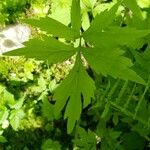
Hydrophyllum virginianum
Eastern waterleaf · John's-cabbage · Virginia waterleaf · Indian Salad · Shawnee-Salad
Description
Source: leafsnapHydrophyllum virginianum, commonly known as Virginia waterleaf, is a herbaceous perennial plant belonging to the Boraginaceae family. Native to eastern North America, it thrives in moist woodlands, along streams, and in other damp areas. The plant can grow up to 60 cm tall and has a spreading habit with multiple stems emerging from the base. Its leaves are deeply lobed with toothed edges and possess a distinctive water droplet shape, which is the source of its common name. The flowers are small, either white or pinkish, with five petals arranged in clusters at the top of each stem. Virginia waterleaf serves as an important food source for various pollinators, such as bees and butterflies. It also boasts medicinal properties, containing compounds traditionally used to treat a range of ailments, including respiratory problems, skin irritations, and fever. Overall, Hydrophyllum virginianum is a visually appealing native wildflower that enhances the beauty of natural areas. It also provides significant ecological benefits, such as supporting pollinator habitats and offering medicinal properties.
🎭 Watery, deciduous, evanescent
Care Guide
💧 Water
☀️ Light Partial sun
🌡️ Temperature 5–32.2°C
💨 Humidity
🪴 Soil 5-7
🌱 Fertilizer
🪴 Pot & Repot
✂️ Pruning
🌿 Propagating
🐛 Diseases & pets
☠️ Toxicity
Characteristics
- Plant Type
- Herb
- Life Cycle
- Perennial
- Genus
- Hydrophyllum
- Family
- Boraginaceae
- Hardiness Zone
- 4-8
- Mature Height
- 30 cm to 61 cm
- Mature Spread
- 30 cm to 40 cm
- Leaf Color
- Green, White, Variegated
- Leaf Type
- Deciduous
- Flower Color
- White, Purple, Lavender
- Flower Size
- 2.54 cm
- Bloom Time
- Late spring, Early summer
- Planting Time
- Autumn
- Harvest Time
- Early summer, Mid summer