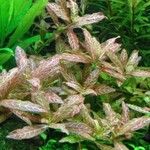
Hygrophila polysperma
East Indian swampweed · Indian swampweed · Miramar-weed · Hygrophila · Dwarf Hygrophila
Description
Source: leafsnapHygrophila polysperma, commonly known as Indian waterweed or dwarf hygro, is a favored aquatic plant in the aquarium hobby. Native to India and Southeast Asia, it thrives in slow-moving or stagnant waters such as ponds, lakes, and streams. This plant features long stems with narrow leaves that grow in opposite pairs along the stem. Typically green, the leaves can turn reddish-brown under high light conditions. Hygrophila polysperma is a fast-growing plant that can quickly fill an aquarium with lush foliage. Beyond its aesthetic appeal, Hygrophila polysperma offers several benefits for aquariums. It oxygenates the water by releasing oxygen during photosynthesis and absorbs excess nutrients, such as nitrates, from the water column. Hygrophila polysperma is easy to care for, thriving under moderate lighting with regular fertilization and CO2 supplementation, if available. It can be propagated by stem cuttings that quickly root into new plants when planted in substrate. Overall, Hygrophila polysperma is a versatile aquatic plant that adds beauty and provides essential benefits for aquariums of all sizes.
Care Guide
💧 Water Every 3 days
Indian swampweed thrives in aquatic habitats, preferring environments with high moisture and stable conditions. It should be watered weekly but can tolerate brief periods of dryness. Ideal for indoor settings with humid environments, such as terrariums or well-lit bathrooms, Indian swampweed is a perfect choice.
☀️ Light Full sun
Indian swampweed comes from habitats that receive abundant sunlight, such as the shallow edges of ponds and lakes. It prefers full sun but can also tolerate partial sun.
🌡️ Temperature 20–37.8°C
Indian swampweed comes from tropical areas, where the climate is usually warm and humid. As a result, it is adapted to high temperatures and humidity. It dislikes sudden temperature changes and prefers a consistent temperature environment, so it's important to prevent temperature fluctuations indoors. It generally does not tolerate cold and needs warmer conditions to grow. If the ambient temperature falls too low, the plant may stop growing or even die.
💨 Humidity
🪴 Soil
🌱 Fertilizer
🪴 Pot & Repot
✂️ Pruning
Indian swampweed benefits from regular pruning techniques, which involve trimming the stems just above the nodes to encourage bushier growth. This process is most effective from early to late spring and helps enhance growth, improve water circulation, and increase visual appeal. Additionally, removing damaged areas ensures healthier foliage and makes maintenance more manageable.
🌿 Propagating
🐛 Diseases & pets
☠️ Toxicity
Characteristics
- Plant Type
- Herb
- Life Cycle
- Perennial
- Genus
- Hygrophila
- Family
- Acanthaceae
- Hardiness Zone
- 9-11
- Mature Height
- 30 cm to 61 cm
- Mature Spread
- 20 cm to 30 cm
- Leaf Color
- Light Green, Medium Sea Green
- Leaf Type
- Evergreen
- Flower Color
- White
- Flower Size
- 0.51 cm to 1.02 cm
- Bloom Time
- All year round
- Planting Time
- Spring, Summer, Autumn
- Harvest Time
- All year round
- Native Area
- Nepal, Sri Lanka, Afghanistan, India, Malaysia, Cambodia, Vietnam, Myanmar, Bhutan, Bangladesh, Pakistan, Laos, Thailand, China