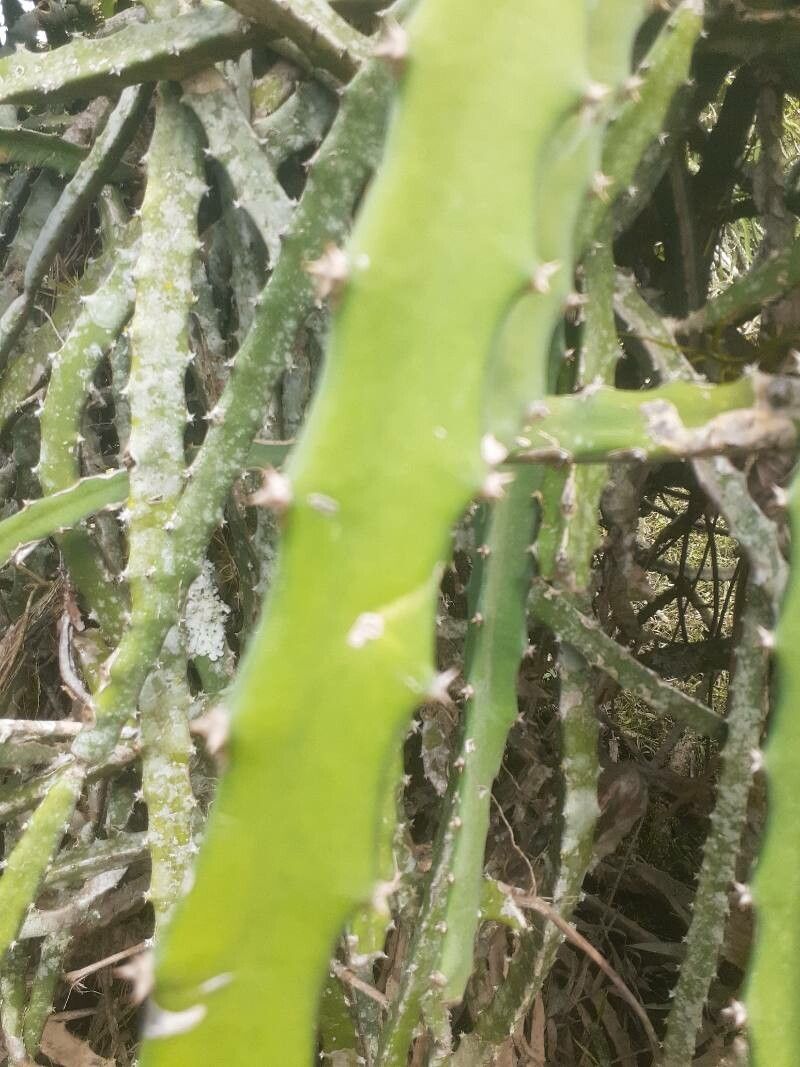
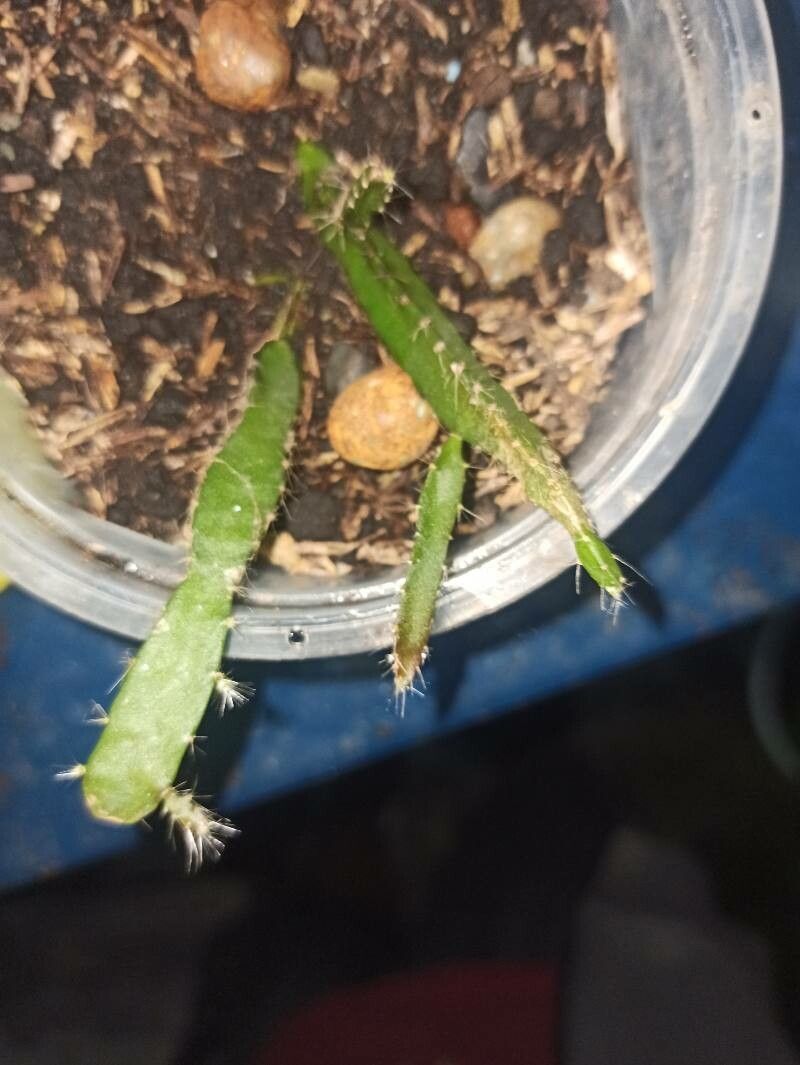
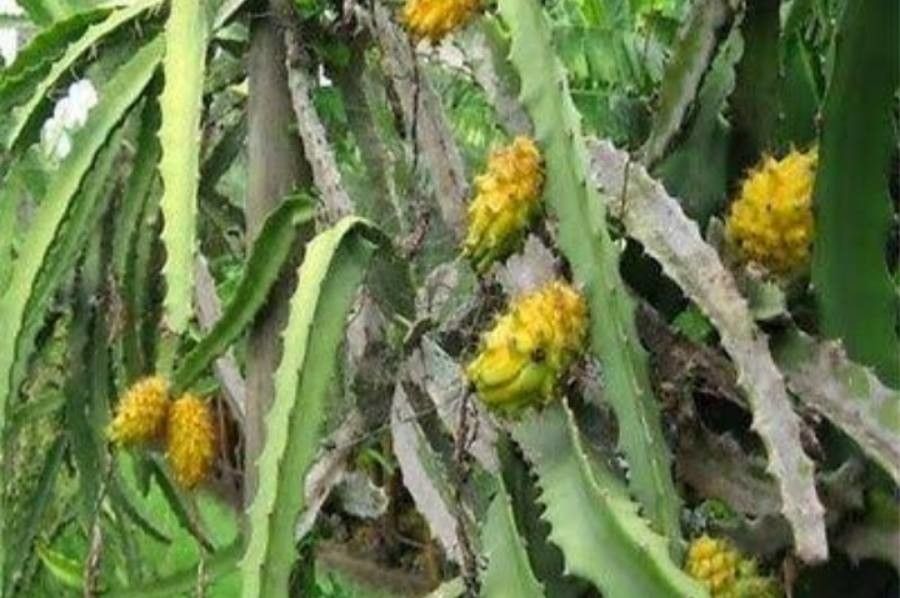
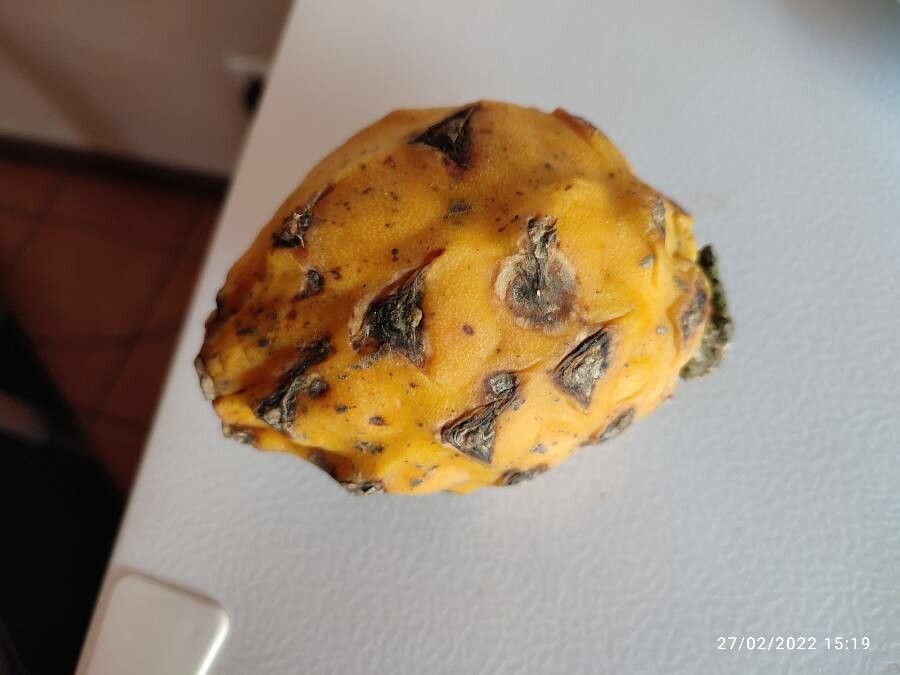
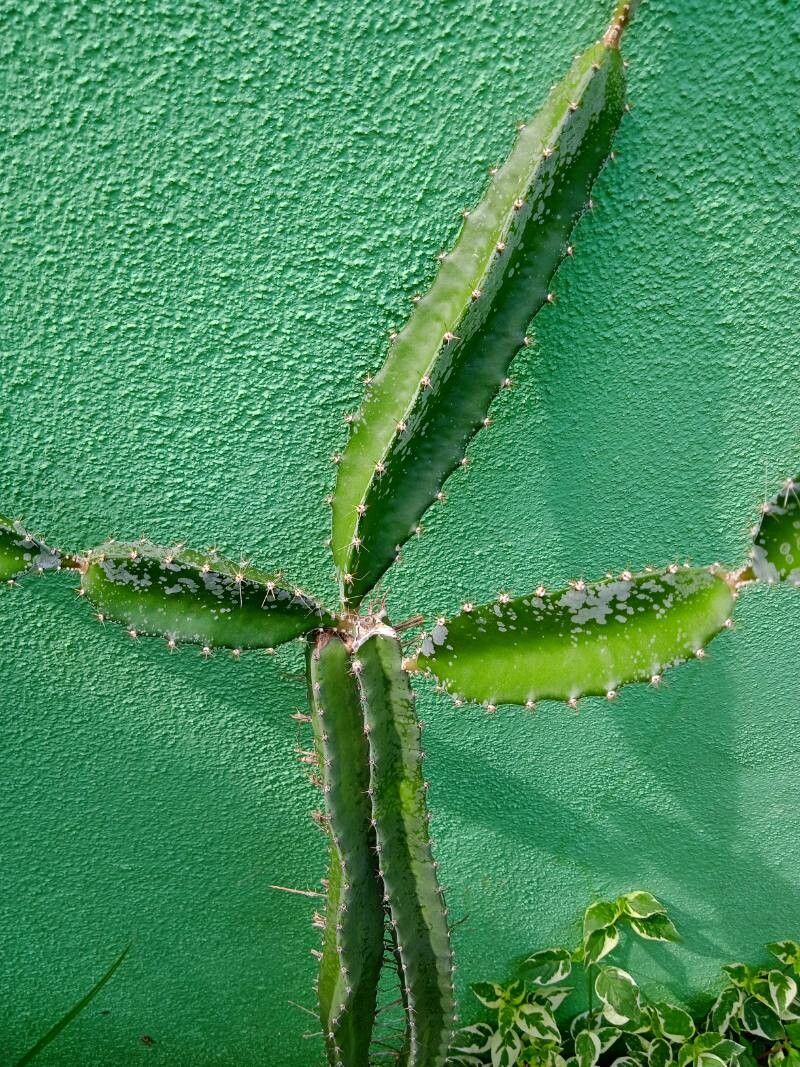
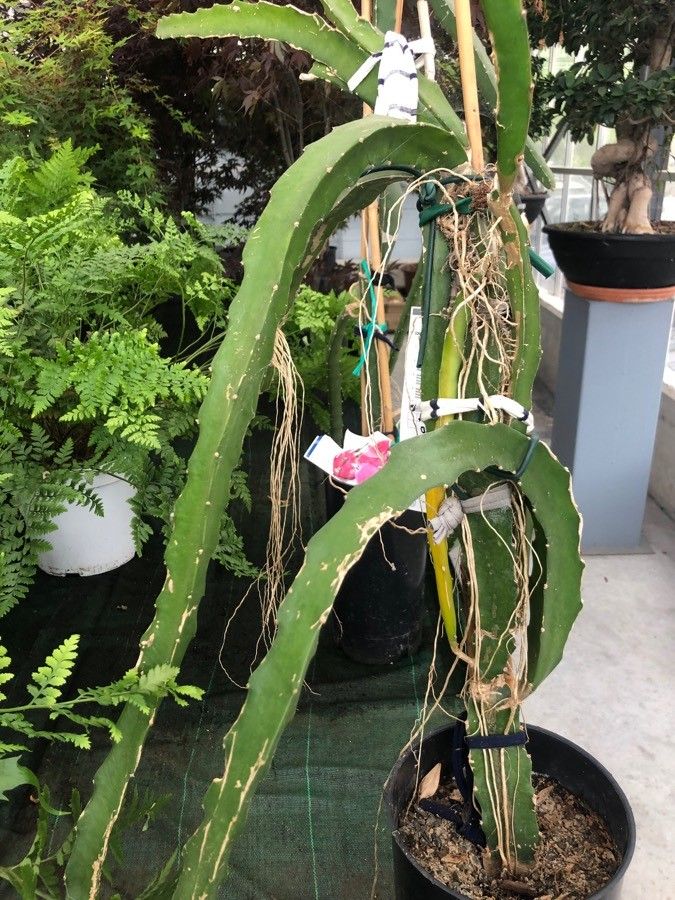
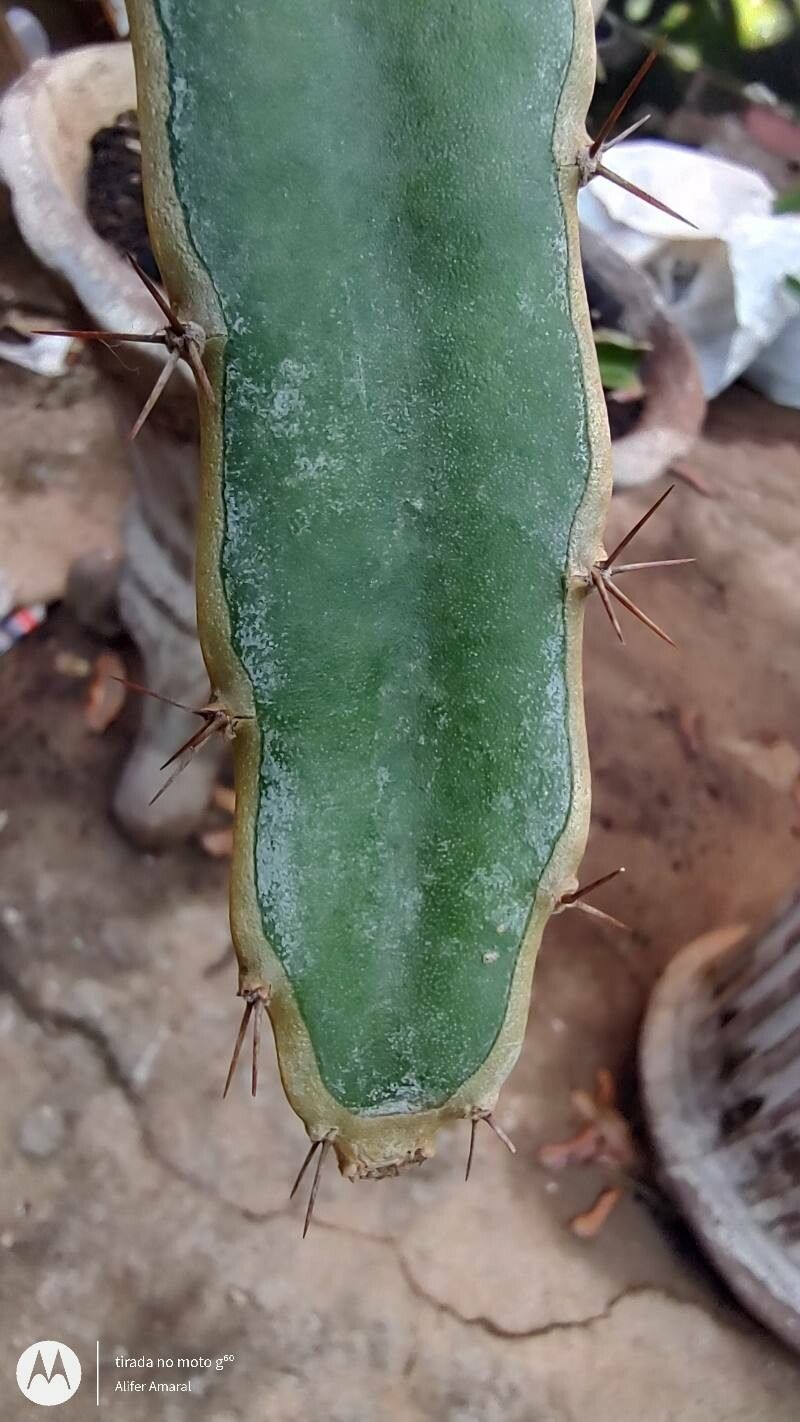
Selenicereus megalanthus, synonym Hylocereus megalanthus, is a cactus species in the genus Selenicereus that is native to northern South America, where it is known, along with its fruit, by the name of pitahaya. The species is grown commercially for its yellow fruit, but is also an impressive ornamental climbing vine with perhaps the largest flowers of all cacti. The yellow fruit has thorns, unlike the red dragon fruits (e.g. S. undatus and S. monacanthus), and is commonly known as "yellow dragon fruit", "yellow pitahaya", "kirin fruit", or "yellow pitaya".
Yellow pitaya has strong disease resistance and, under typical care conditions, is not prone to illness. It can, however, be vulnerable to mealybugs; they may cause some harm but are typically not a major problem. Regarding care, Yellow pitaya is drought-tolerant and does not need frequent watering. It can endure long spells without water and requires little fertilizer. On the other hand, it is very prone to root rot if kept in poor light and overwatered. In general, Yellow pitaya is a good choice for people who prefer low-maintenance plants, though it remains important to meet its basic needs. It is especially suitable for those who are away for long periods and might forget regular watering.
How to keep Hylocereus Megalanthus.
Light
Yellow pitaya performs best in intense sunlight but can also do well with moderate light. Plenty of sun encourages vigorous growth and intensifies its yellow color. Although it tolerates some shade, too little light can fade its coloration and slow its development. Its native habitat features strong solar intensity. Too much sun can burn its skin, while too little can limit its growth.
Water
Yellow pitaya thrives in arid conditions due to its high drought tolerance. To prevent root rot, it should be watered every two weeks in well-draining soil. This epiphytic cactus grows well in outdoor containers, benefiting from dry periods during its growing season.
Temperature
Yellow pitaya is native to environments that experience temperatures between 68 to 100 °F (20 to 38 ℃). It performs best when the temperature is maintained within that range, and seasonal adjustments might be necessary to imitate its natural habitat.
Fertilizer
For Yellow pitaya, light applications of fertilizer once or twice a year during the growing season are sufficient. Avoid fertilizing in winter and in summer when the plant is dormant. Reduce fertilizer for plants that have been repotted and wait a couple of months after repotting before applying any. Fertilizing supports healthy growth and promotes flowering.
Pruning
Yellow pitaya requires minimal pruning. Concentrate on removing withered flowers and branches to ensure that the plant allocates nutrients efficiently, promoting healthy growth.
Pot & Repot
For yellow pitaya to thrive and avoid root rot when grown in pots, excellent drainage is essential.
Botanical profile.
- Plant Type
- Vine, Shrub
- Life Cycle
- Perennial
- Genus
- Hylocereus
- Family
- Cactaceae
- Hardiness Zone
- 10-12
- Mature Height
- 2.13 m
- Mature Spread
- 49 cm
- Leaf Color
- Green
- Leaf Type
- Evergreen
- Flower Color
- White
- Flower Size
- 30.48 cm
- Bloom Time
- Late spring, Early summer, Mid summer
- Planting Time
- Spring, Summer, Autumn
- Harvest Time
- Mid summer
Other names.
Reader questions.
How should I water my Yellow pitaya plant in the best way?
Understanding how to properly water the Yellow pitaya is crucial. Many people wonder if it's best to water from top to bottom or vice versa. Experts recommend starting from the bottom as this method allows sufficient water to reach the plant's roots. When watering from the top, saturation is inadequate, and most of the water will trickle and evaporate, resulting in only a small amount reaching the roots.
Why should I put fertilizer on my Yellow pitaya plant?
If the soil in your area is rich, fertilizing may not be necessary. However, if the soil lacks nutrients, a Yellow pitaya will struggle to produce enough leaves, flowers, and fruits. Conducting a soil test is the most accurate method to identify nutrient deficiencies in the soil. Nutrient deficiencies in Yellow pitaya can lead to small leaves, short branches, yellow or bronze-colored leaves, and less flavorful fruits due to increased acidity. Additionally, certain nutrient deficiencies can result in early fruit falling or splitting.
How can you make sure Yellow pitaya doesn't get too much sunlight?
To protect tropical ornamental plants that thrive in full sun, it's important to find a spot with ample direct sunlight but some shield from the intense midday heat. If you're growing these plants in containers, you can move them to a shadier area during the hottest hours to shield them from excessive sunlight. Another option is to offer shade using a shade cloth or umbrella during the peak heat of the day.
What temperature is best for Yellow pitaya?
To help your tropical plants thrive, it's best to maintain a temperature range of 75℉ to 90℉ (25-32℃). While different species can tolerate temperatures outside this range, sticking within a few degrees of these limits will ensure optimal growth. However, there are extreme temperature limits to be aware of. Anything below 50℉ (10℃) or above 95℉ (35℃) can hinder growth and cause issues with the leaves and stems. Low temperatures are particularly damaging, as even a light frost can lead to the death of your tropical plants. In fact, cellular death can occur rapidly, with some species dying within 12 to 24 hours.
What do I do if my Yellow pitaya plant doesn't have enough water?
If you find that your flowers are drying out despite watering them regularly, the issue may be with the container they are planted in. In this case, choose a larger container with good drainage. It's important to use the right potting soil and clean sand mixture to help the plant absorb more water easily. This species is an epiphyte and cannot handle soggy roots, as it obtains water and nutrients from the air. Therefore, proper drainage is necessary to prevent fungal infections. If your cactus becomes limp, you can transfer it to fresh soil. Gently remove as much of the old soil as possible and keep the new soil evenly moist. Mist the cactus frequently if possible. After the flowers have finished blooming, reduce watering until new buds appear. Be careful not to let the soil dry out too much, as this can cause the buds to drop. Underwatering followed by overwatering is a common mistake made by many owners of these succulent cacti. The lack of water may not be noticeable until it's too late, so it's important to pay attention to signs of wilting or withering. While it is tempting to overcompensate with excessive watering, this can lead to desiccated roots that cannot take in any more water. This can result in waterlogged plants and rotting roots. If you notice signs of underwatering, you can try to revive the cactus by providing regular and frequent, yet controlled, watering. Give the cactus a chance to regenerate and recover its roots without overdoing it.
When should I fertilize my Yellow pitaya for the best results?
To ensure healthy leaf and root development for future growth of young Yellow pitaya plants, it is recommended to provide them with higher nitrogen and phosphorus fertilizer. The optimal time to apply the fertilizer is during the spring of the first growing season. It is also advisable to incorporate compost or another fertilizer into the soil before or immediately after planting. For mature plants, it is necessary to supplement their nutrient requirements every few years, as needed, throughout the spring and summer. This can be achieved by using a balanced fertilizer or a specific fertilizer addressing soil deficiencies in your area. However, it is important to avoid fertilizing Yellow pitaya during autumn or winter.
How much sunlight does Yellow pitaya need to grow?
Tropical ornamental plants that thrive in full sun require at least 6 hours of direct sunlight each day. These plants are well-suited to areas with strong and direct sunlight, as they need this light to flourish. In their natural habitats, they tend to grow in open fields or along forest edges, where they can enjoy abundant sunlight all day long.
Do Yellow pitaya need different temperatures at different stages of growth?
Yellow pitaya does not require changes in temperature to enter different growing phases. However, it is important to maintain consistency in temperature. Fluctuations in temperature can slow down its growth, regardless of its current phase. Therefore, keeping it in a controlled environment is always recommended. The optimal temperature range for Yellow pitaya is between 75℉ and 90℉ (25-32℃), with the emphasis on staying above the lower limit. While going beyond 90℉ (32℃) is not ideal, as a tropical plant, it can tolerate higher temperatures. On the other hand, temperatures below 50℉ (10℃), especially 40℉/5℃, can cause direct damage to this species, which thrives in heat.
How much water does my Yellow pitaya need?
To keep the Yellow pitaya healthy throughout the year, it is important to water it properly. Use well-draining soil when potting the plant to encourage beautiful blooms. The watering needs of the Yellow pitaya can vary. A good rule of thumb is to water when about 1/3 of the topsoil becomes dry, typically once a week. Check the soil with your fingers to see if it is around two inches dry. If the top layer of soil appears very dry, water the plant until it drains out of the pot's drainage holes. Place a tray under the pot to catch any excess water, and after 10 to 15 minutes, discard any water that remains in the tray. While the Yellow pitaya benefits from soaking the roots, it is important not to let it sit in water for an extended period. When the Yellow pitaya is in its flowering stage, it is best to water it sparingly. To increase humidity around the plant, fill the saucer of the pot with pebbles and add water to the pebbles. Checking the soil is the best way to determine the watering needs of the Yellow pitaya. If the soil is too dry, add water to bring moisture back. Avoid letting the pot sit in water, especially during winter when the soil takes longer to dry, as this can lead to root rot. Keep in mind that the Yellow pitaya may respond differently to seasonal changes, so it is important to adapt your watering routine accordingly. In dry and hot climates, it may be necessary to water the plant twice a week. In humid areas, watering once a week should be sufficient. Decrease watering frequency in the fall and winter to promote blooming. If the pots are exposed to excessive sunlight, the moisture in the soil will dry out faster, so more frequent watering is necessary. On the other hand, if the plant is in a cool or humid location, watering can be less frequent.
When is it best to not give my Yellow pitaya plant fertilizer?
To ensure the health of your Yellow pitaya, it is important to avoid fertilizing it after pruning, when it is affected by disease or insects, or when it is already under stress. While fertilizer can address nutrient deficiencies in the soil, it cannot resolve other problems that could potentially harm a Yellow pitaya. Therefore, accurately identifying the issue is crucial before deciding to apply fertilizer. Additionally, it's best to refrain from fertilizing the plant during the winter or during excessively hot and dry periods in the summer.
What will happen if the Yellow pitaya doesn't get enough sunlight?
Tropical ornamental plants that need full sun may face issues if they don't receive enough sunlight. They might become leggy and weak, and their leaves could turn yellow or pale. Furthermore, they may stop producing flowers. Ultimately, if these plants continue to lack the required amount of direct sunlight, there is a possibility that they may die.
Does Yellow pitaya require varying temperatures throughout the year?
Yellow pitaya does not require different temperatures for different growing seasons. The key to seasonal care is to maintain the environment within the ideal temperature range. To ensure this, it is recommended to keep the plant indoors where you have control over the temperature, regardless of the external climate. Adequate light is also crucial for tropical species, including these plants. It is best to provide them with partial side-level sun exposure, which means the light they receive should be dappled or filtered. Bright but indirect light is the optimal choice when growing these plants indoors. Excessive direct sunlight can harm the leaves and hinder the plant's growth potential.