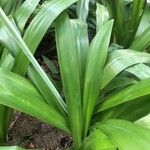
Hymenocallis littoralis
Beach spiderlily · Tropical Spider-Lily · Spider lily · Beach Spider-lily
Description
Source: leafsnapHymenocallis littoralis, commonly known as the beach spider lily or shore lily, is a perennial plant species belonging to the Amaryllidaceae family. Native to the coastal regions of Central and South America, it thrives in sandy soils near beaches, dunes, and mangroves. The plant features long green leaves that can grow up to 60 centimeters in length. Its flowers are white with a yellow center and have a distinctive spider-like appearance due to their long, thin petals. These flowers bloom during the summer months, typically from June through August. Hymenocallis littoralis is widely used as an ornamental plant because of its attractive appearance. It can be cultivated in gardens or containers with well-draining soil that receives full sun exposure or partial shade. For centuries, indigenous people have used Hymenocallis littoralis for medicinal purposes. Its bulbs contain alkaloids that have been found effective against various diseases, including cancer, malaria, and tuberculosis, among others. Overall, Hymenocallis littoralis is not only an appealing ornamental plant but also boasts medicinal properties, making it an excellent choice for both gardeners and herbalists alike.
💡 The petals of the beach spider lily are thick and waxy, typically in shades of yellowish-green to yellow, and often adorned with brown or purplish-brown spots. These petals are slender and widely spread, resembling the long legs of a spider. The center of the flower resembles a spider's body.
🌳 The beach spider lily is more than an ornamental plant; its hardy nature allows it to contribute to coastal stabilization. Its robust root system helps prevent soil erosion, making the beach spider lily a partner in protecting shorelines. This ability is a clear example of the unrecognized practical uses of a plant often admired for its beauty.
🎭 Beauty of nature
Care Guide
💧 Water Every 7 days
The beach spider lily, which originates from coastal regions, thrives in high humidity and consistently moist soil. To support its lush growth and mimic its tropical habitat, it requires weekly watering. As an evergreen outdoor plant, it also benefits from natural rainfall, which helps maintain its vibrant, green appearance throughout the year.
How should I water my Beach spider lily?
To successfully water the Beach spider lily, it is recommended to use filtered water at room temperature. Tap water may contain harmful particles, so filtered water is a better choice. The reason for using room temperature water is that the plant is used to a warm environment and cold water can be a shock to its system. Additionally, it is important to avoid overhead watering as it can lead to foliage problems. Instead, simply apply filtered room temperature water to the soil until it is fully soaked. This helps moisten the roots and allows them to spread through the soil and gather essential nutrients.
What should I do if I give my Beach spider lily too much or too little water?
Overwatering is a common issue for Beach spider lilies and can cause wilting, yellowing leaves, and diseases like root rot, mold, and mildew. Underwatering is less common, but can cause brittle, brown leaves. It is important to notice signs of overwatering early to prevent irreversible damage. Reduce watering and replace poorly draining soil if overwatering is detected. If underwatering is observed, simply water more regularly until signs improve.
How many times should I water my Beach spider lily?
If your Beach spider lily is in a pot, the most precise way to determine if it needs water is by checking the soil. Simply stick your finger into the soil and if the top two to three inches feel dry, it's time to water it. If you have planted your Beach spider lily outdoors in the ground, you can use the same method to test the soil. Once you find that the top few inches of soil have dried out, it's time to water it. Typically, during spring and early fall, you will need to water this plant about once every week using this method. However, during extremely hot weather, you may need to increase the watering frequency to about twice or more per week. It is worth mentioning that mature, well-established Beach spider lilies have an impressive ability to withstand drought.
How much water does my Beach spider lily require?
To properly water your Beach spider lily, don't hold back on the amount of water you use. Make sure the top two to three inches of soil are dry before watering, and then give it a good, thorough watering, making sure to soak the entire soil. The water should be enough to cause excess water to flow out of the drainage holes at the bottom of the pot. If you don't see any excess water draining, you probably didn't give the plant enough water. However, be careful not to let water accumulate inside the soil, as this can harm the plant. On the other hand, if water doesn't drain well from the pot, it could mean that the soil doesn't drain well either, and this is not good for the plant's health. If the plant is outdoors, one inch of rain per week should be enough.
How should I water my Beach spider lily as it grows?
The water needs of the Beach spider lily can vary depending on its growth stages. When it is young or recently transplanted, it requires more water to support root growth. These roots need extra moisture for optimal performance. As the plant matures, it will require less water. Additionally, during the bloom period, the plant may need more water to support flower development.
☀️ Light Partial sun
The beach spider lily does best beneath a canopy that filters sunlight, favoring moderate sun exposure while also adapting to fully exposed or completely shaded sites. Its native habitat provides similar conditions. Although it can tolerate excessive sun, too much light can stress the plant. Conversely, inadequate sunlight may limit its optimal growth.
What are the sunlight requirements for Beach Spider Lily?
Beach Spider Lily requires partial sun, about 3-6 hours of sunlight, to thrive but can also tolerate conditions of full sun or full shade, which involve more than 6 hours of sunlight. The plant appreciates a moderate amount of sun exposure, akin to its origin habitat's conditions. Excessive sunlight might stress the plant, while insufficient sun might limit its growth. Observing how sunlight moves through your garden will help in choosing the optimal spots that provide a balance of light and shade, ensuring the plants' well-being.
How do I use artificial lighting for Beach Spider Lily indoor plants?
For Beach Spider Lily indoor plants, adequate lighting is crucial, especially when natural sunlight is scarce. In such cases, artificial lights can be a great solution. LED lights are recommended because they can be adjusted to provide specific wavelengths needed by your plants. Full sun plants need 30-50W/sq ft of artificial light, partial sun plants need 20-30W/sq ft, and full shade plants need 10-20W/sq ft. The light source should be placed 12-36 inches above the plant, mimicking natural sunlight. Most plants will benefit from 8-12 hours of light per day to ensure healthy growth.
What are the symptoms of inadequate light for Beach Spider Lily?
Inadequate light conditions can lead to several symptoms in Beach Spider Lily, such as smaller new leaves compared to older ones, leggy or sparse growth, faster leaf drop, slower or no new growth, paler new leaves, and conditions like chlorosis, sunscald, leaf curling, wilting, and leaf scorching. These symptoms indicate either insufficient light or overexposure to sunlight, affecting the plant's growth and overall health.
What are the best practices for managing light conditions for Beach Spider Lily indoors and outdoors?
To optimize light conditions for Beach Spider Lily, gradually increase their exposure to sunlight by moving them to sunnier spots each week, aiming for 3-6 hours of direct sunlight daily. This gradual adaptation helps avoid stress from sudden changes. For large or immobile indoor plants, consider using a desk or ceiling lamp for at least 8 hours daily or invest in professional plant grow lights. Outdoors, move plants gradually to avoid sunburn. If sunlight is obstructed, identify and reduce the obstructions, such as pruning trees, or consider transplanting smaller plants during their dormant period to a location with ample sunlight and good drainage. It's important to note that parts of the plant affected by insufficient sunlight might not recover, but new growth should be healthy after adjusting the light exposure.
🌡️ Temperature 20–37.8°C
The beach spider lily thrives in moderate temperatures between 68℉ (20℃) and 100℉ (38℃) and comes from warm, coastal habitats. It tolerates some temperature variation, but sudden drops or extreme heat can harm the plant. In winter, it is best to keep the beach spider lily in a warmer spot to protect it from cold snaps.
What are the ideal growing conditions for the Beach Spider Lily?
The Beach Spider Lily (Hymenocallis littoralis) thrives in moderate temperatures, ideally between 68°F (20°C) to 100°F (38°C), and is native to warm, coastal environments. It is important to maintain temperatures above 20°C during the winter and avoid any cold temperatures that can harm the plant. In autumn, it's recommended to bring outdoor-grown Beach Spider Lilies indoors, placing them near a bright window but away from direct heat sources. The plant prefers to be kept in areas where sudden temperature drops or extreme heat can be avoided to prevent damage.
How should you care for a Beach Spider Lily in case of low temperature exposure?
If a Beach Spider Lily is exposed to low temperatures, it is crucial to trim off any frost-damaged parts to prevent further harm. The plant should be immediately moved to a warmer indoor location to protect it from the cold. Placing it near a south-facing window ensures it receives ample sunlight, but it should be kept at a distance from heaters or air conditioning vents to avoid excessive dryness. This care is vital to prevent the leaves from lightening in color or becoming damaged after exposure to temperatures below -5°C, which can lead to wilting, drooping, and a gradual change to brown or black in the damaged areas.
What steps should be taken if a Beach Spider Lily suffers from high temperature or sun exposure?
In cases where a Beach Spider Lily is subjected to high temperatures, particularly above 43°C, it is susceptible to sunburn, leading to lighter leaf color and increased vulnerability. To care for the plant under these conditions, trim away the sunburned and dried-up parts immediately. Relocate the plant to an area with shade during the midday and afternoon sunlight to protect it. Ensure the soil remains moist by watering the plant in the morning and evening. This helps in mitigating the damage and stresses caused by excessive heat.
💨 Humidity high (>60%)
This plant needs special care because it loves high humidity levels of 60-80% or more. The best way to achieve this is by placing a humidifier near the plant. Daily misting is also essential! Make sure the room has good ventilation.
🪴 Soil 6-7
🌱 Fertilizer
Beach spider lily needs the most fertilizer during its active growth period, which occurs mainly in spring, summer, and early fall. Fertilizing supplies essential nutrients that the soil may lack, encouraging healthy root and stem development and supporting the attractive foliage that is a key feature of this plant.
Why should I put fertilizer on my Beach spider lily?
All plants, including the Beach spider lily, need soil nutrients for their growth. However, there is no guarantee that the soil in your garden will have all the required nutrients. To address this, fertilization and soil amendments are necessary to ensure that your garden plants receive both the basic and specific nutrients they need to thrive. For the Beach spider lily, fertilization is particularly important because it promotes healthy development of its roots and stems throughout the growing season. Moreover, fertilization also enhances the appearance of its foliage, which is the main source of ornamental appeal for this plant.
When should I fertilize my Beach spider lily?
The Beach spider lily requires the most fertilizer when it is actively growing, which is usually during spring, summer, and early fall. In winter, you should feed it every two to four weeks until fall comes. When fall arrives, gradually decrease the amount of fertilizer you give until you stop completely in preparation for winter when the Beach spider lily grows less.
When is it best to not fertilize my Beach spider lily?
During most of the year, you should feed your Beach spider lily regularly, except if you've already given it too much fertilizer or if you've fertilized it incorrectly. In those cases, fix the issue before going back to the usual feeding schedule. However, during winter, when the plant is in its dormant phase, do not fertilize it. Feeding the plant during this time is not necessary and may cause fertilizer burn. This is especially important if you keep the plant indoors in a cold area.
What kind of plant food should I give my Beach spider lily?
The fertilizer for a Beach spider lily has a specific blend of nutrients. Each nutrient is present in relatively low amounts. An ideal fertilizer for this plant has an N-P-K ratio of 3-1-2. However, in some cases, a general-purpose fertilizer with an even blend of nutrients can also work well. But even when using a balanced fertilizer, it's important that the ratio number representing the volume of each nutrient is at 10 or lower. You can choose between a granular or liquid-based fertilizer for your Beach spider lily. If you opt for a liquid-based fertilizer, it is often recommended to dilute the strength by half. Granular fertilizer doesn't have many downsides, but using liquid fertilizer, especially if you water your Beach spider lily while feeding it, is usually the most sensible option.
How can I give nutrients to my Beach spider lily?
When purchasing fertilizer for your Beach spider lily, it will typically include instructions that you should follow. For this specific plant, it's crucial to fertilize either just before or while watering the soil to avoid harming the roots. If you opt for a slow-release granular fertilizer, sprinkle it on the soil and immediately water it. If using a liquid-based fertilizer, dilute it with water, apply to the soil, and add a bit more water. Particularly in spring and fall when the plant's growth is increasing or decreasing, it's important to dilute the fertilizer by at least half.
🪴 Pot & Repot 2-3 years
When repotting Beach spider lily, choose a pot 1-2 inches (2.5–5.1 cm) larger with ample drainage. Use a well-draining, potting mix. Repot in spring or fall, ensuring that the root ball is slightly lower than the rim of the flower pot. Water thoroughly after repotting and place in a warm spot with indirect sunlight.
✂️ Pruning
The beach spider lily is known for its striking white flowers and long green leaves. For optimal growth, it's important to prune the plant from early to late spring. Remove any dead foliage and spent flowers to boost the plant's vigor. Always make sure to use sterilized tools for clean cuts, as this is crucial for healthy growth. Doing so will improve air circulation and help prevent disease.
🌿 Propagating
🐛 Diseases & pets
☠️ Toxicity
Hymenocallis contains a toxin called lycorine which can induce various toxicity symptoms upon ingestion. Eating this plant may result in stomach upset, vomiting, diarrhea, dizziness, obscured vision, spasms, hypotension, and even unconsciousness.
Characteristics
- Plant Type
- Herb
- Life Cycle
- Perennial
- Genus
- Hymenocallis
- Family
- Amaryllidaceae
- Hardiness Zone
- 9-12
- Mature Height
- 0.91 m to 2.13 m
- Mature Spread
- 61 cm
- Leaf Color
- Green
- Leaf Type
- Evergreen
- Flower Color
- White
- Flower Size
- 20.32 cm
- Bloom Time
- Mid summer
- Planting Time
- Spring
- Harvest Time
- Mid summer, Late summer
- Native Area
- Colombia, Belize, Honduras, Mexico, Guatemala, Venezuela, Peru, Brazil, Nicaragua, Costa Rica, Panama