Hyophorbe indica
Palmiste Poison · Champagne palm · Poison palm · Champagne bottle palm
Description
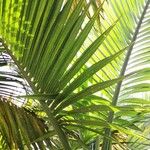
Source: leafsnapHyophorbe indica, commonly known as the Bottle Palm, is a small to medium-sized palm tree native to the Mascarene Islands in the Indian Ocean. This slow-growing plant can reach heights of 10-12 feet and a width of 3-4 feet. The Bottle Palm is named for its unique bottle-shaped trunk, which can be up to 18 inches in diameter and features smooth, greyish-brown bark. The leaves of Hyophorbe indica are pinnate, resembling feathers arranged along a central stem. These dark green, glossy leaves have pointed tips that curve slightly downwards. The plant produces small white flowers on long stalks that emerge from between the leaves. Hyophorbe indica thrives in warm tropical climates with plenty of sunlight but can also tolerate some shade. It requires well-draining soil and regular watering; however, overwatering should be avoided to prevent root rot. The Bottle Palm is often used as an ornamental plant due to its unique shape and size, making it an excellent choice for landscaping or indoor decoration. Its slow growth rate also makes it ideal for container gardening or bonsai cultivation. Overall, Hyophorbe indica is an attractive palm tree species with distinctive features that set it apart from other plants of similar size. Its popularity among gardeners worldwide is due to its ornamental appeal for both indoor and outdoor settings, provided the climatic conditions are suitable for its growth requirements.
Care Guide
💧 Water Every 7 days
☀️ Light Full sun
Palmiste poison comes from open habitats, such as sunny meadows and the edges of forests, which offer plentiful light. It flourishes in Full Sun but can also endure Partial Sun, showing good adaptability to different sunlight levels.
🌡️ Temperature 20–37.8°C
Palmiste poison comes from tropical areas, where the climate is generally warm and humid. As a result, it is well suited to high temperatures and humidity. It does not tolerate sudden temperature changes and prefers a stable thermal environment, so it is important to avoid temperature swings indoors. It usually cannot withstand cold conditions and needs warmer temperatures for growth. If the surrounding temperature falls too low, the plant may stop growing or even die.
💨 Humidity normal (40-60%)
This plant will thrive in moderate humidity, which is probably the level in your home. However, misting it a few times a week can be very beneficial. Make sure the room has good ventilation.
🪴 Soil 6-7
🌱 Fertilizer
Fertilize your Palmiste poison in early spring to encourage healthy growth. Regular feeding improves overall health, producing strong growth, greater hardiness in difficult conditions, and enhanced resistance to pests and diseases. Stick to a consistent fertilization routine for your Palmiste poison to maintain bright, deeply colored foliage and a lush appearance.
🪴 Pot & Repot
✂️ Pruning
🌿 Propagating
🐛 Diseases & pets
☠️ Toxicity
Characteristics
- Plant Type
- Palm
- Life Cycle
- Perennial
- Genus
- Hyophorbe
- Family
- Arecaceae
- Hardiness Zone
- 10-12
- Mature Height
- 6.1 m to 10.06 m
- Mature Spread
- 3.05 m to 4.88 m
- Leaf Color
- Green, Dark Green
- Leaf Type
- Evergreen
- Flower Color
- Yellow, Cream
- Flower Size
- 0.25 cm to 0.51 cm
- Bloom Time
- All year round
- Planting Time
- Spring, Summer, Autumn
- Harvest Time
- All year round