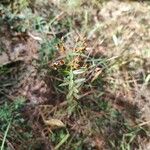
Hypericum cistifolium
Round-pod St. John's-wort · Roundpod St. Johnswort
Description
Source: wikipedia (CC BY-SA)Hypericum cistifolium is a shrub in the family Hypericaceae native in the southeastern United States. Plants in the genus Hypericum are referred to as St. John's wort.
Care Guide
💧 Water
Roundpod St. John's Wort is drought-tolerant but cannot endure waterlogged conditions. During the first year, provide 25 mm (about an inch) of water each week. After that, natural rainfall is usually adequate. Be careful not to over-water, as this can lead to root rot and leaf wilting.
☀️ Light Full sun
Roundpod St. John's wort is a sun-loving perennial herbaceous plant that comes from open habitats and commonly thrives in meadows and grasslands. It prefers full sun but can also tolerate partial sun.
What are the sunlight requirements for Roundpod St. John's wort (Hypericum cistifolium)?
Roundpod St. John's wort (Hypericum cistifolium) thrives in various sunlight conditions. For 'Full sun' exposure, it requires above 6 hours of sunlight a day, ensuring it gets plenty of light for healthy growth. For 'Partial sun' locations, about 3-6 hours of sunlight is sufficient, offering a balance between light and shade. It's important to observe how sunlight moves through your garden, selecting spots that provide the ideal light conditions to ensure the plant's happiness.
🌡️ Temperature 15–35°C
Roundpod St. John's wort is highly adaptable to different climates, whether facing scorching summers or cold winters. Nonetheless, it has a preferred temperature range for growth. If temperatures become too high, the plant is vulnerable to heat and humidity stress, which can lead to its death. In areas where temperatures approach the lower limit of its cold tolerance, taking insulating measures to protect the plant is important.
What is Roundpod St. John's wort?
Roundpod St. John's wort, known botanically as Hypericum cistifolium, refers to a specific species within the extensive Hypericum genus. Although additional details regarding its characteristics, uses, or habitat were not provided, this plant falls under the category of St. John's worts, which are known for their yellow flowers and potential medicinal properties. The genus Hypericum is diverse, encompassing a variety of species that are found in different regions around the world, each with unique applications in traditional and modern medicine.
💨 Humidity
🪴 Soil 6-8
🌱 Fertilizer
Fertilize your Roundpod St. John's wort in early spring to encourage healthy growth. Regular feeding boosts overall health, producing vigorous growth, greater tolerance of difficult conditions, and enhanced resistance to diseases and pests. Keep a consistent fertilization routine for your Roundpod St. John's wort to maintain vibrant, deeply colored foliage and a lush appearance.
🪴 Pot & Repot
✂️ Pruning
Roundpod St. John's wort thrives when pruned in early spring, which helps increase its density and encourages more blooms. Start by removing any dead or weak stems, and then trim healthy shoots by one-third to maintain the plant's shape and vigor. This practice not only improves air circulation but also reduces the risk of disease, resulting in a healthier and more visually appealing roundpod St. John's wort.
🌿 Propagating
🐛 Diseases & pets
☠️ Toxicity
Characteristics
- Plant Type
- Shrub, Herb
- Life Cycle
- Perennial
- Genus
- Hypericum
- Family
- Hypericaceae
- Hardiness Zone
- 7-10
- Mature Height
- 0.61 m to 1.22 m
- Mature Spread
- 30 cm to 61 cm
- Leaf Color
- Dark Green
- Leaf Type
- Deciduous
- Flower Size
- 1.52 cm to 2.54 cm
- Bloom Time
- Summer
- Planting Time
- Spring, Summer, Autumn
- Harvest Time
- Late summer, Early fall, Mid fall