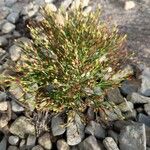
Hypericum gentianoides
Orangegrass · Orange-grass St. John's-wort · Saint John's-wort · Pinweed st. johnswort · Pineweed
Description
Source: leafsnapHypericum gentianoides is a species of flowering plant in the St. John's wort family Hypericaceae. Its common names include orangegrass and pineweed. Native to eastern North America, it ranges from Ontario; Nova Scotia and Maine south to Florida, west to Texas, and north to Missouri and Minnesota.It is an annual herb typically growing 10–40 cm tall. The leaves are repressed against the stem, 1-3mm long, and scale-like; an adaptation to reduce transpiration in exposed environments. The flowers are no more than 3mm across, with five to ten stamens, and three styles. It commonly grows in nutrient poor soil, sand, and on exposed sites, but is also known to occur in wetter areas such as coastal plain marshes. The name orangegrass refers to the citrus smell that is released when it is crushed. Chemical extracts of H. gentianoides have been found to inhibit the contraction of HIV.
Care Guide
💧 Water Every 7 days
Orangegrass thrives in consistently moist conditions without being overly saturated. It has moderate drought tolerance and can adapt well to average humidity levels. To maintain optimal hydration, it should be watered weekly, especially when grown outdoors. This schedule aligns with seasonal rainfall, ensuring the plant receives enough moisture during its growth cycles.
How should I water my Orangegrass in the most effective way?
To water Orangegrass, you have various options including using a garden hose with a spray nozzle or a watering can. Orangegrass is not particular about the type of water it receives, whether it's rainwater, tap water, or filtered water. However, it's recommended to avoid watering this plant from overhead as it can harm the leaves and flowers and possibly lead to disease. Instead, setting up a drip irrigation system is often the best method for watering Orangegrass. These systems distribute water evenly and directly to the soil. If you have a container-grown Orangegrass, you can use a cup, watering can, or tap water to directly water the soil.
What should I do if I give my Orangegrass either too much or too little water?
To properly care for your Orangegrass, it's important to pay attention to its watering needs. Underwatering can be fixed by simply watering the plant more frequently when you notice it's lacking moisture. On the other hand, overwatering can be more concerning, as it can lead to diseases and even the death of the plant. To prevent this, choose a growing location that gets plenty of sunlight to help dry the soil and has good drainage to avoid waterlogging. If you have overwatered Orangegrass in a pot, it might be necessary to change to a new pot with better drainage. When repotting, use loose soils and a pot that drains efficiently.
How frequently should I water my Orangegrass?
Orangegrass requires regular watering throughout the growing season. In spring, it needs to be watered once a week. As the season progresses and becomes warmer, you may need to water it two to three times a week. However, watering it too often can harm the plant. It is important to keep the soil moist but not overly wet. Watering Orangegrass in a pot is slightly different. The soil in pots can dry out faster, so you will generally need to water it more frequently. In most cases, you should water a potted Orangegrass a few times a week compared to just once a week for a plant in the ground.
How much water does my Orangegrass plant need?
There are multiple ways to decide how much water to give your Orangegrass. Some prefer to check the soil moisture by feeling it and suggest watering until the top six inches are moist. Alternatively, you can use a specific measurement, like around two gallons per week, depending on the temperature and soil dryness. But be careful not to overwater if your plant needs less. When growing Orangegrass in a container, the method is different. You should water until all dry soil layers are moistened, which you can test by sticking your finger in the soil or observing a bit of excess water draining from the pot.
How do I know if I'm watering my Orangegrass enough?
Avoiding overwatering your Orangegrass can be tricky. On one hand, you need to keep the soil moist by watering it weekly because Orangegrass have deep roots. But on the other hand, these plants are highly prone to root rot and browning from overwatering. Underwatering is less common because Orangegrass can survive without additional watering for a while. However, if you wait too long to water it, the plant will likely start wilting, and the leaves may become dry.
☀️ Light Full sun
Orangegrass favors exposure to sunny areas, though not to an extreme degree. Its native habitat reflects this preference, including places where cover interferes with unobstructed sunlight. At all stages of growth, moderate light benefits the plant's health. Both excessive and insufficient light can impede growth and produce adverse effects.
How much sunlight does Orangegrass need to grow?
The Orangegrass thrives in partial sunlight, needing at least 3-6 hours of direct sunlight per day. When planting it in your garden, it's recommended to find a spot with morning sun and afternoon shade. Alternatively, you can place it under a tree that offers filtered sunlight. If grown in containers, the Orangegrass can be placed on a patio, balcony, or porch but should be moved around to ensure it receives the right amount of light throughout the day.
If Orangegrass doesn't get enough sunlight, what will happen?
Insufficient sunlight can negatively impact the growth of Orangegrass. When they lack sunlight, their stems become thin and long as they stretch towards the light. In addition, they will not bloom or produce seeds in shady areas. The leaves of Orangegrass will turn yellow or pale green, hindering their growth. Moreover, the lack of light makes them more vulnerable to diseases and pests.
What happens if Orangegrass gets too much sunlight?
Too much sunlight can harm the Orangegrass, especially in hot months. It can cause brown spots on the leaves and flowers, and may even make the leaves fall off. The Orangegrass can also get dehydrated and have wilted leaves. If you see any of these signs, relocate the Orangegrass to a shadier spot or decrease its sunlight exposure.
🌡️ Temperature 20–37.8°C
Orangegrass originates from temperate zones and needs temperatures between 68 and 100.4 °F (20 to 38 ℃). In colder months, consider relocating the plant to a warmer location or supplying additional heat to sustain optimal growth.
What is the best temperature for Orangegrass?
To help your tropical plants thrive, it's best to maintain a temperature range of 75℉ to 90℉ (25-32℃). While different species can tolerate temperatures outside this range, sticking within a few degrees of these limits will ensure optimal growth. However, there are extreme temperature limits to be aware of. Anything below 50℉ (10℃) or above 95℉ (35℃) can hinder growth and cause issues with the leaves and stems. Low temperatures are particularly damaging, as even a light frost can lead to the death of your tropical plants. In fact, cellular death can occur rapidly, with some species dying within 12 to 24 hours.
Does Orangegrass need different temperatures at different stages of growth?
Orangegrass doesn't need temperature changes to progress through its growing stages, but it is important to maintain consistency. Fluctuations in temperature can slow down its growth, regardless of the current phase. Therefore, it is best to keep Orangegrass in a controlled environment. The optimal temperature range for its growth is between 75℉ and 90℉ (25-32℃), with a priority to stay above the lower limit. While it is not ideal to exceed 90℉ (32℃), Orangegrass can tolerate higher temperatures to some extent due to its tropical nature. However, if the temperature falls below 50℉ (10℃), and especially 40℉/5℃, it will begin to directly harm this heat-loving plant species.
Does Orangegrass require varying temperatures based on the different seasons?
Orangegrass requires a consistent temperature to grow well throughout the year. It is recommended to keep this plant indoors to maintain the optimal temperature regardless of the outside climate. Additionally, providing the right amount of light is crucial for tropical species like orangegrass. These plants prefer partial side-level sun exposure, meaning they should receive filtered or dappled light. Bright but indirect light is the ideal option for indoor growth, as excessive direct sunlight can harm the leaves and hinder their growth.
What temperatures are best to keep your Orangegrass healthy?
Here are three tips to help you take care of your plants: 1. Keep your plants away from windows during colder months: Cold air can leak into your home through cracks in the windows, and any plants placed near them will be affected. Move tropical plants to an area with bright but indirect light, while avoiding potential drafts. 2. Watch out for dry patches, which may indicate too much sunlight or heat: If you notice white or scorched leaves, your plant may be getting too much heat or sunlight. This can lead to dehydration and hinder growth. Dry spots can spread and eventually cause your plants to die if left unaddressed. 3. Be cautious of frost: Colder temperatures and frost can damage plants by disrupting their water circulation. This can lead to a lack of moisture in the stems and leaves. Look out for signs of hydrosis (a water-soaked appearance) and if the issue persists, the plant may shrivel and turn dark brown or black, eventually leading to death.
How can I keep my Orangegrass at the right temperature?
To maintain the right temperature range for Orangegrass, it is important to consider the climate and humidity. In order to mimic its natural habitat, it is recommended to keep the plant in a room with climate control. Monitoring the humidity levels is also crucial as it directly affects the temperature. To increase humidity, you can use a humidifier or mist the leaves. If you plan to grow Orangegrass outdoors, it might be challenging to maintain the ideal temperature and humidity. If the temperature drops or the air becomes too dry, it is best to move the plant inside your home, where you can have better control over the climate.
💨 Humidity
🪴 Soil 6-7
🌱 Fertilizer
Orangegrass benefits from regular, light fertilizer applications to encourage healthy leaf growth. You should feed Orangegrass roughly once a month during the summer. Nitrogen is essential for the foliage, and providing nitrogen-rich sources helps Orangegrass thrive.
🪴 Pot & Repot
✂️ Pruning
Orangegrass has slender stems and small yellow flowers that thrive with minimal pruning. To promote growth, remove dead stems, and improve airflow, trim the plant from early to late spring. Regular pruning enhances the plant's health and flowering. Always use sterilized tools to prevent disease.
🌿 Propagating
🐛 Diseases & pets
☠️ Toxicity
Characteristics
- Plant Type
- Herb
- Life Cycle
- Annual
- Genus
- Hypericum
- Family
- Hypericaceae
- Hardiness Zone
- 11
- Mature Height
- 10 cm to 40 cm
- Mature Spread
- 20 cm to 40 cm
- Leaf Color
- Green
- Leaf Type
- Deciduous
- Flower Color
- Yellow
- Flower Size
- 0.51 cm to 0.76 cm
- Bloom Time
- Mid summer, Late summer, Early fall
- Planting Time
- Spring, Summer
- Harvest Time
- Early fall, Mid fall