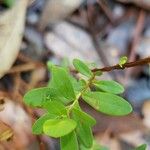
Hypericum hypericoides
St. Andrew's-cross
Description
Source: leafsnapHypericum hypericoides, commonly known as St. Andrew's cross or Aaron's beard, is a perennial herbaceous plant in the Hypericaceae family. Native to the southeastern United States, this plant thrives in wetlands, swamps, and along stream banks. St. Andrew's cross can grow up to 3 feet tall and features opposite, lance-shaped leaves with a glossy green appearance. Its bright yellow flowers, which have five petals arranged in a cross shape, resemble the Scottish flag of St. Andrew. The plant blooms from June through September, attracting bees, butterflies, and other pollinators with its nectar-rich flowers. Historically, Native Americans have used St. Andrew's cross for medicinal purposes, particularly as an anti-inflammatory agent for treating wounds and burns. This plant is easy to grow in moist soil conditions but can also tolerate dry soil once established. It is an excellent low-maintenance choice for gardeners looking to add color to their landscape while attracting pollinators.
🎭 Protection and renewal, cheerfulness and inspiration
Care Guide
💧 Water Every 7 days
St. Andrew's cross thrives in environments with occasional rainfall and is drought-tolerant. Water it sparingly, roughly every three weeks, and adjust based on natural rainfall. Its ability to withstand dry conditions makes it an excellent choice for gardens in areas with unpredictable precipitation.
How should I water my St. Andrew's cross plant?
Here are some tips to ensure excellent root development for your plants: 1. Place a garden hose at the base of the plant, avoiding direct spraying of the leaves. If the plants are outdoors and exposed to direct sunlight, keep in mind that the leaves will require more watering. 2. Consider using bubblers or soaker hoses to moisten the roots. Bubblers can be attached to each plant, while soaker hoses can cover the entire garden or bed. These methods help in deeply watering the roots. 3. After adding or removing plants, make sure to drain any excess water and wait for the soil to dry before watering again. 4. Water at ground level to prevent diseases. 5. On sunny days, it might be beneficial to spray the entire bush with water. 6. Regardless of whether the plants are potted or in-ground, keep in mind that St. Andrew's cross prefers deep watering instead of light sprinkling.
If I give St. Andrew's cross plant too much or too little water, what should I do?
If a St. Andrew's cross plant is overwatered, its leaves may turn yellow, drop off, and wilt. The plant might also appear dull and unhealthy, with mushy stems. In such cases, adjust your watering schedule when possible. Conversely, wilting can also indicate under watering. Under these circumstances, the leaves might become crispy and dry, while overwatered leaves will be soft and wilted. When the soil is dry and watering alone is insufficient, give the plant a thorough watering. Sufficient water will help the St. Andrew's cross recover, but the plant may still exhibit dryness and yellowing leaves for a few days due to root damage. Once it returns to normal, the yellowing of leaves will stop. If you keep a St. Andrew's cross plant indoors, always check the moisture levels in the pot. Avoid overwatering and watch out for black spots. If you notice black spots, allow the soil to dry in the pot for a few days without watering. Overwatering can lead to root rot. If your plant develops root rot, consider transferring it to a different pot, especially if you observe discolored and slimy roots. It is important to prevent root rot by avoiding excessively soggy soil. When planting a St. Andrew's cross plant outdoors, ensure that the soil is moist enough by digging a little deeper and checking with your fingers. If the soil is too dry, it may indicate underwatering. Adequate watering is necessary to help the plant recover.
How much should I water my St. Andrew's cross plant?
The St. Andrew's cross plant prefers deep and infrequent watering, especially when planted in pots. When watering, soak them in a gallon of water each time to account for the limited water storage in the pots. In cold regions, watering every 3 to 5 days is necessary. Water the plant early in the morning when the soil is dry, both indoors and outdoors. Check the soil moisture by feeling the top 2-3 inches of soil. If it's dry, give the plant a thorough watering. In hot weather, it's important to check the moisture daily as the soil can dry out quickly. If you have a garden, irrigation of the soil is required. In a hot climate, once a week watering is sufficient. Only water when the top 2 to 3 inches of soil become too dry, and consider the amount of rainfall before watering to prevent root rot. During spring and fall, St. Andrew's cross plants generally grow. When outdoors, use a 3 to 4-inch layer of mulch to conserve water. Sandy soil requires more frequent watering as it drains faster, while clay soil requires less frequent watering to prevent root rot. Mark the watering dates on the calendar and monitor the plant for drooping leaves as an indicator of needing water.
How much water should I give my St. Andrew's cross plant?
The St. Andrew's cross plant generally requires about a gallon of water on a regular basis. For potted plants, it is recommended to water them deeply until the water starts dripping from the bottom of the pot. Afterward, you should wait for the soil to dry before watering them again. To determine the amount of water you have given your plant in a week, you can use a water calculator or a moisture meter. During the flowering period, it is important to provide plenty of water but allow the moisture to evaporate afterwards to prevent root rot. If the St. Andrew's cross plant is planted outdoors and receives adequate rainfall, additional watering may not be necessary. However, when the plant is young or newly planted, it should receive 1-2 inches of rain per week. As the plant continues to grow, it can rely solely on rainfall. Only when the weather is excessively hot or there has been no rainfall for 2-3 weeks, you should consider giving the plant a full watering during cooler times of the day to prevent damage from high heat. Additional watering will be needed during prolonged dry spells.
Should I water my St. Andrew's cross more or less depending on the time of year or where I live?
The St. Andrew's cross plant requires water based on the weather conditions. In dry weather, it may only need watering. During the spring and fall, the soil should be kept moist but not soggy. Alternating dry and moist soil conditions are beneficial for growth. In the summer, hot weather can cause water to evaporate quickly, so extra watering may be necessary. During winter, the plant needs less water as it goes dormant. A well-draining soil mixture can help with moisture evaporation. Once the plant starts leafing out and going dormant, watering can be skipped, relying on fall and winter rains. After winter, encourage growth and blooming when temperatures rise. Good drainage is necessary to prevent ponding or drought. Potted plants have limited root growth and should be well-watered, especially in summer. Deep soaking once or twice a week is better than shallow sprinkles to avoid fungal growth and reach the roots. The plants should not be allowed to completely dry out, even during dormancy. Avoid overwatering and ensure proper soil drainage. Mulching is recommended to reduce stress, conserve water, and promote healthy blooms.
☀️ Light Partial sun
St. Andrew's cross prefers a moderate amount of sun each day but can adjust to both increased sunlight and periods with less light. At every stage of growth, fluctuations in light exposure do not greatly affect its health. Its native habitat has conditioned it to a variety of light conditions. Too much or too little sun will not cause serious damage.
What are the sunlight requirements for plants?
The sunlight requirements for plants vary based on their specific needs. Partial sun plants require about 3-6 hours of sunlight daily, while plants categorized under full sun or full shade need more than 6 hours of sunlight. It's important to observe the movement of sunlight through your garden to find spots that offer an optimal balance of light and shade, ensuring your plants thrive.
How does St. Andrew's cross adapt to different lighting conditions?
St. Andrew's cross is adaptable to varying light conditions due to its origin in diverse light environments. It prefers a moderate amount of sun but can handle both more and less light without significant harm. Artificial lighting can be useful indoors, especially where natural light is limited. LED lights are recommended for their ability to cater to the specific light needs of plants, with required wattage depending on whether plants are full sun, partial sun, or full shade varieties.
What symptoms indicate insufficient light for St. Andrew's cross?
Symptoms of insufficient light in St. Andrew's cross include smaller new leaves, leggy or sparse growth, faster leaf drop, slower or halted new growth, lighter-colored or chlorotic leaves, leaf curling, wilting, sunscald, and leaf scorching. These symptoms suggest the plant is struggling to adapt to the available light, indicating a need for better light exposure or artificial lighting solutions.
How can I improve light conditions for St. Andrew's cross?
To improve light conditions for St. Andrew's cross, gradually introduce the plant to more sunlight by relocating it to sunnier spots each week. For indoor plants, consider using artificial lighting, such as desk lamps or professional grow lights, for at least 8 hours daily. Outdoors, ensure the plant is gradually exposed to direct sunlight to avoid sunburn. If obstruction by trees is an issue, prune them to increase sun exposure. For small plants, consider transplanting during their dormant period to a location with better sunlight and drainage.
🌡️ Temperature 10–35°C
Because st. Andrew's cross is native to North America, it is suited to a broad range of temperatures. This plant does best between 50 to 95℉ (10 to 35℃). When cultivating st. Andrew's cross in different seasons, allow time for acclimation, since sudden temperature swings can affect its growth and flowering.
What temperature ranges are suitable for growing St. Andrew's cross?
St. Andrew's cross, native to North America and scientifically known as Hypericum hypericoides, is well-adapted to a broad range of temperatures, thriving in conditions from 50 to 95°F (10 to 35°C). The plant demonstrates strong cold resistance, making special frost protection measures unnecessary in most cases. However, in regions where winter temperatures plummet below -25°C, it's crucial to take steps to protect the plant, such as wrapping the trunk and branches with insulating materials. Additionally, watering the plant abundantly before the onset of the first freeze in autumn helps it retain moisture through the winter, aiding in its survival and growth during colder months.
How does St. Andrew's cross react to extremely low temperatures?
St. Andrew's cross is highly cold-tolerant and can generally withstand winters well, provided temperatures stay above -15°C. In instances where temperatures dip below -25°C, the plant may not show immediate adverse effects during winter. However, come spring, the branches might become brittle, dry, and unable to produce new shoots. The recommended solution for dealing with these after-effects is to prune any dead branches in the spring to encourage the growth of new leaves and shoots.
What should I do if St. Andrew's cross experiences very high temperatures?
During the summer months, maintaining temperatures below 35°C is ideal for St. Andrew's cross. Exposure to temperatures above 41°C can lead to symptoms such as lighter leaf coloration, dry and withered leaf tips, and an increased susceptibility to sunburn. To mitigate these issues, it's advisable to trim away sunburned and dried parts of the plant and relocate it to a shadier spot or utilize shade cloth to protect it from intense midday and afternoon sun. Additionally, watering the plant in the early morning and evening can help keep the soil moist and further protect the plant from heat stress.
💨 Humidity normal (40-60%)
This plant will thrive in moderate humidity, which is probably the level in your home. However, misting it a few times a week can be very beneficial. Make sure the room has good ventilation.
🪴 Soil 5-6
🌱 Fertilizer
Apply fertilizer to your St. Andrew's cross in early spring to encourage healthy growth. Regular fertilizing improves overall health, producing vigorous growth, better tolerance of harsh conditions, and increased resistance to pests and diseases. Keep a consistent fertilization schedule for your St. Andrew's cross to maintain vibrant foliage with deep color and a lush look.
🪴 Pot & Repot
✂️ Pruning
St. Andrew's cross is a plant known for its yellow, cross-shaped flowers. To keep it healthy and promote new growth, it is important to prune it in late spring. Start by cutting back older stems and removing any damaged branches. Pruning after the plant flowers will enhance blooms for the next season, increase density, strengthen its structure, and reduce the risk of disease, ensuring the plant's vitality.
🌿 Propagating
🐛 Diseases & pets
☠️ Toxicity
Characteristics
- Plant Type
- Shrub
- Life Cycle
- Perennial
- Genus
- Hypericum
- Family
- Hypericaceae
- Hardiness Zone
- 6-10
- Mature Height
- 1.22 m
- Mature Spread
- 1.52 m
- Leaf Color
- Green
- Leaf Type
- Deciduous
- Flower Color
- Yellow
- Flower Size
- 1.02 cm to 2.03 cm
- Bloom Time
- Early summer, Mid summer
- Planting Time
- Spring
- Harvest Time
- Mid summer