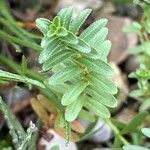
Hypericum orientale
Description
Source: wikipedia (CC BY-SA)Hypericum orientale, the Ptarmic-leafed St. John's wort or Eastern St. John's wort, is a flowering plant in the family Hypericaceae. It is distributed across northern Turkey, Georgia, the Caucasus, and Dagestan. The species can be found on stony sloped amidst volcanic rocks in the mountains and in light woodlands at elevations of up to 2,300 m (7,500 ft). It flowers from May to June and July to August. The plant has small, bright yellow flowers and grows across the ground in a creeping pattern. It prefers full sun and is ideal for rock gardens, and is hardy down to -30°F.
Care Guide
💧 Water
Hypericum orientale is drought-tolerant but cannot survive in waterlogged conditions. For the first year, water the plant with 25 mm of water each week. In areas with sufficient rainfall, additional watering is not needed. Starting from the second year, the plant depends on natural precipitation, as over-watering can lead to root rot and leaf wilting.
☀️ Light Full sun
Hypericum orientale is a sun-loving herbaceous perennial plant native to open habitats and commonly thriving in meadows and grasslands. It favors full sun but can also tolerate partial sun.
What are the sun requirements for Hypericum orientale?
Hypericum orientale, also known by its botanical name Hypericum orientale, thrives in areas that receive full sun to partial sun. Full sun means the plant should receive above 6 hours of sunlight daily, while partial sun refers to about 3-6 hours of sunlight per day. It's important to observe the way sunlight moves through your garden throughout the day. Selecting the right spots that offer a harmonious balance of light and shade can significantly influence the wellbeing of your plants. By doing so, you ensure that your Hypericum orientale gets the ideal conditions to flourish.
🌡️ Temperature 5–35°C
Hypericum orientale can tolerate a wide variety of temperature conditions, but its distribution may still be restricted by different combinations of moisture and heat. It grows best in warm summer climates with sufficient rainfall or watering. Extended periods of cloudy, rainy weather, as well as prolonged high temperatures, can raise the chance of Hypericum orientale dying. In winter, adequate protection from cold can increase the plant’s survival rate.
💨 Humidity
🪴 Soil 6-8
🌱 Fertilizer
The best time to fertilize Hypericum orientale is in early spring, as it is coming out of dormancy and starting active growth. Fertilization supplies essential nutrients for healthy development. While Hypericum orientale has relatively low fertilizer requirements, applying fertilizer annually can improve its survival and encourage better, longer-lasting flowers.
🪴 Pot & Repot
✂️ Pruning
Hypericum orientale is known for its bright yellow flowers and bushy growth habit. To encourage healthy growth, maintain its shape, and improve air circulation, it is best to prune the plant from early to late spring, after it has finished flowering. Regular pruning helps prevent legginess and supports vigorous blooming.
🌿 Propagating
🐛 Diseases & pets
☠️ Toxicity
Characteristics
- Plant Type
- Herb, Shrub
- Life Cycle
- Perennial
- Genus
- Hypericum
- Family
- Hypericaceae
- Hardiness Zone
- 5-9
- Mature Height
- 30 cm to 61 cm
- Mature Spread
- 20 cm to 40 cm
- Leaf Color
- Green, Dark Green
- Leaf Type
- Deciduous
- Flower Color
- Yellow
- Flower Size
- 2.03 cm to 3.05 cm
- Bloom Time
- Summer
- Planting Time
- Spring, Summer, Autumn
- Harvest Time
- Late summer, Early fall, Mid fall
- Native Area
- Armenia, Turkey