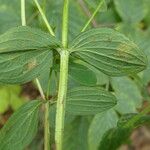
Hypericum tetrapterum
St. Peter's-wort · Square-stalk St. John's-wort · Square-stalked St John's-Wort · Square-stemmed St John's-wort · St Peter's-wort
Description
Source: leafsnapHypericum tetrapterum (syn. H. quadrangulum) is a herbaceous perennial plant species in the flowering plant family Hypericaceae. Its common names include St. Peter's wort, Peterwort, square stemmed St. John's wort, and square stalked St. John's wort.
Care Guide
💧 Water
St. Peter's wort is adapted to thrive in its native moist environments, so it needs to be watered regularly, about once a week. While it can tolerate moderate drought, the plant truly flourishes in consistently humid conditions. As an herbaceous perennial, keeping the soil moist during its growing season will help support its lush foliage and vibrant flowers.
How should I water my St. Peter's wort in the best way?
When watering the St. Peter's wort, it's best to use filtered water at room temperature. Tap water may contain harmful particles, so filtered water is safer. The plant prefers warm water because it comes from a warm environment, and cold water can be a shock. Avoid overhead watering to prevent foliage issues. Instead, apply filtered room temperature water to soak the soil completely. This helps moisten the roots and allows them to spread and absorb nutrients effectively.
What should I do if I give too much or too little water to my St. Peter's wort plant?
Overwatering and underwatering can both harm the health of your St. Peter's wort, but overwatering is more commonly encountered. When this plant receives excessive water, its stems and leaves may wilt and turn yellow. Prolonged overwatering can also lead to diseases like root rot, mold, and mildew, which can be fatal. Underwatering is less common for St. Peter's wort because it can tolerate drought well. However, it is still possible, and when it happens, the leaves may become brittle and brown. It is important to detect signs of overwatering quickly when caring for your St. Peter's wort since some diseases caused by overwatering, such as root rot, cannot be reversed if left unaddressed for too long. If you notice early signs of overwatering, reduce your watering schedule immediately. Additionally, check the soil quality where your St. Peter's wort grows. If it drains poorly, replace it with a loose, well-draining potting mix. On the other hand, if your plant shows signs of receiving too little water, simply increase your watering frequency until those signs disappear.
How much water does my St. Peter's wort plant need?
Here are some tips for watering your St. Peter's wort: - Don't hold back on the amount of water you give it. - Check if the top two to three inches of soil are dry. - If they are, give it a good, thorough watering. - Make sure the water completely soaks the soil. - Add enough water so that it flows through the drainage holes at the bottom of the pot. - If you don't see excess water draining, you might not have given it enough water. - Be careful not to let water accumulate inside the soil, as it can harm the plant. - If water doesn't drain well from the pot, it could indicate poorly draining soils, which is bad for the plant. - If the plant is outside, around 1 inch of rain per week should be enough.
At different stages of growth, how should I water my St. Peter's wort?
The water needs of the St. Peter's wort can vary depending on its growth stages. In the early years or after transplanting, it requires more water. During these stages, the plant focuses on developing roots for future growth, so providing additional moisture is beneficial. As the plant matures, it requires less water. Another growth stage that requires more water is the bloom period, as flower development relies on moisture.
How should I water my St. Peter's wort at different times of the year?
The St. Peter's wort has different water needs depending on the season. In the summer, when it's hottest, you may need to water the plant more frequently, potentially even multiple times per week if the soil dries out quickly. However, during the winter, the plant goes into a dormant phase and needs much less water. In fact, you might not have to water it at all during the winter months. If you do decide to water it, make sure to do so sparingly, about once per month, as overwatering during this time can increase the risk of disease.
☀️ Light Full sun
St. Peter's wort flourishes optimally under strong light exposure all day, which is in accordance with its naturally sunlit environment. A plentiful supply of light promotes robust development. Insufficient light can obstruct this growth, while excess light can lead to burning. These lighting necessities generally do not vary greatly throughout diverse growth phases.
What are the sunlight requirements for St. Peter's wort?
St. Peter's wort requires full sun, meaning it needs more than 6 hours of direct sunlight daily, to thrive. This aligns with its natural habitat, which is typically very sunny. The plant is versatile, also growing well in partial sun, which is about 3-6 hours of sunlight. It's important to watch how sunlight moves through your garden to choose spots that offer the right balance of light for the plant.
Why is light important for St. Peter's wort, and how can artificial lighting be used?
Light is crucial for the healthy growth of St. Peter's wort, as it mirrors the plant's sunny natural habitat. Inadequate light can hinder growth, while excessive exposure can cause damage. During periods of low natural light, such as in winter or less sunny spaces, artificial lighting can provide a vital solution. LED lights are recommended due to their ability to be customized to specific light wavelengths needed by the plant. For full sun plants, 30-50W/sq ft of artificial light is optimal, partial sun plants require 20-30W/sq ft, and full shade plants need 10-20W/sq ft. The light source should be placed 12-36 inches above the plant, and most plants need 8-12 hours of light per day.
What are the symptoms of improper lighting for St. Peter's wort?
Symptoms of poor lighting for St. Peter's wort include smaller new leaves, leggy or sparse growth, faster leaf drop, slower or no new growth, lighter-colored or pale new leaves, chlorosis (yellowing leaves), sunscald, leaf curling, wilting, and leaf scorching. These symptoms highlight the importance of optimal lighting conditions for the plant's health.
How can I improve light conditions for St. Peter's wort indoors and outdoors?
To improve light conditions for St. Peter's wort indoors, gradually move the plant to a sunnier location until it receives at least 6 hours of direct sunlight daily. A south-facing window is ideal. For large or immovable plants, consider using artificial lights for at least 8 hours daily. Outdoors, adjust the plant's position gradually to prevent sunburn, aiming for a spot with the best sunlight exposure. If your plant suffers from inadequate sunlight, focus on improving conditions for new growth, as parts of the plant already affected may not recover.
What are some effective strategies for managing sunlight exposure for St. Peter's wort?
Effective strategies for managing sunlight exposure include reducing obstructions that block sunlight, such as by pruning trees or moving the plant to a more suitable location. For smaller plants, consider transplanting during their dormant period, usually in late winter or early spring, to a location with ample sunlight and good drainage. These measures can help ensure your St. Peter's wort receives the necessary sunlight for healthy growth.
🌡️ Temperature 5–35°C
St. Peter's wort can adjust to several temperature conditions, however, variations in heat and water conditions can restrict its spread. It flourishes optimally in hot climates during summer, provided there's sufficient rain or water supply. Extended durations of overcast and wet weather, coupled with sustained high temperatures, could heighten the chances of this plant perishing. During winter, safeguarding the plant against the cold may enhance its chances of survival.
What is St. Peter's wort?
St. Peter's wort, botanically known as Hypericum tetrapterum, is a plant species recognized by its unique characteristics. Although specifics about its essentials, such as general description and additional information, were not provided, the botanical designation helps in identifying the species within the large genus Hypericum.
💨 Humidity
🪴 Soil 5-7
🌱 Fertilizer
The optimal period to feed a St. Peter's wort is at the beginning of spring, as it awakens from its dormant phase and begins to actively grow. Fertilizing offers essential nutrients needed for robust growth. While St. Peter's wort does not require excessive fertilization, delivering nutrients annually can aid its longevity and encourage improved, sustained blooming.
Why do I have to put fertilizer on my St. Peter's wort?
The main structure of the St. Peter's wort consists of its leaves, and fertilization is the most effective way to ensure that the leaves look great and fulfill their function. Proper fertilization promotes consistent color and a healthy texture in the leaves, while also benefiting the plant's roots. Fertilization not only helps generate new roots, but also maintains existing roots in the root system. This ensures the plant remains healthy and enhances its ability to absorb nutrients from the soil in the long run.
When should I fertilize my St. Peter's wort for best results?
When growing your St. Peter's wort outdoors, it will start growing new leaves in early spring. This is a signal to start fertilizing for the year. Normally, a single application of fertilizer in spring is enough for the plant to thrive. However, if you want to encourage maximum growth, you can fertilize multiple times during spring and early summer. In this case, you can feed your St. Peter's wort approximately once every month to a month and a half.
When should I not add fertilizer to my St. Peter's wort?
During the late fall and winter, your St. Peter's wort goes into a dormant phase and stops growing. During this time, it's best to avoid fertilizing it. In the spring and summer, if you choose to fertilize, gradually decrease the amount as summer approaches because the plant's growth rate slows down. In general, avoid fertilizing your St. Peter's wort during extremely hot weather or when the soil is very dry. Fertilizing in these conditions can stress the plant and cause it to die prematurely.
What kind of fertilizer should I use for my St. Peter's wort?
Choosing the best fertilizer for a St. Peter's wort is simple. A general-purpose garden fertilizer with equal parts nitrogen, phosphorus, and potassium, like a 10-10-10 ratio, works well. Avoid high-nitrogen fertilizers if unsure. Granular fertilizers are recommended and should be slow-release for easy application to the soil. Using organic soil amendments like compost can also be beneficial for feeding St. Peter's wort.
How can I give nutrients to my St. Peter's wort plant?
1. Wait until early spring when your St. Peter's wort starts showing its first leaves. 2. Once you see the leaves, apply a balanced slow-release fertilizer to the soil surrounding the base of the plant. 3. You can repeat this process later in the season if you want. 4. When applying fertilizer, focus on the soil at the base of the plant, not on the plant itself. You might need to move some leaves to access the soil above the roots. 5. It's a good idea to water your St. Peter's wort before and after feeding it.
🪴 Pot & Repot
✂️ Pruning
St. Peter's wort is known for its bright yellow flowers and flourishes in moist environments. To improve airflow and encourage healthy growth, prune dead branches and thin out crowded areas from early to late spring. Regular pruning not only enhances growth and bloom production but also helps maintain the plant's shape. Be sure to use clean, sharp tools to prevent both damage and disease.
🌿 Propagating
🐛 Diseases & pets
☠️ Toxicity
Characteristics
- Plant Type
- Herb
- Life Cycle
- Perennial
- Genus
- Hypericum
- Family
- Hypericaceae
- Hardiness Zone
- 5-9
- Mature Height
- 61 cm
- Mature Spread
- 61 cm
- Leaf Color
- Green, Blue
- Leaf Type
- Deciduous
- Flower Color
- Yellow
- Flower Size
- 1.02 cm to 1.52 cm
- Bloom Time
- Summer
- Planting Time
- Spring, Summer, Autumn
- Harvest Time
- Late summer, Early fall, Mid fall
- Native Area
- Libya, Turkey, Sweden, Austria, Slovakia, Slovenia, Morocco, Croatia, Belarus, Russia, Iraq, Germany, Romania, Belgium, Netherlands, France, Czech Republic, Bulgaria, Armenia, Poland, Greece, Ukraine, Lebanon, Serbia, Syria, Italy, Spain, Switzerland, Denmark, Iran, Albania, Ireland, United Kingdom, Hungary, Algeria, Azerbaijan