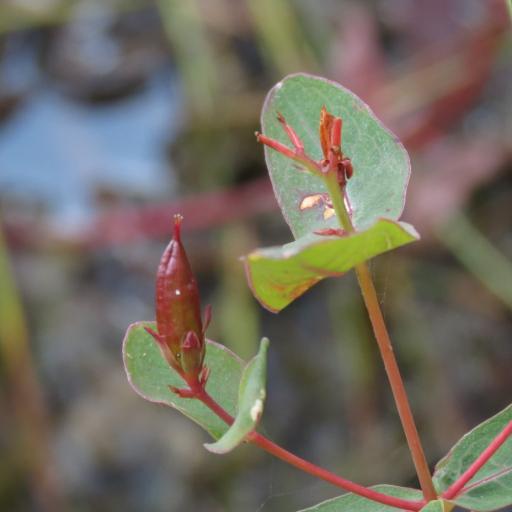
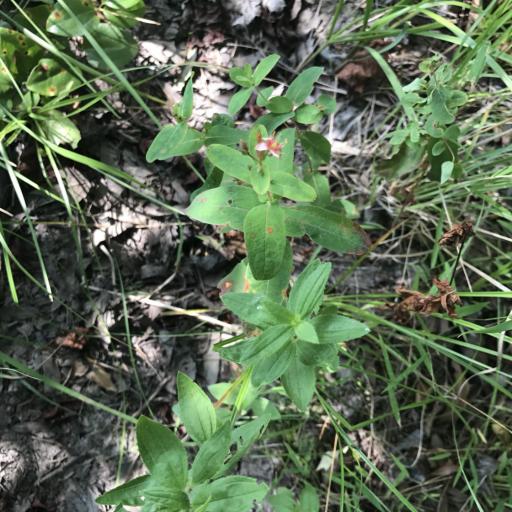
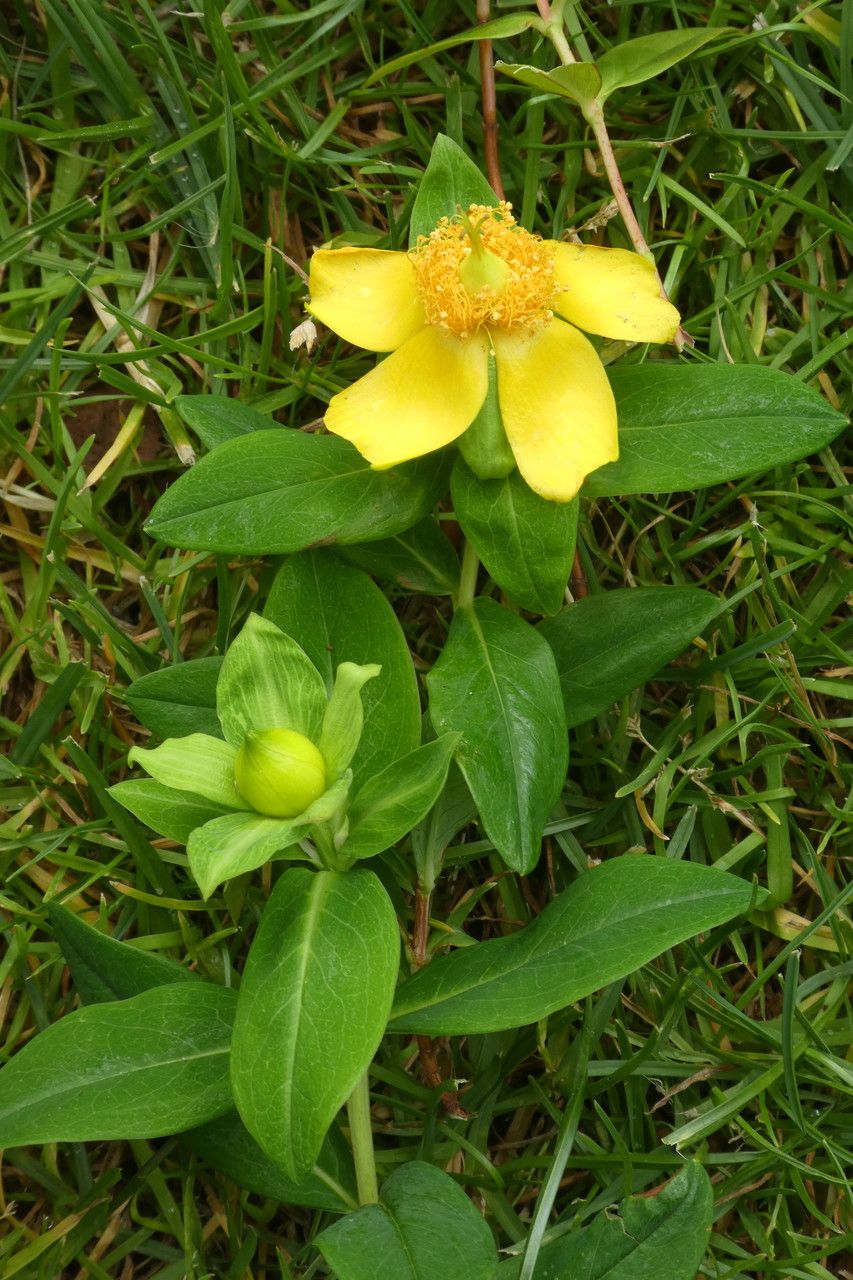
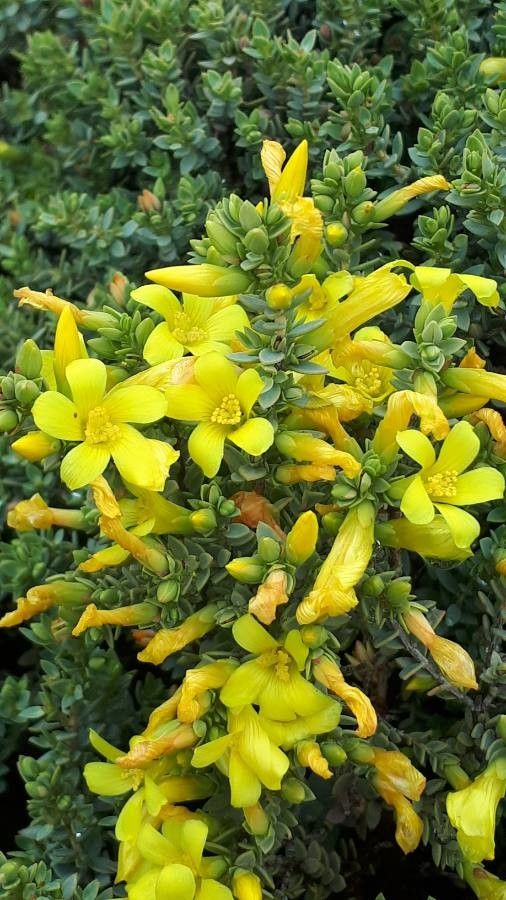
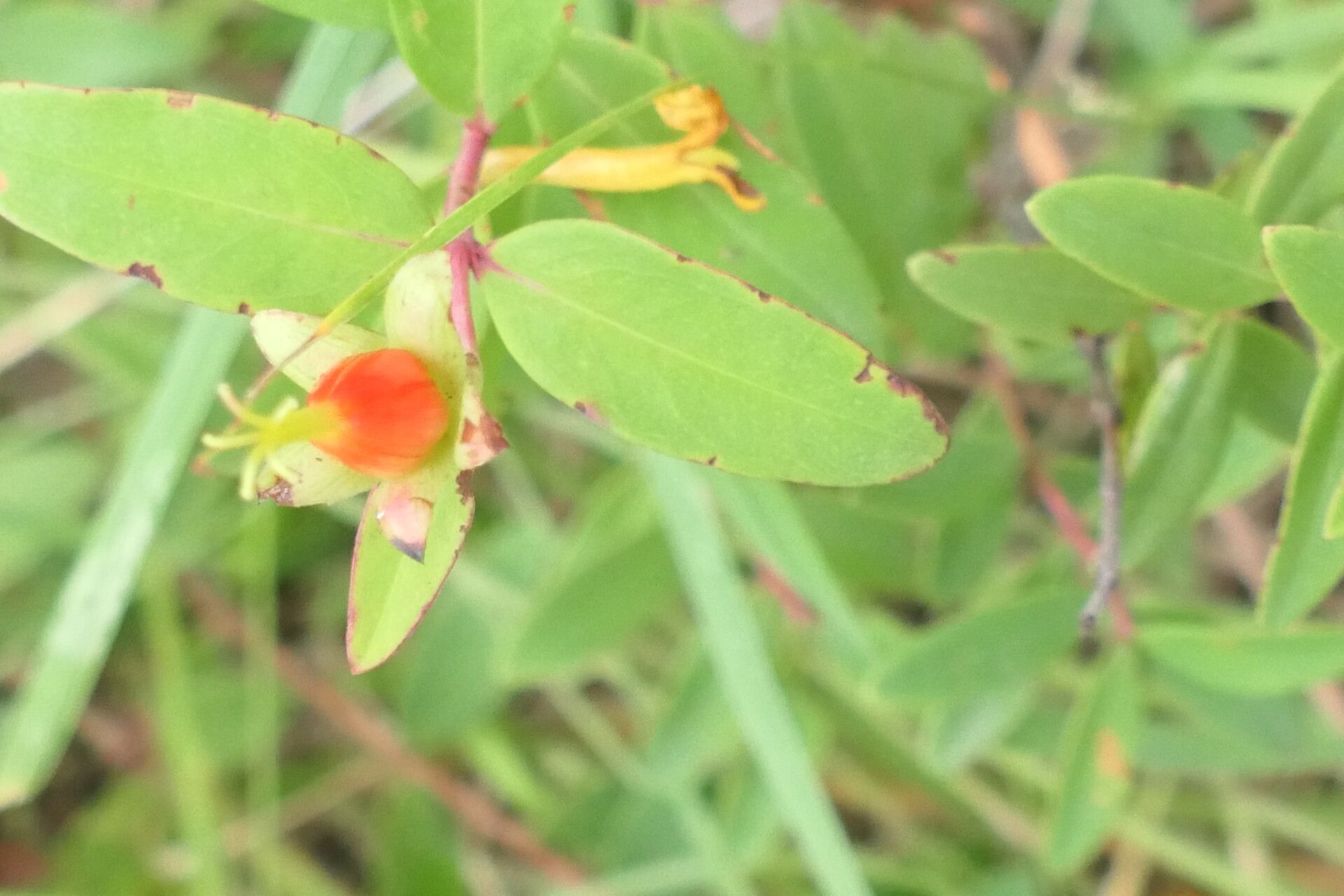
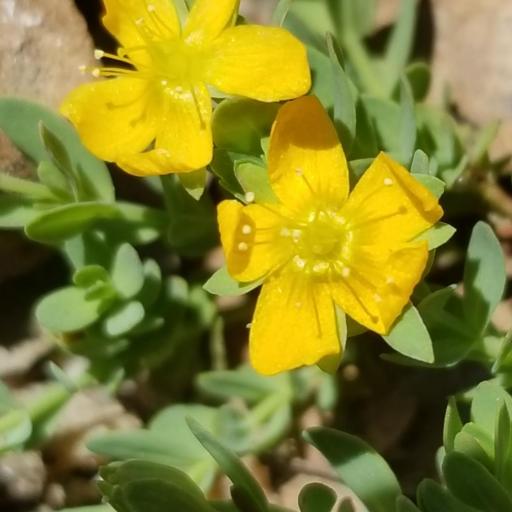
Hypericum virginicum (Triadenum virginicum), the marsh St. Johns-wort or Virginia marsh St. Johnswort, is a species of flowering plant in the family Hypericaceae. It is native to the central and eastern United States and eastern Canada. Hypericum virginicum is a small herbaceous plant growing up to 70 cm (28 in) in height. Its leaves are sessile and opposite, sometimes clasping. The flowers grow up to 15 mm (0.6 in) in diameter, with 5 pink petals. It flowers in the summer to early fall and grows in bogs, wet meadows, fens, swamps, and along lakeshores. It can be distinguished from the closely related Hypericum fraseri by its longer, acute sepals, and longer styles. It was originally described as Hypericum virginicum L. in 1759, but long considered a member of a separate genus, Triadenum.
Virginia marsh St. John's wort has strong disease resistance and is generally not prone to illnesses. Still, it can be affected by pests and diseases present in its surroundings. Such infections are typically mild. Regarding care, this plant needs moderate maintenance. It should be pruned regularly to maintain a tidy appearance and encourage healthy growth. Applying fertilizer can also help stimulate flowering. Virginia marsh St. John's wort is well suited to anyone with outdoor space, such as a garden or patio, and does not require extensive gardening experience. It may demand more attention if grown indoors.
How to keep Hypericum Virginicum.
Light
Virginia marsh St. John's wort generally thrives in places with moderate sunlight. This preference for partly bright conditions stays consistent through every stage of its growth. It originates in habitats where constant full sun is uncommon. Excessive exposure can cause growth problems, while insufficient light may lead to stunted development.
Temperature
Virginia marsh St. John's wort is native to areas with temperatures of 59 to 95 °F (15 to 35 ℃). It prefers not to change its temperature tolerance seasonally. Any temperature variation within that range is considered suitable.
Fertilizer
The best time to fertilize a Virginia marsh St. John's wort is in early spring, when it is coming out of dormancy and beginning active growth. Fertilization supplies essential nutrients needed for healthy development. Although this plant has relatively low fertilizer requirements, applying fertilizer annually can improve its survival and encourage better, longer-lasting flowers.
Botanical profile.
- Plant Type
- Herb
- Life Cycle
- Perennial
- Genus
- Hypericum
- Family
- Hypericaceae
- Hardiness Zone
- 8-10
- Mature Height
- 61 cm
- Mature Spread
- 1.52 m
- Leaf Color
- Green
- Leaf Type
- Semi-evergreen
- Flower Color
- Pink
- Flower Size
- 1.52 cm
- Bloom Time
- Mid summer, Late summer, Early fall
- Planting Time
- Spring, Summer
- Harvest Time
- Fall
Other names.