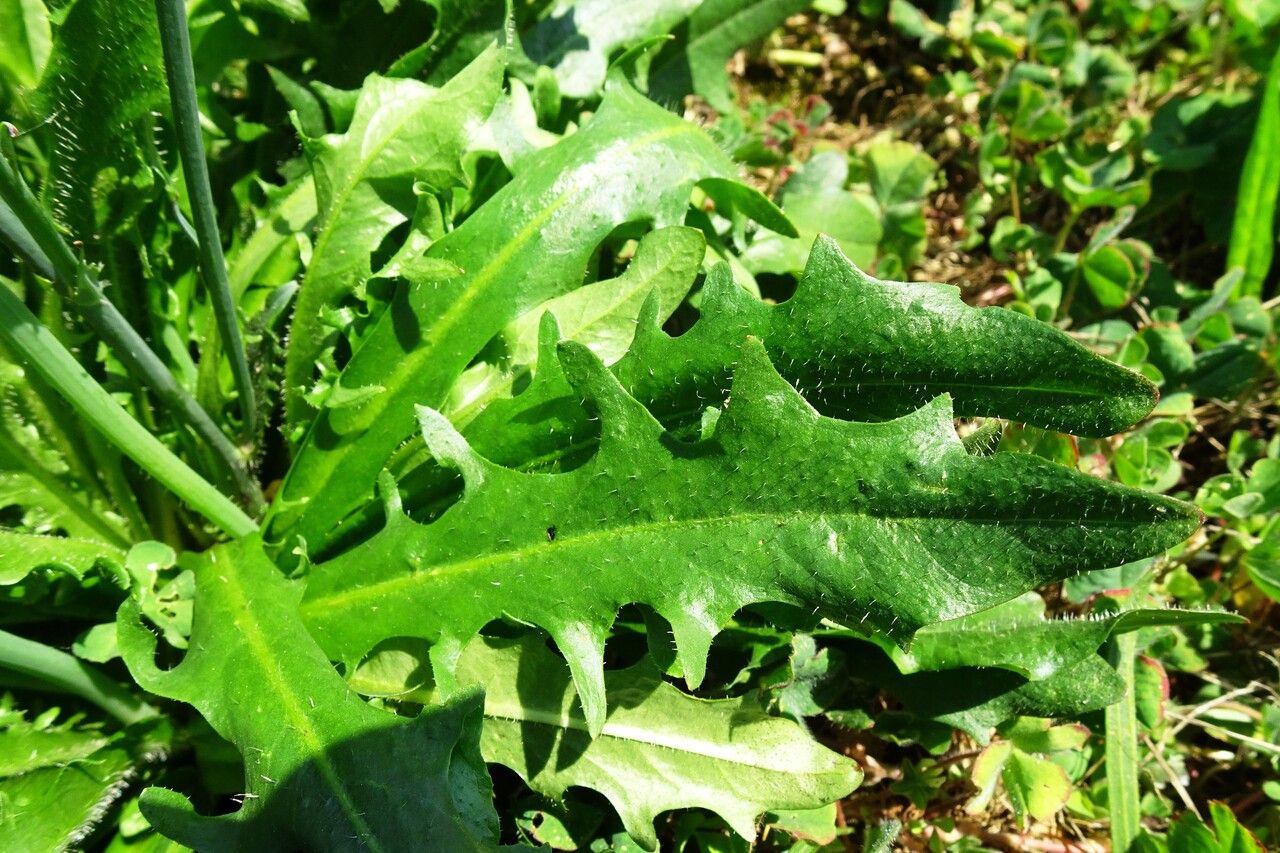
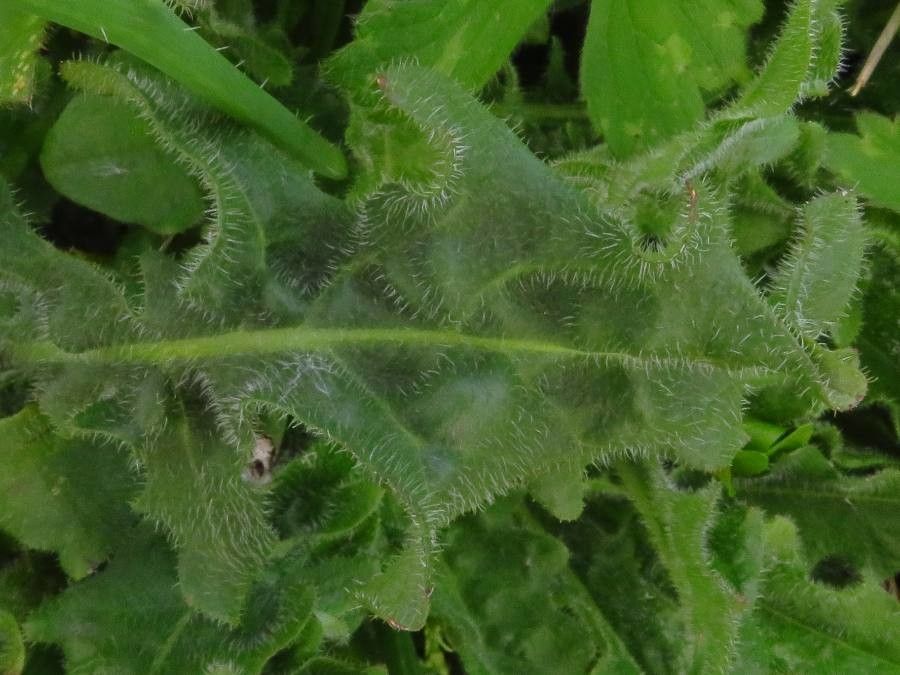
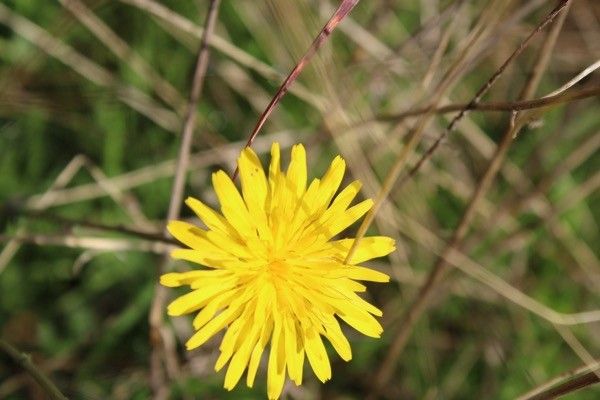
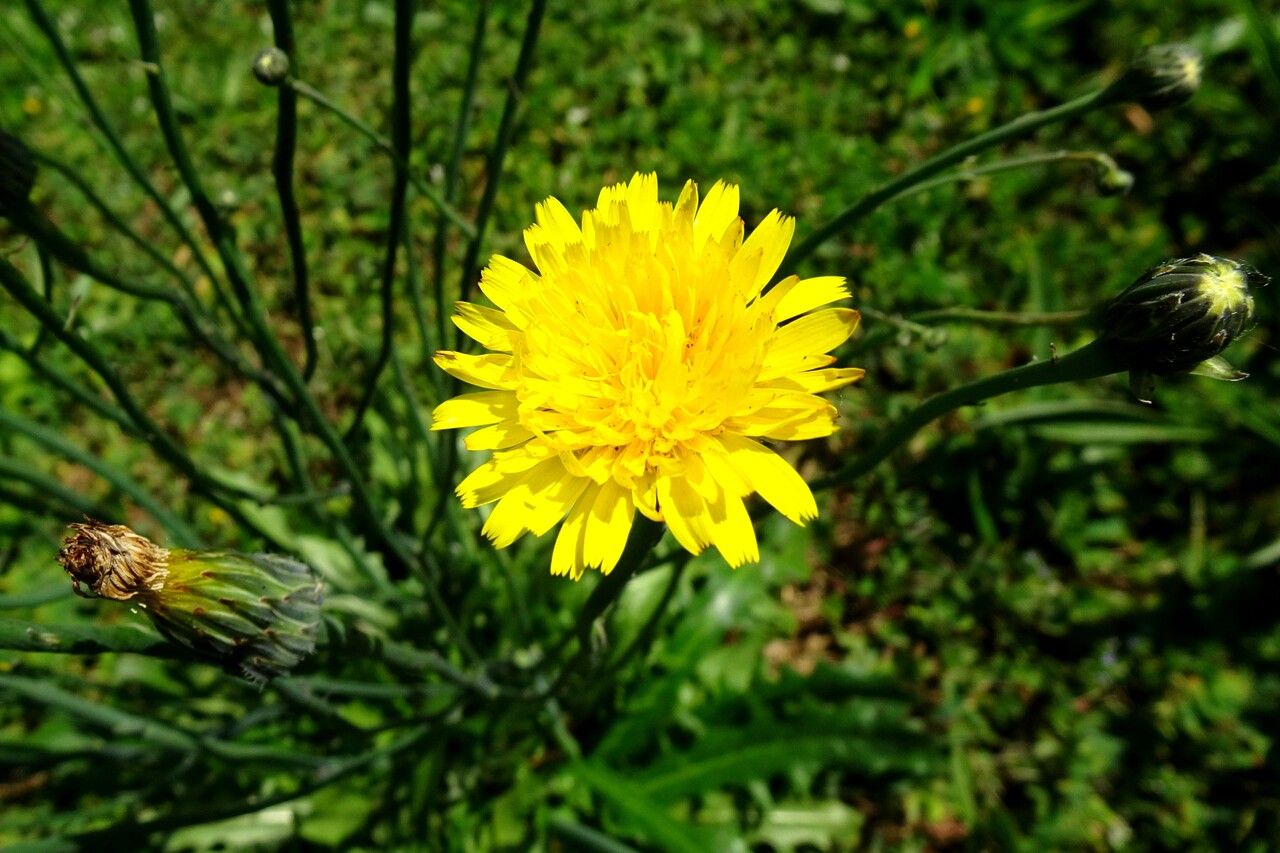
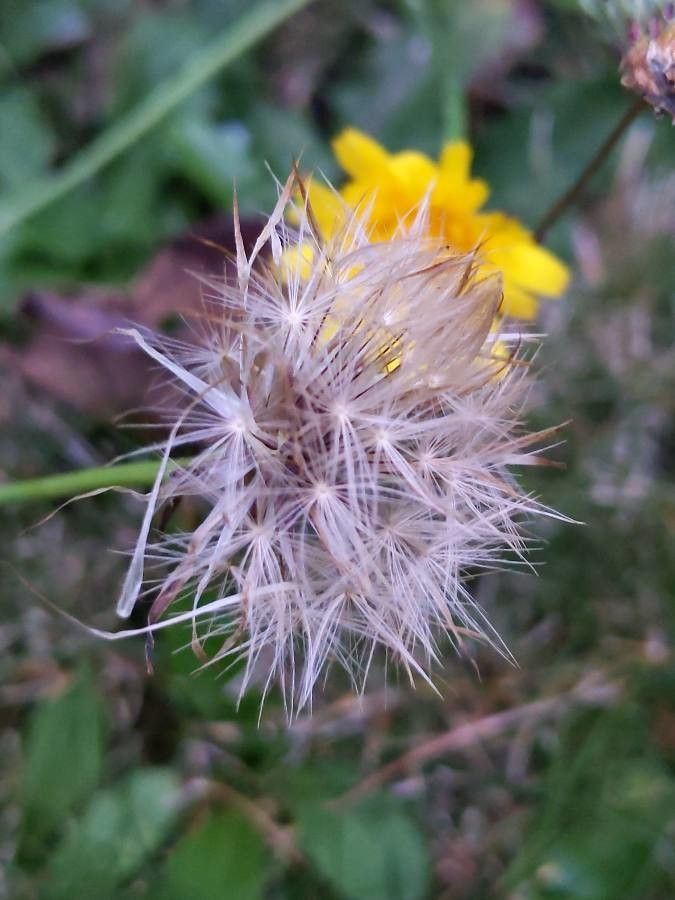
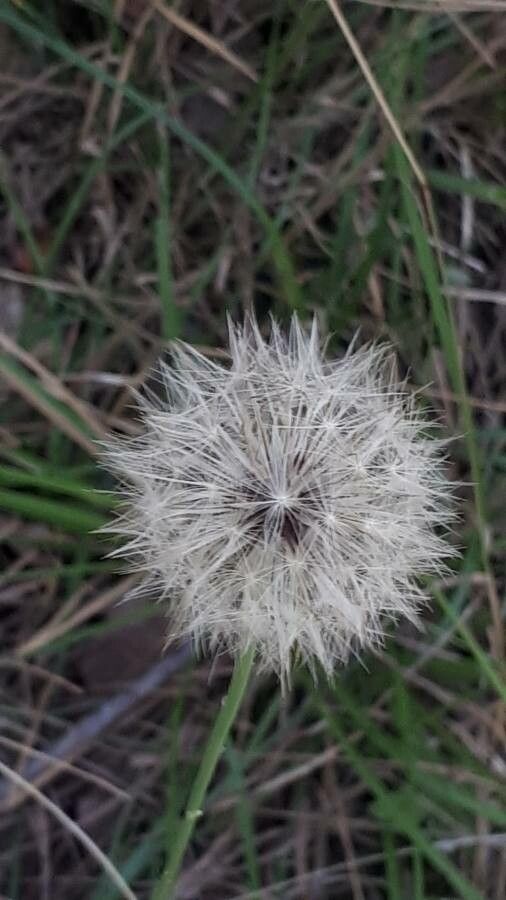
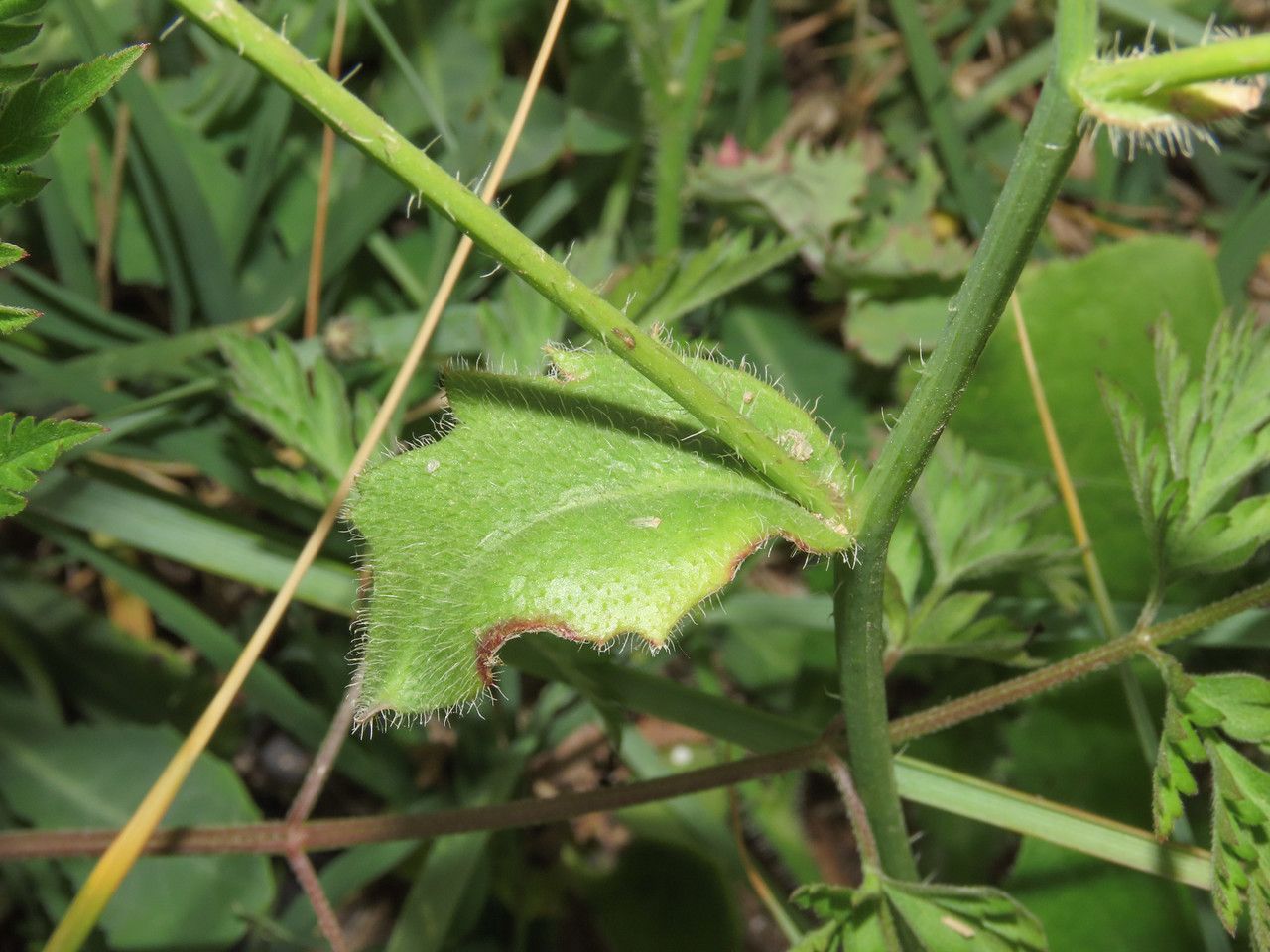
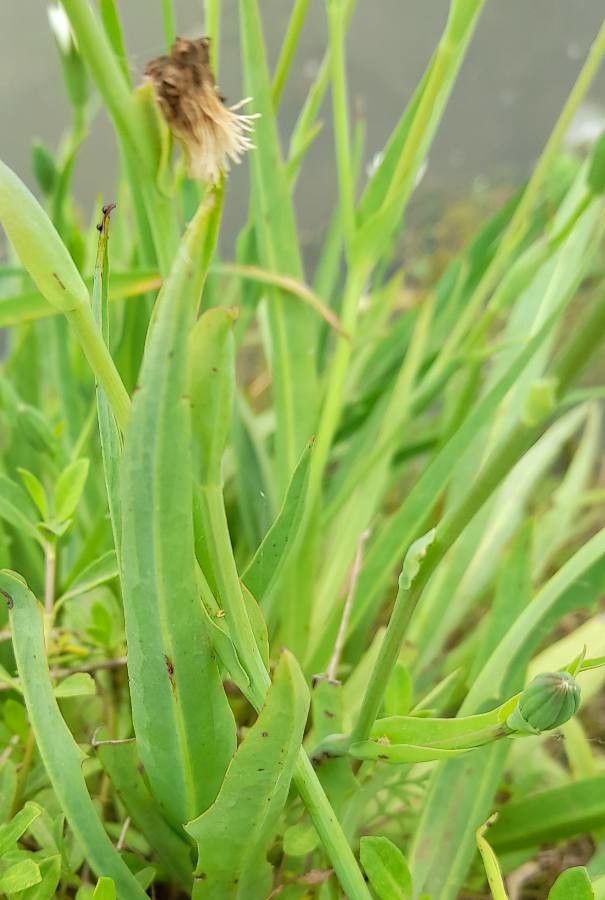
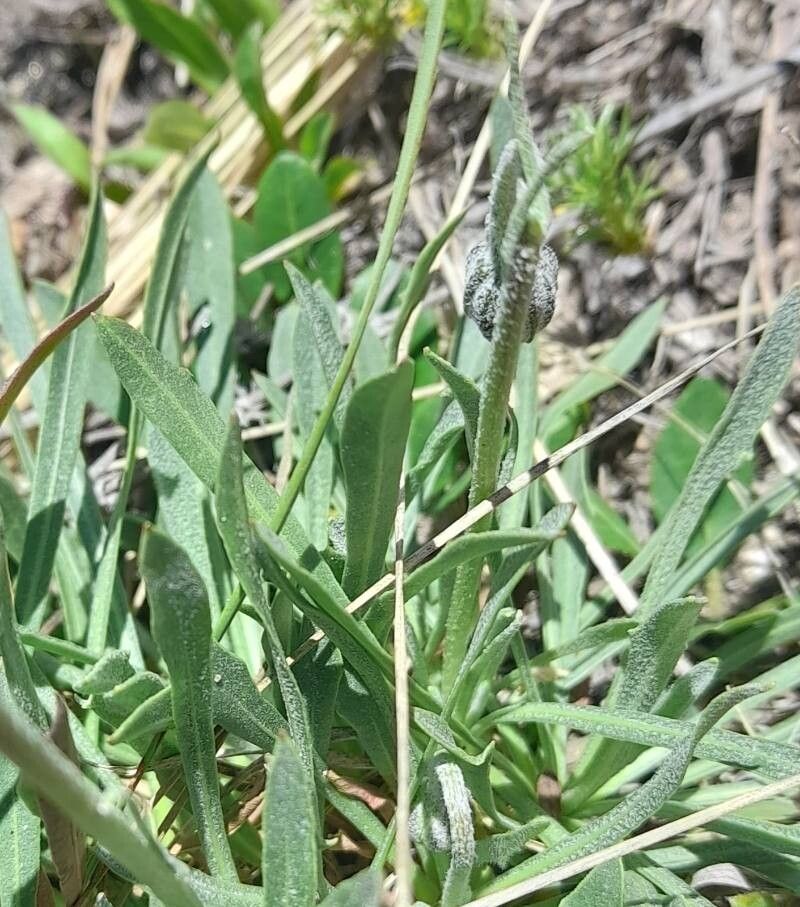
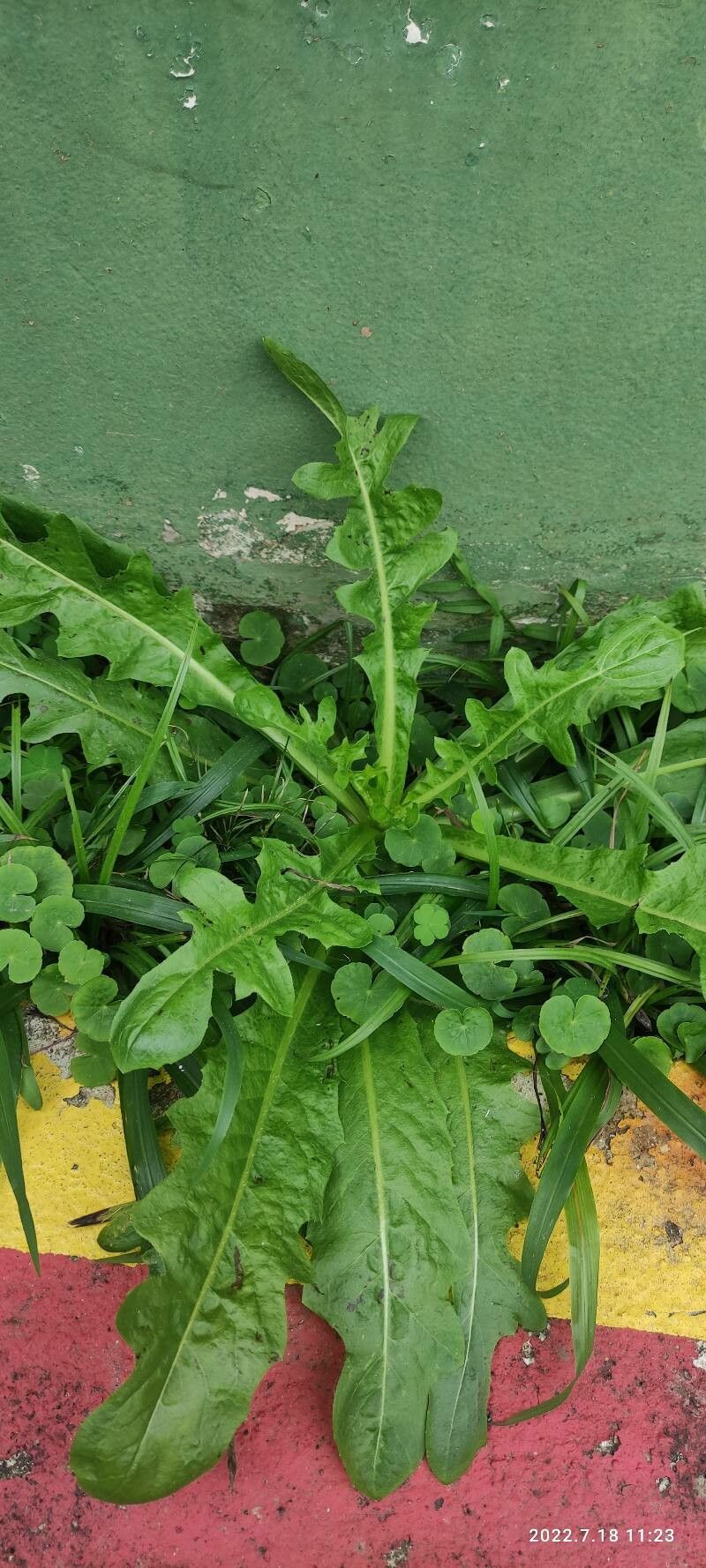
Hypochaeris radicata, commonly known as cat's ear or flatweed, is a perennial herbaceous plant in the Asteraceae family. Native to Europe, it has been introduced to many other parts of the world, including North America and Australia. The plant can grow up to 50 cm tall and features a basal rosette of hairy, toothed leaves. Its stem is also hairy and supports yellow flowers that bloom from May through September. These flowers are daisy-like, with yellow petals encircling a brownish-yellow center. Cat's ear thrives in well-drained soils under full sun or partial shade. It is commonly found in meadows, pastures, lawns, roadsides, waste areas, and disturbed sites. For centuries, cat's ear has been valued for its medicinal properties, particularly its anti-inflammatory effects, which can help alleviate pain from arthritis and other inflammatory conditions. Additionally, cat's ear is an important food source for pollinators, such as bees and butterflies, due to its nectar-rich flowers. In summary, Hypochaeris radicata is an attractive wildflower that not only has medicinal properties but also plays a crucial role in supporting pollinators within the ecosystems it inhabits.
How to keep Hypochaeris Radicata.
Water
Its deep taproot and ability to draw considerable amounts of water from an area may lend a competitive advantage to this species in arid or semi-arid habitats. It prefers dry or moist soil. Hypochaeris radicata like moist soil, so you should water them regularly to keep them hydrated. Make sure that the top two inches of the soil are dry before each round of watering.
Humidity
This plant will thrive in moderate humidity, which is probably the level in your home. However, misting it a few times a week can be very beneficial. Make sure the room has good ventilation.
Temperature
It is hardy to UK Zone 5 and is not susceptible to frost damage.
Toxicity
Hypochaeris radicata is suspected of causing stringhalt in horses if consumed in excess.
Further reading →
The toxicity and danger assessments provided are for reference only. We do not assure their accuracy, so it's crucial not to depend on them. Seek professional advice when necessary for accurate guidance.
Botanical profile.
- Genus
- Hypochaeris
- Family
- Asteraceae
Other names.