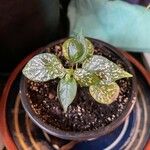
Hypoestes phyllostachya
گل سنگ · Polka-dot-plant · Polka-dot plant · Flamingo-plant · Measlesplant
Description
Source: leafsnapHypoestes phyllostachya, commonly known as the Polka Dot Plant, is a popular houseplant native to Madagascar. Belonging to the Acanthaceae family, it is celebrated for its attractive foliage. The plant features oval-shaped leaves adorned with small pink or white spots, giving it a unique and eye-catching appearance. When grown indoors, the Polka Dot Plant can reach up to 12 inches in height and 18 inches in width. It thrives in bright but indirect light and prefers well-draining soil that is kept moist but not waterlogged. The plant can be easily propagated through stem cuttings or by dividing the root ball. Regular pruning is necessary to maintain the Polka Dot Plant's shape, as it tends to become leggy over time. It also benefits from occasional fertilization during the growing season. The plant has no major pest or disease issues but may be susceptible to spider mites if grown in dry conditions with low humidity levels. Overall, Hypoestes phyllostachya makes an excellent addition for indoor gardeners seeking an easy-to-care-for houseplant with unique foliage patterns that add color and interest to any space.
💡 The polka dot plant is a popular choice for glass terrarium setups. It is one of the few plants that thrive in these conditions. Its suitability comes from its compact growth, tolerance for high humidity, and attractive foliage.
🌳 The polka dot plant is commonly valued for its decorative appeal, and a less well-known fact is its ability to enhance indoor air quality. Research has shown that certain ornamental plants, including the polka dot plant, can absorb volatile organic compounds from the air, thereby helping to create a healthier indoor environment.
🎭 Forbearance
Care Guide
💧 Water Every 7 days
The polka dot plant thrives in humid environments similar to its native tropical rainforest habitat. While it can tolerate some drought, it still needs to be watered weekly to ensure it stays moist. As an evergreen plant, it conserves water in its leaves, which means it requires less frequent watering than deciduous plants.
When Should I Water My Polka Dot Plant?
The ideal time to water your Polka Dot Plant, Hypoestes phyllostachya, is when the top 1-2 inches of soil are dry, which can be assessed by inserting your finger into the soil up to the second knuckle. Other signs indicating the need for water include wilting and drooping leaves, which signify dehydration. However, it's important not to wait until the leaves are severely drooping. Additionally, slow or stunted growth and the condition of the roots, where brown and mushy roots indicate overwatering and brittle roots suggest underwatering, can also guide your watering schedule. It's essential to balance watering to prevent both underwatering, which can slow the plant's growth, and overwatering, which can lead to root rot.
How Should I Water My Polka Dot Plant?
Watering your Polka Dot Plant should be done with care to maintain the right moisture level in the soil, ensuring it's consistently moist but not waterlogged. Misting and bottom watering are two recommended methods; misting helps maintain humidity, mimicking the plant's native tropical conditions, and bottom watering ensures water reaches the roots without wetting the leaves, which could lead to fungal issues. Use tools like a moisture meter for accurate soil moisture levels, a tray for bottom watering, a mister to maintain humidity, and a long, narrow spout watering can for controlled watering. Remember to water the soil directly, avoiding the foliage, and remove the plant from the water tray as soon as the topsoil feels moist.
How Much Water Does Polka Dot Plant Really Need?
The Polka Dot Plant requires thorough watering, enough to soak the soil until water drains from the bottom of the pot, approximately 1-2 cups for an average-sized plant in a 6- to 8-inch pot. The right quantity depends on the plant's size, root depth, and pot size, with larger ones needing more water. Soil should feel slightly damp to the touch after watering. Look out for wilting or bright leaves as signs of under-watering and yellowing leaves or a musty smell for overwatering. It's crucial to strike a balance in watering to prevent both dryness, leading to wilted leaves and leaf fall, and overwatering, which can cause root rot or fungus.
What Kind of Water is Best for Polka Dot Plant?
The Polka Dot Plant prefers being watered with rainwater or distilled water to avoid the adverse effects of contaminants and minerals found in tap water. If using tap water, it should be left to sit for 24-48 hours to dechlorinate, reducing chlorine and fluoride levels, as the plant is sensitive to these elements. These substances can inhibit growth, so filtered water is preferable. Use water at room temperature to prevent stress from cold water, which can lead to leaf loss, or hot water, causing root burn. Clean, quality water results in a healthier, more vibrant plant.
How Do Polka Dot Plant's Watering Needs Change with the Seasons?
Seasonal changes significantly impact the Polka Dot Plant's watering needs. During spring, its active growth phase, maintain consistent soil moisture with regular watering. In summer, water more frequently to combat increased evaporation. Autumn calls for reduced watering frequency, allowing the soil to dry out slightly between waterings, though the soil should still stay lightly moist. Winter, during dormancy, requires even less watering, allowing the topsoil to dry out more between waterings to prevent overwatering, as the plant requires less moisture.
☀️ Light Partial sun
The polka dot plant flourishes in moderate light but can also cope with low light conditions. Being native to understory environments, it's accustomed to less bright circumstances. Nonetheless, inadequate light can result in stunted growth and the disappearance of unique color patterns. Excessive exposure, on the other hand, may lead to leaf scorching.
What are the sunlight requirements for a Polka Dot Plant?
The Polka Dot Plant requires partial sun, about 3-6 hours of sunlight, to thrive optimally. It can also grow in full shade conditions, which means it gets less than 3 hours of sunlight. It's important to observe the movement of sunlight in your garden to find the ideal balance of light and shade that ensures the well-being of your plants.
How does the Polka Dot Plant react to different lighting conditions?
The Polka Dot Plant prefers modest illumination and can survive in scarce light conditions thanks to its understory habitat origins. However, insufficient light can lead to poor growth and a loss of the plant's distinctive color patterns, while too much light might cause foliage burn. To supplement natural light, especially in less sunny spaces or during winter, artificial lighting like LED lights, which can be customized to provide the specific wavelengths of light your plants need, can be employed. The required wattage for artificial light varies depending on whether the plant needs full sun (30-50W/sq ft), partial sun (20-30W/sq ft), or full shade (10-20W/sq ft). The placement and duration of artificial light should mimic natural sunlight conditions as closely as possible.
What are the symptoms of improper lighting conditions for a Polka Dot Plant?
Symptoms of inadequate lighting for a Polka Dot Plant include leggy or sparse growth, loss of variegation, slower or no new growth, chlorosis (leaf yellowing due to breakdown of chlorophyll), sunscald (damage from intense sunlight), leaf curling (to minimize water loss and damage), wilting (due to excessive water loss), and leaf scorching (brown, dry edges from too much sunlight). These symptoms indicate that the plant is not in its ideal light condition and adjustments are needed to ensure its health.
How can I address insufficient sunlight for my Polka Dot Plant?
To address insufficient sunlight for your Polka Dot Plant, gradually move it to more sunlit spots each week, aiming for 3-6 hours of direct sunlight daily. This gradual adaptation avoids shock from sudden changes. If moving the plant isn't feasible, such as for larger plants or those fixed indoors, consider using artificial light sources like desk or ceiling lamps for at least 8 hours a day, or investing in professional grow lights. For outdoor plants, it's crucial to make these transitions gradually to prevent sunburn. In cases where larger plants are located, reducing obstructions like trimming trees or even transplanting to sunnier locations with ample sunlight and good drainage might be necessary. It's important to note that not all parts of the plant that have suffered from low light conditions may recover, but adapting these methods can promote healthy new growth.
🌡️ Temperature 20–37.8°C
The polka dot plant's native habitat requires a temperature range of 20 to 38 ℃ (68 to 100.4 ℉) for optimal growth. This type favors warm climates yet isn't resilient to intense heat. Manage the temperature throughout the various seasons, steering clear of exposing it to direct sun during hotter periods and maintaining a temperature over 10 ℃ (50 ℉) in the colder months.
What is the ideal temperature range for a Polka dot plant?
The Polka dot plant thrives in temperatures ranging from 20 to 38°C (68 to 100.4°F). It prefers warm conditions but cannot withstand extreme heat. To accommodate seasonal temperature changes, avoid direct sunlight during the hotter months and keep the plant in environments above 10°C (50°F) during winter. It is crucial to protect this heat-loving species from cold by bringing it indoors in the autumn and placing it near a bright window, away from heaters. Ensuring the temperature remains above 20°C during winter is beneficial for its growth, as temperatures nearing 5°C can be harmful.
How should you care for a Polka dot plant in low temperatures?
The Polka dot plant is sensitive to cold and requires temperatures above 20°C to thrive while needing protection from temperatures below 5°C. During winter, a Polka dot plant should not be exposed to temperatures falling below 1°C as it may cause the leaves to lighten and the plant to suffer from frost damage, leading to wilting and drooping. After frost damage, trim away the damaged parts and move the plant indoors to a warm spot, preferably near a south-facing window, to ensure it receives enough sunlight without being too close to heaters or air conditioning vents that could dry out the air excessively.
What steps should be taken if a Polka dot plant is exposed to high temperatures?
During hot summers, it's important to ensure that a Polka dot plant is not exposed to temperatures above 38°C, as exceeding 43°C can lighten the leaf color and increase susceptibility to sunburn. If such damage occurs, trim away the sunburned and dried-up parts of the plant. To manage high temperature exposure, relocate the plant to a shaded area, particularly during the midday and afternoon sun. Additionally, watering the plant in the morning and evening can help keep the soil adequately moist, protecting the plant from heat stress.
💨 Humidity normal (40-60%)
This plant will thrive in moderate humidity, which is probably the level in your home. However, misting it a few times a week can be very beneficial. Make sure the room has good ventilation.
🪴 Soil 5-6
🌱 Fertilizer
The polka dot plant necessitates the greatest amount of fertilizer during its main growth stage, typically in the spring, summer, and beginning of fall. The fertilizer is needed to supply crucial nutrients that might be deficient in the ground, supporting vigorous stem and root growth, in addition to appealing foliage, which is a distinctive characteristic of this specific plant.
Why should I put fertilizer on my Polka dot plant?
All plants need soil nutrients for their growth, including the Polka dot plant. However, it is not always guaranteed that the soil where your plants are growing will have all the necessary nutrients. To address this, fertilization and soil amendments are important. They ensure that your garden plants not only receive the basic nutrients they need but also the specific nutrients that are necessary for their health. For the Polka dot plant, fertilizer is needed to promote the development of roots and stems throughout the growing season. Additionally, fertilization will enhance the appearance of its leaves, which are crucial for the plant's ornamental appeal.
What is the most ideal time to add fertilizer to my Polka dot plant?
The Polka dot plant requires the most fertilizer when it is actively growing, which usually occurs during spring, summer, and early fall. During these months, you should feed it regularly. As winter ends, reduce the feeding frequency to once every two to four weeks. Keep feeding at this rate until fall approaches. Then, slowly decrease the amount of fertilizer you give to prepare the plant for winter, when its growth slows down.
When is it best to not use fertilizer for my Polka dot plant?
For most of the year, including spring, summer, and most of fall, it is important to regularly feed your Polka dot plant. However, if you notice that your plant has received too much fertilizer or has been fertilized incorrectly, you should address the issue before resuming regular feedings. The only exception to this fertilizing schedule is during the winter. If you keep your plant indoors in a cold area, it will go into a dormant phase during this time. It is unnecessary and potentially harmful to feed the plant during its dormant phase, as it can lead to fertilizer burn.
What kind of fertilizer does my Polka dot plant need?
The fertilizer for a Polka dot plant needs a specific blend of nutrients, but each nutrient is present in relatively low amounts. The ideal fertilizer will have an N-P-K ratio of 3-1-2. However, a general-purpose fertilizer with an even blend of nutrients can also work well in some cases. Regardless of the type of fertilizer, the ratio numbers for each nutrient should be 10 or lower. You can choose between a granular or liquid-based fertilizer. If you opt for a liquid-based fertilizer, it's generally best to dilute the strength by half. While there aren't many drawbacks to granular fertilizer, using liquid fertilizer is often more practical, especially if you provide water while feeding your Polka dot plant.
How can I give my Polka dot plant the right plant food?
When purchasing fertilizer for your Polka dot plant, it usually comes with instructions that you should follow. For this type of plant, it's best to apply the fertilizer just before or while watering the soil to avoid harming the roots. If using slow-release granular fertilizer, sprinkle it on the soil and water immediately afterward. If using liquid-based fertilizer, dilute it with water, apply to the soil, then water a bit more. Make sure to dilute the fertilizer by at least half, especially during spring and fall when the plant's growth is increasing or decreasing.
🪴 Pot & Repot 2-3 years
When you are looking to repot the Polka dot plant, select a pot that's 1-2 inches (2.5-5 cm) bigger with plenty of drainage ability. Make sure to use a potting mix that drains well. Preferably do the repotting in spring or autumn, and position the root ball so it's somewhat beneath the flower pot's rim. After you've repotted, water the plant thoroughly and place it in a warm area with indirect light.
✂️ Pruning
The polka dot plant is known for its vibrant, dotted leaves and thrives with regular pruning. To encourage bushier growth, trim the plant in early spring. After it flowers in late spring, you can prune it again to maintain its shape. Be sure to use clean, sharp tools, and make your cuts just above a leaf node. This helps prevent the plant from becoming leggy and promotes its overall health and vibrancy.
🌿 Propagating
🐛 Diseases & pets
☠️ Toxicity
The polka dot plant isn't toxic. It's a safe houseplant to have around for people, dogs, cats, horses, and even wild animals. However, it is not intended to be eaten and should still be kept away from children or pets to minimize the risk of ingestion.
Characteristics
- Plant Type
- Herb
- Life Cycle
- Perennial
- Genus
- Hypoestes
- Family
- Acanthaceae
- Hardiness Zone
- 10-11
- Mature Height
- 10 cm to 49 cm
- Mature Spread
- 40 cm to 49 cm
- Leaf Color
- Green, Variegated, White, Red
- Leaf Type
- Evergreen
- Flower Color
- Purple
- Flower Size
- 2.54 cm
- Bloom Time
- Mid spring, Late spring, Summer
- Planting Time
- Spring, Summer, Autumn, Winter
- Harvest Time
- All year round
- Native Area
- Madagascar