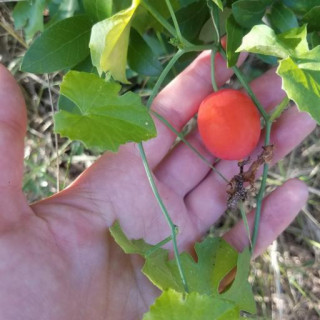
Ibervillea lindheimeri
Lindheimer's globeberry · Rio Grande globeberry · Balsamgourd · Globe berry
Care Guide
💧 Water
Native to arid regions, the balsam gourd is highly drought-tolerant and thrives with minimal moisture. It stores water in its fleshy tissues, requiring watering only once every 2 to 3 weeks. This plant prefers outdoor natural light and conserves water efficiently during its dormant period, which coincides with the drier seasons.
☀️ Light Full sun
Balsam gourd prefers abundant sunlight, which strongly affects its healthy growth. Because it comes from habitats used to generous sun, plentiful light offers the optimal stimulus for its various growth stages. It may struggle in poor light, while excessive light can be harmful, potentially causing scorching.
🌡️ Temperature 20–35°C
Balsam gourd is native to temperate regions, where temperatures range from 68 to 95°F (20 to 35 ℃). During periods of low reflectivity or chilliness, consider increasing the ambient temperature to match its preferences.
💨 Humidity
🪴 Soil 6-7
🌱 Fertilizer
Appropriate fertilization is essential for the health and appearance of the Balsam gourd. Fertilize the Balsam gourd in summer, repeating the application monthly throughout summer. Nutrients support growth and upkeep of the plant’s parts. Fertilizing improves the Balsam gourd’s flower display, ensuring the best blooms.
🪴 Pot & Repot 2-3 years
To encourage healthy growth, repot your balsam gourd every 2 to 3 years in early spring. Use a deep container to accommodate its roots. After repotting, place the plant in bright, indirect light and water it moderately. Make sure the soil drains well and provide adequate support to accommodate its climbing habit.
✂️ Pruning
The balsam gourd is known for its vigorous vine growth, featuring heart-shaped leaves and bright orange fruit. To encourage healthy growth and control its spread, it is recommended to prune the plant between early and late spring. Proper pruning improves air circulation, reduces the risk of disease, and supports blooming and fruiting, all while maintaining efficient photosynthesis.
🌿 Propagating
🐛 Diseases & pets
☠️ Toxicity
Characteristics
- Plant Type
- Herb, Vine
- Life Cycle
- Perennial
- Genus
- Ibervillea
- Family
- Cucurbitaceae
- Hardiness Zone
- 10
- Mature Height
- 20 cm
- Mature Spread
- 34 cm
- Leaf Color
- Dark Green
- Leaf Type
- Deciduous
- Flower Color
- Yellow
- Flower Size
- 1.27 cm
- Bloom Time
- Late spring, Early summer, Mid summer
- Planting Time
- Spring, Autumn
- Harvest Time
- Late summer, Early fall, Mid fall
- Native Area
- Mexico