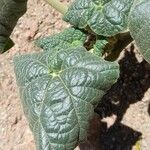
Ibicella lutea
Double-claw · Pumpkinvine · Yellow-flower devil's-claw · Unicorn-plant · Yellow unicorn-plant
Description
Source: leafsnapIbicella lutea, commonly known as the yellow trumpet or devil's claw, is a unique and fascinating plant belonging to the family Martyniaceae. Native to South America, it can be found in regions such as Brazil, Argentina, Paraguay, and Uruguay. This plant stands out due to its striking appearance. It produces bright yellow, trumpet-shaped flowers that bloom in the summer, each about 5 cm long with five petals adorned by purple spots near their base. The leaves of Ibicella lutea are greenish-grey with a rough texture. One of the most intriguing aspects of this plant is its seed pods, which resemble claws or hooks. These pods can grow up to 10 cm long and have sharp spines that help them attach to passing animals, aiding in seed dispersal. Ibicella lutea thrives in well-drained soil with plenty of sunlight but can also tolerate partial shade. While it is drought-tolerant, regular watering during dry spells is necessary for optimal growth. Traditionally, indigenous people have used this plant for medicinal purposes, such as treating fever, inflammation, and pain, due to its anti-inflammatory properties. In summary, Ibicella lutea is an intriguing species that adds unique beauty wherever it grows and provides ecological benefits through its effective seed dispersal mechanisms.
Care Guide
💧 Water Every 7 days
The yellow unicorn plant thrives in arid regions due to its excellent drought tolerance, requiring watering ideally just once a week. Its ability to conserve water in its tissues enables it to endure long periods without rain, making it well-suited for outdoor growth in less hospitable soils.
How should I water my Yellow unicorn-plant?
To water the Yellow unicorn-plant, you have multiple options such as using a garden hose with a spray nozzle or a watering can. This plant is not very particular about the source of water and can thrive with rainwater, tap water, or filtered water. It is usually recommended to avoid watering this plant from above as it can harm the leaves, flowers, and potentially cause disease. A drip irrigation system is often the best way to water this plant as it delivers water evenly and directly to the soil. When watering a container-grown Yellow unicorn-plant, you can use a cup, watering can, or tap to water the soil directly.
What should I do if I give my Yellow unicorn-plant too much or too little water?
To fix underwatering of the Yellow unicorn-plant, simply water it more regularly when you notice it lacks moisture. Overwatering, however, is a more serious problem that can lead to diseases and death. To prevent this, choose a sunny location with good drainage. If you overwater a potted Yellow unicorn-plant, consider changing it to a new pot with better drainage. Add loose soil and use a pot that drains well.
How often do I need to water my Yellow unicorn-plant?
To properly care for your Yellow unicorn-plant, it is important to water it regularly during the growing season. At the start of spring, watering once per week should suffice. As the season progresses and the weather gets hotter, you may need to increase watering to two or three times per week. However, be careful not to exceed this rate as it can harm the plant. It is also crucial to keep the soil moist but not saturated, regardless of the watering frequency. When it comes to a potted Yellow unicorn-plant, the soil tends to dry out quicker, so watering should be done more frequently. Usually, a few times per week is recommended for container-grown plants, compared to just once per week for those planted directly in the ground.
How much water does my Yellow unicorn-plant need? --> How much water does my Yellow unicorn-plant require?
Determining how much water to give your Yellow unicorn-plant can be done in a few ways. Some gardeners prefer to feel the soil for moisture and water until the first six inches are moist. Alternatively, you can follow a set measurement, typically around two gallons per week, adjusting for heat and soil dryness. However, be cautious not to overwater if your plant needs less. For container-grown plants, ensure all layers of soil are moist, testing with your finger or checking for excess water drainage.
How do I know if I am giving enough water to my yellow unicorn plant?
Avoiding overwatering your Yellow unicorn-plant can be tricky. On one hand, these plants need to be watered weekly due to their deep roots. On the other hand, overwatering can lead to root rot and browning. Underwatering is less of a concern since Yellow unicorn-plants can survive without much water. However, if you wait too long to water them, they may wilt and develop dry leaves.
☀️ Light Full sun
Yellow unicorn-plant is native to habitats that receive abundant sunlight, including open bogs and sunny wetlands. It favors full sun but can tolerate partial sun as well.
What are the sunlight requirements for the Yellow unicorn-plant?
The Yellow unicorn-plant (Ibicella lutea) thrives in environments that offer full sun, needing above 6 hours of sunlight per day for optimal growth. It originates from bright, open environments and can tolerate partial sun but prefers direct sunlight. It's important to observe the way sunlight moves through your garden to ensure the selected spots offer a perfect balance of light and shade, supporting the plant’s growth and happiness.
How can artificial lighting support the growth of indoor Yellow unicorn-plants?
Indoor Yellow unicorn-plants require adequate lighting for optimal growth, especially when natural sunlight is insufficient, like in winter or less sunny spaces. Artificial lights, such as LEDs which can be customized to specific wavelengths, provide a vital solution. Full sun plants need 30-50W/sq ft, partial sun plants 20-30W/sq ft, and full shade plants 10-20W/sq ft of artificial light. The light source should be placed 12-36 inches above the plant to mimic natural sunlight and should be on for 8-12 hours per day to meet most plant species' needs.
What are the symptoms of inadequate light for Yellow unicorn-plants?
When the Yellow unicorn-plant is grown indoors under inadequate light, it may exhibit symptoms such as small leaves, leggy or sparse growth, faster leaf drop, slower or no new growth, and lighter-colored or yellow new leaves indicating chlorosis. Excessive sunlight can cause issues like sunscald, leaf curling, wilting, and leaf scorching. These symptoms highlight the plant’s need for a balanced light environment, whether by adjusting indoor lighting or optimizing outdoor placement.
What solutions can help Yellow unicorn-plants receive adequate sunlight?
To ensure Yellow unicorn-plants receive adequate sunlight, gradually move them to sunnier locations, ensuring they get at least 6 hours of direct sunlight daily. Indoor plants can benefit from south-facing windows or the use of artificial light, like desk or ceiling lamps on for at least 8 hours daily, or professional grow lights. Outdoors, it's crucial to avoid sudden changes in light intensity. Reducing obstructions, like pruning trees, or transplanting smaller plants to sunnier spots with ample sunlight and good drainage can also benefit plant health. Note that parts of the plant affected by insufficient sunlight may not recover, but new growth will be healthy with improved light exposure.
🌡️ Temperature 20–37.8°C
Yellow unicorn-plant prefers moderate temperatures, much like what most people find comfortable. It grows best in conditions that are neither overly hot nor too cold. The primary concern with high heat is the risk of sunburn, so offering some shade in summer is recommended to prevent excessive warmth. When temperatures decline, Yellow unicorn-plant enters dormancy. If you want it to keep growing continuously, it's necessary to maintain warmer conditions during winter. Frost can harm the plant and should be avoided.
💨 Humidity
🪴 Soil 5-6
🌱 Fertilizer
The yellow unicorn plant thrives when given balanced nutrition, supplemented occasionally by high-nitrogen boosts. To ensure healthy growth, fertilize the plant every month during its growing season and every two months in the winter. Choose a mild, liquid-soluble fertilizer to prevent root burn. Always apply the diluted fertilizer to moist soil, and carefully monitor the plant's response, adjusting the care as needed.
🪴 Pot & Repot 2-3 years
When repotting a Yellow unicorn-plant, choose a pot 1-2 inches (2.5–5.1 cm) larger with ample drainage. Use a well-draining potting mix. Repot in spring or fall, ensuring the root ball is slightly lower than the rim of the flower pot. Water thoroughly after repotting and place in a warm spot with indirect sunlight.
✂️ Pruning
Pruning yellow unicorn plants from early to late spring is beneficial for their growth and health. Start by removing dead stems and thinning out overcrowded areas to improve air circulation and sunlight exposure. This practice helps control the plant's size and prevents it from becoming overgrown. Additionally, conducting regular inspections for pests and diseases during pruning is essential to maintain the plant's health.
🌿 Propagating
🐛 Diseases & pets
☠️ Toxicity
Characteristics
- Plant Type
- Herb
- Life Cycle
- Annual
- Genus
- Ibicella
- Family
- Martyniaceae
- Hardiness Zone
- 9-11
- Mature Height
- 30 cm to 61 cm
- Mature Spread
- 40 cm to 76 cm
- Leaf Color
- Red
- Leaf Type
- Deciduous
- Flower Color
- Yellow
- Flower Size
- 3.05 cm to 5.08 cm
- Bloom Time
- Summer, Early fall, Mid fall
- Planting Time
- Spring, Autumn
- Harvest Time
- Late summer, Fall, Early winter