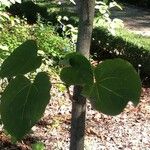
Idesia polycarpa
Idesia · Idesia tree · チルギ
Description
Source: leafsnapIdesia polycarpa, commonly known as the wonder tree or bead tree, is a deciduous tree species belonging to the family Salicaceae. Native to East Asia, it can be found in China, Japan, and Korea. The tree can reach heights of up to 20 meters and features a broad, spreading crown. The leaves of Idesia polycarpa are large, heart-shaped, and have serrated edges. They appear dark green during the summer but turn yellow or red in the autumn before falling. From May to June, the tree produces small white flowers, which are followed by clusters of bright red berries resembling beads. Idesia polycarpa is valued as an ornamental plant due to its attractive foliage and colorful berries. Its bark is also used medicinally, containing compounds effective in treating fever, inflammation, coughs, and other ailments. The wonder tree prefers moist soil conditions but can tolerate drought once established. It thrives in full sun or partial shade but requires protection from strong winds due to its brittle branches. Overall, Idesia polycarpa is an appealing ornamental plant with medicinal properties, making it a valuable addition to any garden or landscape design project.
Care Guide
💧 Water Every 7 days
The iigiri tree, native to East Asia, thrives in high humidity and prefers consistent moisture. It needs watering every 1-2 weeks. Typically grown outdoors for its ornamental beauty, the tree benefits from mulching to help retain soil moisture and regulate root temperature.
What's the best way to water my Iigiri tree?
To promote excellent root development, place a garden hose at the base of the plant. Avoid spraying the leaves directly, and keep in mind that outdoor plants in direct sunlight may need more water for the leaves. You can also use bubblers or soaker hoses to water the roots. When adding or removing plants, use soaker hoses to thoroughly moisten the entire garden or bed. Remember to drain any excess water and allow the soil to dry before watering again. Watering at ground level will help prevent diseases. On sunny days, consider spraying the entire bush. Whether your tree is in a pot or in the ground, remember to give it deep watering instead of light sprinkling.
What should I do if I give my Iigiri tree too much or too little water?
An overwatered Iigiri tree will exhibit yellowing, dropping, and wilting leaves, as well as a dull and unhealthy appearance with mushy stems. Adjusting your watering schedule when these signs begin to appear is recommended. Conversely, wilting can also indicate under watering, characterized by crispy and dry leaves. In such cases, check the soil for dryness and provide a thorough watering. However, even with sufficient water, the Iigiri tree may still display dryness and yellow leaves due to root damage. Once the plant has fully recovered, the yellowing of leaves will cease. When growing an Iigiri tree indoors, always monitor moisture levels and avoid overwatering, watching out for black spots. If present, allow the soil to dry by withholding water for a few days. Overwatering can result in root rot, so if discolored and slimy roots are observed, consider transferring the plant to a different pot and preventing excessive moisture. When planting an Iigiri tree outdoors, ensure adequate watering if the soil is excessively dry.
How frequently should I water my Iigiri tree?
The Iigiri tree prefers deep and infrequent watering, particularly when planted in pots. Water them with a gallon of water each time to account for the limited water storage in pots. In cold regions, water every 3 to 5 days, preferably in the morning when the soil is dry. Check the top 2-3 inches of soil for dryness to determine when to water. During hot days, monitor the soil moisture daily to prevent it from drying out too quickly. If you have a garden, irrigate the soil as needed, watering once a week in hot climates. Avoid adding water if there has been sufficient rainfall to prevent root rot. During the Iigiri tree's growing seasons of spring and fall, add mulch to conserve water when growing outdoors. Adjust the watering frequency based on the type of soil - sandy soil requires more frequent watering, while clay soil can go 2-3 days without water. Keep track of watering dates and observe drooping leaves as signs that watering may be needed.
How much water does my Iigiri tree need?
The Iigiri tree generally requires about a gallon of water on a regular basis. For potted plants, it is recommended to water them deeply until you notice water dripping from the bottom of the pot. Then, allow the soil to dry before watering again. You can use a water calculator or moisture meter to determine the amount of water given to your plant in a week. During the flowering period, provide plenty of water but allow the moisture to evaporate afterwards to prevent root rot. If the Iigiri tree is planted outdoors and receives adequate rainfall, additional watering may not be necessary. When the tree is young or newly planted, it should receive 1-2 inches of rain per week. As the Iigiri tree matures, it can survive solely on rainfall. Only during extremely hot weather or when there is no rainfall for an extended period of 2-3 weeks should the tree be given a full watering during the cooler parts of the day to prevent damage. Additional watering may be needed during prolonged dry spells.
Do I need to water my Iigiri tree more or less depending on the time of year or the weather?
The Iigiri tree thrives outdoors when it receives rain, but if there is persistent dry weather, it will need to be watered. In spring and fall, keep the soil moist but not soggy, and alternating between dry and moist conditions will help the tree grow well. During summer, hot weather can cause water to evaporate quickly, so if there is a lack of rainfall, water more frequently to keep the soil moist. In winter, the tree needs less water as it goes dormant and loses its leaves. Use well-draining but moisture-retentive soil like terracotta to help with evaporation. Once the tree starts leafing out in the spring and going dormant again, you can skip watering and rely on fall and winter rains. Good drainage is important at all times, especially during winter. When the Iigiri tree is in a pot, its root growth is limited, so keep it well-watered, especially during summer. Avoid having cold and wet roots by ensuring adequate drainage. Water the tree's entire root system with a deep soak once or twice a week, depending on the weather, and avoid shallow sprinkles that can encourage fungi growth. Even during dormancy in the fall and winter, don't let the tree dry out completely. Avoid sitting the tree in water for too long, as it can die in winter if the soil doesn't drain well. Mulch can help reduce stress, conserve water, and promote healthy blooms.
☀️ Light Full sun
Iigiri tree does best when it receives full sunlight throughout the day. It can also adjust to locations where sunlight is irregular or only partial. Too much or too little light can negatively impact the health and growth of the iigiri tree.
What are the sunlight requirements for an Iigiri tree?
The Iigiri tree (Idesia polycarpa) thrives best when it receives full exposure to sunlight throughout the day, requiring more than 6 hours of sunlight to maintain optimal health and growth. It can also adapt to conditions of partial sun, which means about 3-6 hours of sunlight daily. However, it’s crucial to watch how sunlight moves through your garden and choose spots that provide a perfect balance of light and shade to ensure your plant's happiness.
How can artificial lighting benefit indoor Iigiri trees?
Artificial lighting plays a pivotal role in promoting the growth of indoor Iigiri trees, especially when natural sunlight is insufficient, like in winter or in less sunny spaces. LED lights are a popular choice for indoor plant lighting as they can be customized to provide specific wavelengths of light needed by the plants. The requirements for artificial lighting vary based on the type of plant: full sun plants need 30-50W/sq ft, partial sun plants require 20-30W/sq ft, and full shade plants need 10-20W/sq ft. The light source should be placed 12-36 inches above the plant, and it's recommended to mimic natural daylight hours, usually 8-12 hours of light per day.
What are the symptoms of light deficiency in Iigiri trees?
Iigiri trees can exhibit several symptoms when exposed to suboptimal lighting conditions. These include smaller new leaves compared to the mature ones, leggy or sparse growth, faster leaf drop, halted growth or no new growth, lighter-colored or yellowing leaves indicating chlorosis, and physical damage like sunscald, leaf curling, wilting, and leaf scorching. Each of these symptoms signifies a light deficiency affecting the plant’s health.
What solutions can help improve light exposure for Iigiri trees?
To improve light exposure for Iigiri trees, consider gradually moving your plants to sunnier locations, ensuring they receive at least 6 hours of direct sunlight daily. For indoor plants, consider using south-facing windows and keeping curtains open during the day. If the plant is large or not easily movable, artificial light sources like desk or ceiling lamps, or professional plant grow lights, can be used for at least 8 hours daily. For outdoor plants, make sure to move them gradually to avoid shock and potential sunburn. Additionally, reducing obstructions like pruning trees or transplanting to a location with more sunlight and better drainage can be beneficial. Remember that parts of the plant affected by insufficient sunlight may not recover, but new growth will be healthy with improved light conditions.
🌡️ Temperature 10–35°C
The Iigiri tree is highly adaptable to different climate conditions, coping with both intense summer heat and cold winter weather. Nevertheless, it has an optimal temperature range for growth. If temperatures rise too much, the plant can undergo heat and humidity stress, which may cause it to die. In areas where temperatures reach the lower edge of its cold tolerance, it is important to use insulation measures to protect the plant.
💨 Humidity
🪴 Soil 5-6
🌱 Fertilizer
Proper timing is important when fertilizing the Iigiri tree. Apply fertilizer in early spring and continue once a month through early summer. Fertilizer promotes attractive blooms and supplies energy during both dormant and active growth stages.
Why should I use fertilizer on my Iigiri tree?
No matter what type of Iigiri tree you have, regular fertilization is important for its overall health. Providing the right nutrients helps it grow stronger and better withstand difficult growing conditions, while also improving its ability to resist diseases and pests. The foliage of your Iigiri tree is an appealing aspect, so it's crucial to preserve it. To achieve this, follow a regular fertilization schedule tailored to your Iigiri tree. This will encourage the growth of vibrant, beautifully colored leaves.
When should I fertilize my Iigiri tree for the best results?
To ensure healthy growth, it is recommended to fertilize your Iigiri tree for the first time in late winter or early spring. This supplies the necessary nutrients for the tree to thrive once the weather warms up. If you live in a warm climate, it is beneficial to provide an additional fertilizer feeding during early fall. This not only adds nutrients for the upcoming growing season, but also helps the tree withstand winter cold without foliage damage. Fertilizing earlier in the year allows sufficient time for new branches to grow and withstand the cold winter.
When is it best to not put fertilizer on my Iigiri tree?
There are specific periods throughout the year when you should avoid fertilizing your Iigiri tree. Firstly, in the early and mid-winter months, when the tree is dormant and does not require nutrients. Additionally, it is not advisable to fertilize during late spring and summer, as the hotter and drier weather can have a negative impact on the tree's response to fertilization. To prevent any issues, it is best to stick to a fertilization schedule that only involves feeding in early spring and early fall.
What kind of fertilizer should I use for my Iigiri tree?
The most critical nutrient for an Iigiri tree is usually nitrogen, but it should not be overlooked that phosphorus and potassium also play crucial roles. Ideally, your Iigiri tree requires a sufficient amount of all three main nutrients. This is why a balanced fertilizer, like a 10-10-10, is effective. However, optimal growth for an Iigiri tree often occurs with a more nuanced nutrient ratio. Fertilizers with slightly higher nitrogen content, such as a 10-6-4 ratio, tend to yield better results. When it comes to fertilization, you have the option of using granular or liquid-based fertilizers.
How can I give my Iigiri tree plant food?
To fertilize your Iigiri tree, you have two options: using granular fertilizer or liquid fertilizer. If you choose granular fertilizer, simply sprinkle it on the soil at the right time. Granular fertilizer releases nutrients slowly into the soil over time. It's a good idea to lightly water the tree before applying the fertilizer. Using liquid fertilizer is less common, but still an option. Mix the fertilizer with water and pour it around the base of the tree. If needed, perform a soil test to determine if you should adjust the pH before fertilizing.
🪴 Pot & Repot
✂️ Pruning
The Iigiri tree, known for its attractive berries and heart-shaped leaves, benefits greatly from early spring pruning. This practice involves removing dead branches to improve air circulation. Thinning out dense areas promotes better structure and overall health. Annual pruning is essential to maintain the tree's form and encourage fruit production. Always use sharp, clean tools to prevent the spread of disease.
🌿 Propagating
🐛 Diseases & pets
☠️ Toxicity
Characteristics
- Plant Type
- Tree
- Life Cycle
- Perennial
- Genus
- Idesia
- Family
- Salicaceae
- Hardiness Zone
- 6-9
- Mature Height
- 11.89 m
- Mature Spread
- 11.89 m
- Leaf Color
- Green, Yellow
- Leaf Type
- Deciduous
- Flower Color
- Yellow, Green
- Flower Size
- 2.54 cm
- Bloom Time
- Mid spring, Late spring
- Planting Time
- Spring, Autumn
- Harvest Time
- Mid fall, Late fall, Early winter, Mid winter
- Native Area
- South Korea, Japan, China