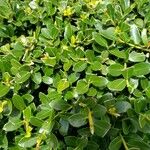
Ilex crenata
Japanese holly · Box-leaf holly · Box-leaved holly
Description
Source: leafsnapIlex crenata, commonly known as Japanese holly or box-leaved holly, is a small evergreen shrub that belongs to the family Aquifoliaceae. Native to Japan, Korea, and China, it has been widely cultivated as an ornamental plant in gardens and landscapes around the world. This plant has a compact growth habit with dense foliage consisting of small, glossy green leaves. The oval-shaped leaves have finely serrated edges, giving them a box-like appearance. In late spring or early summer, the shrub produces small white flowers, followed by black berries in autumn. Ilex crenata is highly valued for its ornamental qualities due to its attractive foliage and compact growth habit, making it an ideal choice for hedging or topiary work. It thrives in full sun or partial shade and prefers well-drained, slightly acidic soil. The plant requires minimal maintenance but may occasionally need pruning to maintain its shape and size. It can be propagated by seed or cuttings, although it may take several years to reach maturity. Overall, Ilex crenata is a versatile evergreen shrub that enhances any garden setting with its beauty and structure, requiring minimal care once established.
💡 The Japanese holly is a small, dense shrub that is very easy to care for. Despite its name, "holly," this shrub doesn't have any prickles at all. It resembles a boxwood bush and is ideal for hedges. These bushes can tolerate both sun and shade, but they require regular watering to thrive.
🌳 Japanese holly, admired for its glossy foliage and small white flowers, is valued for more than just ornamentation. Many people do not know that its wood, prized for its smooth texture and light color, is in demand for fine work, used in everything from detailed jewelry boxes to large furniture pieces. Its tiny leaves have also been used historically as a tea substitute. There is further potential in the essential oils that can be obtained from its leaves, which — because the plant is hardy and resistant to disease — may have uses for human health.
🎭 Defense, Lightning Resistance, Fortune
Care Guide
💧 Water Every 7 days
Japanese holly, which originates from Japanese forests, thrives in conditions of moderate moisture and high humidity. To care for it properly, water the plant every 1-2 weeks, ensuring the soil stays moist but not waterlogged. While it is best suited for outdoor cultivation, using mulch can help retain soil moisture and mimic the natural leaf litter environment of its native habitat.
When Should I Water My Japanese Holly?
To ensure the health and growth of Japanese Holly, it is essential to monitor its hydration needs carefully. The plant's soil should remain evenly moist but not waterlogged. Check the soil's top 1-inch layer for dryness to determine the need for watering. For more accuracy, use a soil moisture meter. The appearance of the leaves is another indicator; if they begin to wilt or dull, it's likely time to water. Slowed growth or increased droopiness can also signify dehydration. Beware of overwatering or early watering, as it may cause root rot, fungal growth, or nutrient leaching.
How Should I Water My Japanese Holly?
Japanese Holly has specific hydration needs that include keeping the soil moist without being waterlogged and never allowing the plant to completely dry out. Bottom-watering is effective, by allowing the plant to absorb water from a tray or saucer, ensuring moisture reaches the roots without over-saturating the top soil. Use a watering can with a narrow spout to target the base of the plant and avoid foliage, which could lead to fungal diseases. Ensure water penetrates the soil evenly and reaches the roots by watering slowly.
How Much Water Does Japanese Holly Really Need?
The watering needs of Japanese Holly vary with factors like pot size, root depth, and the plant's overall size, usually requiring 1-2 inches of water per week. Ensure water reaches deeply but avoid waterlogging by allowing excess to drain. Properly hydrated Japanese Holly should have vibrant, glossy leaves. The soil should feel moist without being soggy. Over or under-watering can lead to yellow or brown leaves, root rot, or stunted growth. Utilize well-draining soil and pots with drainage holes, watering thoroughly while allowing the top inch of soil to dry out before the next watering.
What Kind of Water is Best for Japanese Holly?
Japanese Holly thrives best with distilled water due to its purity and lack of contaminants. Rainwater is a good alternative if it's free of pollutants. Filtered water can also be used, while tap water should be the last resort because of its potential chlorine and fluoride content, which the plant is sensitive to. Let tap water sit for 24 hours to allow chlorine to evaporate. The plant prefers room temperature water, avoiding extremes that could shock it.
How Do Japanese Holly's Watering Needs Change with the Seasons?
During spring, ensure the soil is kept well-drained and moist, accommodating increased water absorption due to warming temperatures - pay special attention to newly planted Japanese Holly. Summer may dry out the soil faster, so water regularly to maintain moisture, ideally in the morning or evening. In autumn, reduce watering as the plant prepares for dormancy, but do not let the soil dry out completely. Winter requires minimal watering, done only when the soil feels dry to the touch, to prevent root rot and accommodate the plant's dormant state.
☀️ Light Full sun
Japanese holly does best when exposed to plenty of sunlight all day, although it can tolerate partial shade. Native to regions with abundant sun, it may develop yellowing leaves or stunted growth if it gets too little or too much light.
What are the sunlight requirements for Japanese holly?
Japanese holly requires full sun, meaning it thrives best with above 6 hours of sunlight per day, but it can also tolerate partial sun conditions, which is about 3-6 hours of sunlight per day. It's crucial to observe the movement of sunlight through your garden to find the ideal spots that provide a perfect balance of light and shade, ensuring the plant's wellbeing. Native to areas with plenty of sunshine, Japanese holly can experience leaf yellowing or growth issues if it receives too little or too much sunlight.
What are the essentials for growing Japanese holly?
Essentials for growing Japanese holly include ample sunlight throughout the day, although the plant can survive in semi-shaded conditions. Originating from sunny regions, inadequate sunlight can lead to leaf yellowing or stunted growth. For indoor plants, when natural sunlight is not sufficient, especially during winter or in less sunny spaces, artificial lighting provides a crucial alternative. LED lights, preferred for their ability to offer specific wavelengths, help in faster, healthier plant growth. Full sun plants need 30-50W/sq ft, partial sun plants require 20-30W/sq ft, and full shade plants need 10-20W/sq ft of artificial light, placed 12-36 inches above the plant and provided for 8-12 hours per day to mimic natural sunlight.
What are the key symptoms of light deficiency in Japanese holly?
In conditions of suboptimal lighting, Japanese holly may exhibit specific symptoms indicating light deficiency. These include smaller new leaves, leggy or sparse growth, faster leaf drop, slower or no new growth, lighter-colored new leaves, chlorosis (leaves turning yellow due to a breakdown of chlorophyll), sunscald (damage from intense sunlight exposure), leaf curling (a defense mechanism against excessive sunlight), wilting (loss of turgor pressure due to overexposure to sunlight), and leaf scorching (brown, dry edges on leaves caused by excessive sunlight). These symptoms help in diagnosing and remedying the effects of inadequate sunlight on the plant.
How can you alleviate the symptoms of light deficiency or excess in Japanese holly?
To counteract symptoms of light deficiency or excess in Japanese holly, consider the following solutions: For indoor plants, incrementally move them to sunnier locations each week until they receive at least 6 hours of direct sunlight daily, utilizing south-facing windows and keeping curtains open for maximum exposure. Use artificial light sources like desk or ceiling lamps for at least 8 hours a day, or invest in professional grow lights if the plant is large or not easily movable. For outdoor plants, gradually relocate them to sunnier spots to prevent sunburn, avoiding sudden changes in light intensity. If plants are suffering from light obstruction, consider pruning nearby trees or transplanting smaller plants to sunnier locations during their dormant period, ensuring ample sunlight and good drainage for optimal growth. Note that parts of the plant already affected may not recover, but new growth after increasing light exposure should be healthy.
🌡️ Temperature 15–35°C
The optimal temperature range for Japanese holly growth is 59℉ (15℃) to 95℉ (35℃). It is native to temperate regions and can tolerate both hot summers and cold winters. With proper care in winter, it can withstand temperatures as low as 23℉ (-5℃).
What is the optimal temperature range for the growth of Japanese Holly?
The optimal temperature range for the growth of Japanese Holly (Ilex crenata) is between 59°F (15°C) to 95°F (35°C). This plant is native to regions with a temperate climate and is capable of tolerating both hot summers and cold winters. It can withstand temperatures as low as 23°F (-5°C) during winter, with appropriate care. If the temperature is expected to drop below the plant's cold tolerance threshold, temporary measures such as wrapping the plant with plastic film, fabric, or other protective materials should be taken to shield it from the cold. These protective materials should be removed once the temperature rises to ensure the plant's health.
How should you care for Japanese Holly in low temperatures?
Japanese Holly has a moderate tolerance to low temperatures and thrives best when kept above its minimum tolerable temperature. Specifically, during the winter months, it's crucial to ensure that the temperature does not fall below the plant's tolerable growth temperature minimum. If the temperature does drop below this threshold, the leaves may start to droop, and in severe cases, they could wilt and eventually fall off. To protect Japanese Holly from low temperatures, you should trim off any frost-damaged parts and take preventive measures before cold weather hits again. Wrapping the plant with materials such as non-woven fabric or cloth, and constructing a wind barrier can protect it from cold winds, aiding in its survival and health during cold spells.
What should be done if Japanese Holly experiences high temperatures?
During summer, it's important to ensure that Japanese Holly is kept below its maximum suitable growth temperature to prevent stress and damage. Exposure to temperatures above its tolerable growth temperature maximum can lead to symptoms such as lighter leaf color, dry and withered leaf tips, curling leaves, and an increased susceptibility to sunburn. To care for Japanese Holly in high temperatures, you should trim away the sunburned and dried-up parts of the plant. Additionally, moving the plant to a shaded area or using a shade cloth can protect it from the midday and afternoon sun. It's also beneficial to water the plant in the morning and evening to keep the soil moist, further helping the plant cope with high temperatures.
💨 Humidity
🪴 Soil 5-6
🌱 Fertilizer
Fertilize your Japanese holly in early spring to encourage healthy growth. Regular feeding improves overall health, producing vigorous growth, greater tolerance of challenging conditions, and enhanced resistance to pests and diseases. Keep to a consistent fertilization schedule to maintain foliage that is vibrant, deeply colored, and lush.
Why do I have to put fertilizer on my Japanese holly plant?
If you own a Japanese holly, it doesn't matter which type you have -- regular fertilization is important for its overall health. Providing the right nutrients will help it grow stronger, making it more resilient to tough conditions and better able to fight off diseases and pests. The foliage of your Japanese holly is one of its most attractive features, so it's important to keep it healthy. This requires sticking to a regular fertilization schedule that is specific to your Japanese holly. By doing this, you can ensure that your Japanese holly develops richly colored leaves and has a lush appearance.
When should I fertilize my Japanese holly?
To properly fertilize your Japanese holly, start by doing it in late winter or early spring. This will provide the necessary nutrients for healthy growth when the weather warms up. If you live in a warm climate, it's also beneficial to give an additional fertilizer feeding in early fall. This adds more nutrients to the soil for the upcoming growing season and helps the plant withstand the cold of winter without foliage damage. By fertilizing earlier, new branches will have enough time to grow and be prepared for the winter.
When is it not a good idea to fertilize my Japanese holly?
There are specific times of the year when you should avoid fertilizing your Japanese holly. Firstly, during the early and mid-winter months, when the plant is dormant and doesn't require feeding. Secondly, it is not recommended to fertilize during late spring and summer, as the weather is hotter and drier, which can have a negative impact on the plant's response to fertilizers. To prevent any issues, it is best to follow a fertilization schedule that includes feeding only in the early spring and early fall.
What kind of fertilizer should I use for my Japanese holly?
The most important nutrient for a Japanese holly is typically nitrogen, but that doesn't mean phosphorus and potassium aren't important. In fact, your Japanese holly needs all three main nutrients in decent amounts. A balanced fertilizer like 10-10-10 can work well, but a more nuanced ratio of nutrients often leads to optimal growth. Fertilizers with a bit higher nitrogen, like 10-6-4, tend to work well. You can choose either a granular or liquid fertilizer when fertilizing.
How can I make my Japanese holly plant grow better by adding nutrients to the soil?
To properly fertilize your Japanese holly, you have two options. The first is to use a granular fertilizer. Simply sprinkle it on the soil at the right time, and the slow-release formula will gradually provide nutrients to the plant. Remember to water your holly before applying the fertilizer. The second option is to use a liquid fertilizer, although this is less common. Mix the liquid fertilizer with water and pour it around the base of the plant. Before fertilizing, it can be helpful to conduct a soil test to determine if you need to adjust the pH levels.
🪴 Pot & Repot 2-3 years
When repotting Japanese holly, choose a pot 1-2 inches (2.5–5 cm) larger with good drainage. Use a well-draining potting mix. Repot in spring or fall, making sure the root ball sits slightly below the rim of the flower pot. Water thoroughly after repotting and place in a warm location with indirect sunlight.
✂️ Pruning
Japanese holly grows best when it is regularly pruned, ideally from early to late winter. Effective pruning techniques include thinning out crowded branches, removing dead wood, and shaping the plant for a more appealing look. These practices enhance airflow, enable better light penetration, and promote healthy growth. It's also important to use sharp, clean tools to ensure the plant regrows healthily.
🌿 Propagating
🐛 Diseases & pets
☠️ Toxicity
Sky pencil holly shrubs contain saponins that are considered to have low-toxic effects on people and pets. If the fruit of these shrubs is ingested, it can result in vomiting, diarrhea, or other digestive symptoms.
Characteristics
- Plant Type
- Shrub
- Life Cycle
- Perennial
- Genus
- Ilex
- Family
- Aquifoliaceae
- Hardiness Zone
- 8-10
- Mature Height
- 3.05 m to 4.88 m
- Mature Spread
- 1.52 m to 2.44 m
- Leaf Color
- Green, Yellow
- Leaf Type
- Evergreen
- Flower Color
- White
- Flower Size
- 2.54 cm
- Bloom Time
- Late spring, Early summer
- Planting Time
- Spring, Autumn
- Harvest Time
- Mid summer, Late summer, Fall, Winter
- Native Area
- Russia, India, Vietnam, Myanmar, Japan, Philippines, Bhutan, South Korea, China