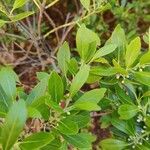
Ilex glabra
Inkberry · Appalachian-tea · Bitter gallberry · Winter-berry · Gallberry
Description
Source: leafsnapIlex glabra, commonly known as inkberry or gallberry, is an evergreen shrub belonging to the holly family. Native to the eastern United States, this plant thrives in wetlands, swamps, and along stream banks. It typically reaches up to 6 feet in height and spreads about 8 feet wide, forming a dense growth habit. The leaves of Ilex glabra are dark green with a glossy texture and are oval-shaped with smooth edges. In late spring or early summer, the plant produces small white flowers that are followed by black berries in the fall. Ilex glabra is an essential food source for wildlife, including birds and small mammals that feed on its berries. The plant also has several medicinal uses, including herbal remedies for colds, flu, fever reduction, and digestive issues. Due to its attractive foliage, which provides year-round interest, inkberry is commonly used in landscaping. Its dense growth makes it perfect for hedges or border plants, ideal for creating privacy screens. Overall, Ilex glabra is a visually appealing evergreen shrub that offers both aesthetic value and ecological benefits, making it a popular choice among gardeners across North America.
🌳 Far from being just decorative, inkberry fulfill an important ecological function as overlooked botanical champions. Their thick, durable leaves offer more than appearance—they are high in tannin. This flexible organic substance is in demand for the manufacture of wine, beer, and leather. Remarkably, inkberry also serve as natural purifiers, breaking down pollutants in water. Their aptitude for bioremediation lets them operate as living filters, enhancing wastewater quality in environmentally friendly clean-up efforts.
🎭 Bearer of luck
Care Guide
💧 Water Every 7 days
Inkberry thrives in moist conditions and prefers soil that remains consistently moist without becoming waterlogged. Once established, it becomes drought-tolerant. Watering should be done every 1 to 2 weeks. As an evergreen, inkberry efficiently manages water loss through transpiration, adapting well to various climates.
How should I water my Inkberry plant?
Your Inkberry plant is not demanding when it comes to watering. You can use common watering tools like cans, hoses, or even cups to water it. It's important to apply the water directly to the soil and make sure all areas are equally moistened to meet the root system's needs. Using filtered water is preferable to tap water, as it may contain harmful particles. Additionally, using water at or slightly above room temperature is recommended, as colder or hotter water may shock the Inkberry. However, this plant typically responds well to any type of water you provide.
What should I do if I give my Inkberry plant either too much or too little water?
When planting outdoor plants, especially new ones or seedlings, it's important to remember that they are prone to not getting enough water. You should keep watering them regularly for a few months until they establish their roots and can rely on rain. If you have an Inkberry planted in a pot, be careful not to overwater it. In case you accidentally overwater it, here's what you should do: stop watering immediately to minimize the impact, remove the Inkberry from the pot to check its roots, if there's no root rot, you can place it back in the pot, but if there is root rot, trim affected roots and consider applying fungicide. Finally, repot it in well-draining soil. On the other hand, underwatering an Inkberry can also be problematic, but it's an easy fix. If you notice drooping, dry leaves or leaves falling off, simply water the plant more frequently and the leaves will return to fullness. Make sure to adjust your watering frequency as soon as you realize the plant is underwatered.
How frequently should I give water to my Inkberry plant?
To properly care for outdoor plants, consider the amount of rainfall in your area. If there is not enough rainfall, make sure to water your plants every two weeks in the spring and fall, and more frequently in the summer. In the winter, water sparingly as plants require less water during this time. If you have a young or newly planted Inkberry, water it more often to help it establish and ensure it grows to be adaptable and drought tolerant. For potted plants, there are two main methods to determine watering frequency for your Inkberry. The first is to follow a set watering schedule, such as once a week or once every other week. However, keep in mind that this may not account for the specific growing conditions of your Inkberry. Watering frequency can also vary depending on the season. During summer, when water needs are highest, a predetermined schedule may not be sufficient. Alternatively, you can base watering frequency on soil moisture. Wait until the top two to four inches of soil in the pot have completely dried out before watering again.
How much water does my Inkberry plant need?
To water your Inkberry effectively, you don't always need to use a lot of water. Simply check if the top few inches of soil have dried out since the last watering. If they have, give your Inkberry about five to ten ounces of water. You can also gauge the amount of water based on how dry the soil is. If more than half of the soil is dry, give it a little extra water until you see drainage from the pot's holes. If your Inkberry is planted outside and receives sufficient rain, additional watering may not be necessary. However, when it's young or establishing, ensure it gets 1-2 inches of rain per week. Once it's established, it can rely on rainwater alone. Only if there's no rain at all for 2-3 weeks during hot weather, consider giving your Inkberry a thorough watering to prevent stress.
How can I know if I'm giving enough water to my Inkberry plant?
The Inkberry plant is more likely to be overwatered than underwatered, and there are clear signs to look out for in both cases. When the plant is overwatered, the leaves will turn yellow and some may even fall off. Overwatering can also cause the plant to shrivel and promote root rot. On the other hand, if the plant is underwatered, it will start to wilt and have brown or brittle leaves. Regardless of whether you see signs of overwatering or underwatering, it is important to take action and restore the health of your Inkberry plant.
☀️ Light Full sun
The inkberry favors full sun to grow vigorously, although it can tolerate partial daylight. Excessive shade can limit its growth and reduce its fullness. Its requirement for sunlight stays consistent at every stage. Its native habitat made it adaptable to different levels of sun.
What are the sunlight requirements for inkberry?
Inkberry plants thrive with full sun exposure, requiring above 6 hours of sunlight daily for vigorous growth. They can also manage with partial sun, about 3-6 hours of sunlight. It is essential to watch how sunlight moves through your garden and select spots that ensure a balance of light and shade. Inkberry is adaptable to varying degrees of sun due to its native habitat conditions but tends to suffer from stunted growth when placed in too much shade.
How does artificial lighting benefit inkberry plants indoors?
Indoor inkberry plants require adequate artificial lighting when natural sunlight is insufficient, especially during winter or in less sunny spaces. Artificial lights, like LED, offer a vital solution by promoting faster, healthier growth. They can be customized to provide the specific wavelengths needed by the plants. Full sun plants need 30-50W/sq ft, partial sun plants need 20-30W/sq ft, and full shade plants need 10-20W/sq ft of artificial light. The light source should be placed 12-36 inches above the plant and set to mimic the natural daylight hours, typically 8-12 hours per day.
What are common symptoms of inadequate sunlight in inkberry plants?
When inkberry plants receive insufficient sunlight, they might exhibit small and fewer new leaves, leggy or sparse growth, faster leaf drop, slower or halted growth, and lighter-colored new leaves. Other symptoms include chlorosis, where leaves lose their green color and turn yellow due to chlorophyll breakdown; sunscald, which damages leaves or stems from intense sun exposure; leaf curling as a defense mechanism to reduce surface area exposed to sunlight; wilting due to increased water loss, and leaf scorching characterized by brown, dry, and crispy edges on leaves from excessive sunlight.
How can you address inadequate sunlight for inkberry plants?
To address insufficient sunlight for inkberry, gradually increase sunlight exposure by moving plants to sunnier locations each week until they receive at least 6 hours of direct sunlight daily. Use south-facing windows for indoor plants and keep curtains open during the day. If moving the plant isn't feasible, consider using artificial grow lights for at least 8 hours daily. For outdoor plants, avoid sudden light intensity changes to prevent sunburn. Minimize obstructions or transplant smaller plants to sunnier locations, ensuring ample sunlight and good drainage. It's important to note that parts of the plant affected by inadequate sunlight might not recover, but new growth should be healthy after increasing light exposure.
🌡️ Temperature 15–35°C
The native growth environment's temperature requirements for inkberry range from 15 to 35 ℃ (59 to 95 ℉). Inkberry prefers moderate to warm temperatures. In winter, avoid subjecting inkberry to sharp temperature drops, as these can cause frost damage. For best growth and development, keep temperatures within that preferred range.
What are the ideal temperature conditions for growing Inkberry?
Inkberry thrives in moderate to warm temperature conditions, with the ideal temperature range being from 15 to 35°C (59 to 95°F). This plant can tolerate some cold and generally does not need extra protection if the temperature stays above -5°C. However, during the winter months, it's crucial to shield Inkberry from severe cold and frost to prevent damage. Steps should be taken to protect the plant from temperatures below -5°C, such as wrapping it with materials like plastic film or fabric. Once the temperature rises again, these protective measures should be removed to ensure the plant's continued health.
How does Inkberry react to low temperatures?
Inkberry has a moderate tolerance for low temperatures and prefers conditions above 15°C for optimal growth. It can withstand temperatures down to -5°C, but if they fall below -10°C, the plant may show signs of stress, such as drooping leaves. Without intervention, severely affected leaves will eventually wilt and drop. To prevent frost damage in low temperatures, trim off the affected parts and wrap the plant with a suitable material, like non-woven fabric or cloth, while also creating a wind barrier for extra protection against cold winds.
What should I do if Inkberry experiences high temperatures?
Inkberry should be kept in conditions below 35°C during the hot summer months to prevent stress and damage. Exposure to temperatures above 38°C can cause the leaves to lighten in color, tips to dry and wither, leaves to curl, and increase the risk of sunburn. If your Inkberry suffers from such issues, trim away the damaged areas and relocate the plant to a shaded area or use a shade cloth to protect it from the harsh midday and afternoon sun. Additionally, keep the soil moist by watering in the morning and evening, which helps the plant cope with the heat.
💨 Humidity
🪴 Soil 5-6
🌱 Fertilizer
Fertilize your Inkberry in early spring to encourage healthy growth. Regular feeding improves overall health, producing vigorous growth, greater tolerance of harsh conditions, and increased resistance to pests and diseases. Follow a consistent fertilization schedule to keep the foliage vibrant, deeply colored, and lush.
Why should I put fertilizer on my Inkberry plant?
No matter what type of Inkberry you have, regular fertilization is essential for maintaining its overall health. By providing the proper nutrients, your Inkberry will experience stronger growth and increased resilience to harsh conditions, as well as improved resistance against diseases and pests. The foliage of your Inkberry is particularly appealing, so it's crucial to preserve it. To achieve this, establish and stick to a regular fertilization routine tailored to your specific Inkberry. This will result in vibrant, lush leaves with a rich color.
When should I fertilize my Inkberry plant?
To keep your Inkberry healthy and promote growth, fertilize it in late winter or early spring. This provides the nutrients needed for thriving once the weather warms up. Additionally, if you live in a warm climate region, consider giving your Inkberry another round of fertilizer in early fall. This not only supplies more nutrients for the upcoming growing season, but also helps it withstand the winter cold without harming the foliage. Fertilizing earlier ensures that new branches have sufficient time to grow and withstand the winter.
When is the best time to not fertilize my Inkberry?
There are a few times throughout the year when you should avoid fertilizing your Inkberry plant. The first time is during the early and mid-winter months when the plant is dormant and doesn't require any feeding. It is also not recommended to fertilize it during late spring and the summer due to the hotter and drier weather conditions. Fertilizing during this time increases the likelihood of the Inkberry plant having a negative response. To prevent any issues, it is suggested to follow a fertilization schedule that focuses on feeding only during early spring and early fall.
What kind of fertilizer does my Inkberry plant need?
Inkberries primarily require nitrogen as their most crucial nutrient, but this should not undermine the significance of phosphorus and potassium. In fact, a sufficient amount of all three main nutrients is typically needed by your Inkberry plant. A balanced fertilizer like a 10-10-10 can be effective in this regard. However, achieving optimal growth for an Inkberry often necessitates a more nuanced nutrient ratio. Usually, fertilizers with a slightly higher nitrogen content tend to yield better results. For instance, a ratio of 10-6-4 can often promote optimal growth. When it comes to fertilizing, both granular and liquid fertilizers can be used.
How should I give fertilizer to my Inkberry plant?
To fertilize your Inkberry, you have two options: granular fertilizer or liquid fertilizer. If you choose to use granular fertilizer, simply sprinkle it on the soil at the correct time. The nutrients will be released slowly into the soil over time. It's best to lightly water your Inkberry before applying the fertilizer. Alternatively, you can use liquid fertilizer, although this is less common. To do this, mix the fertilizer with water and pour it onto the soil around the base of your Inkberry. Before fertilizing, it can be helpful to perform a soil test to determine if any pH adjustments are needed.
🪴 Pot & Repot 2-3 years
When repotting Inkberry, select a pot 1–2 inches (2.5–5.0 cm) larger with ample drainage. Use a well-draining potting mix. Repot in spring or fall, ensuring that the root ball is slightly lower than the rim of the flower pot. Water thoroughly after repotting and place in a warm spot with indirect sunlight.
✂️ Pruning
Inkberry is an evergreen shrub known for its dense, rounded shape and glossy leaves. To maintain its health and appearance, prune the shrub between early and late winter. This timing promotes recovery before the growing season begins. Focus on removing dead branches and reducing congestion within the plant. Regular pruning helps improve the shrub's health, foliage, and overall shape. Be sure to use clean, sharp tools to prevent the spread of disease.
🌿 Propagating
🐛 Diseases & pets
☠️ Toxicity
Inkberry holly will induce minor toxicity symptoms in humans and pets upon ingestion. Inkberry poisoning can cause vomiting, diarrhea, and depression. Additionally, the leaves of the plant are sharp enough to injure your pet's mouth, throat, airway, and intestinal tract.
Characteristics
- Plant Type
- Shrub
- Life Cycle
- Perennial
- Genus
- Ilex
- Family
- Aquifoliaceae
- Hardiness Zone
- 8-9
- Mature Height
- 1.52 m to 2.44 m
- Mature Spread
- 0.91 m to 1.22 m
- Leaf Color
- Green
- Leaf Type
- Evergreen
- Flower Color
- White
- Flower Size
- 0.51 cm to 0.76 cm
- Bloom Time
- Late spring, Early summer
- Planting Time
- Spring, Autumn
- Harvest Time
- Early spring, Mid spring, Mid summer, Late summer, Fall, Winter
- Native Area
- American coastal plains from Nova Scotia to Texas