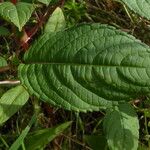
Impatiens glandulifera
Himalayan balsam · Indian Balsam · Jewelweed Policeman's-helmet · Policeman's-helmet · Ornamental jewelweed
Description
Source: leafsnapImpatiens glandulifera, commonly known as Himalayan balsam or Indian balsam, is a fast-growing annual plant native to the Himalayan region of Asia. It was introduced to Europe in the mid-19th century as an ornamental plant and has since become naturalized in many parts of Europe and North America. The plant can grow up to 2 meters tall and has hollow stems with lance-shaped leaves arranged alternately. The flowers are pink or purple with a distinctive spur at the back, giving them their characteristic shape. They bloom from June to October and are followed by seed pods that explode when touched, dispersing seeds up to 7 meters away. Himalayan balsam prefers moist soils and often grows along riverbanks, ditches, and other wetland areas. It is considered an invasive species in many parts of the world due to its ability to outcompete native plants for resources such as light, water, and nutrients. Despite its invasive nature in some regions, Impatiens glandulifera has been used for medicinal purposes by indigenous people for centuries due to its anti-inflammatory properties. Traditionally, it has been used to treat skin conditions such as eczema and psoriasis, as well as other ailments like fever and headache pain relief.
🌳 Himalayan balsam displays a distinctive ability to signal heavy metal contamination in soil. The plant frequently prospers in locations where the soil has high levels of metals like zinc and lead, a feature that indicates its potential use in phytoremediation. Scientists have utilized Himalayan balsam as a bioindicator, assessing areas for environmental pollutants because the plant only grows in soils that meet its particular requirements. This little-exploited aspect points to possibilities for research into bioremediation and assessments of ecological health.
🎭 Passionate love
Care Guide
💧 Water Every 3 days
Himalayan balsam, originally from the Himalayas, flourishes in moist environments with high humidity. To maintain its lush growth, it needs to be watered weekly. It prefers soil that is wet but not waterlogged. Its strong root system allows it to outcompete native plants, especially during its vigorous growing season.
How frequently should I give water to my Himalayan balsam plant?
To ensure the health of your Himalayan balsam, it is important to water it regularly throughout the growing season. In the spring, watering once a week should be sufficient. However, as the season progresses and temperatures rise, you may need to increase the watering to two or three times per week. It is important not to exceed this rate as it can harm the plant. Regardless of how often you water, it is crucial to maintain moist, but not wet, soil for your Himalayan balsam. If you have the plant in a pot, the soil can dry out faster, so you will generally need to water it more frequently – a few times a week – compared to an in-ground plant that only needs watering once a week.
How should I water my Himalayan balsam?
There are several ways to water Himalayan balsam. You can use a garden hose with a spray nozzle, a watering can, or any other common watering tool. This plant is not too particular about the type of water it receives, as it can survive with rainwater, tap water, or filtered water. It is generally best to avoid watering from overhead as it can harm the leaves and flowers and potentially cause disease. Using a drip irrigation system is often the most effective method for watering Himalayan balsam as it ensures even and direct application of water to the soil. For container-grown Himalayan balsam, you can use a cup, watering can, or tap water to directly water the soil.
What should I do if I give my Himalayan balsam either too much or too little water?
When it comes to underwatering Himalayan balsam, the remedy is quite simple. If you notice that your plant is lacking moisture, all you need to do is start watering it more regularly. On the other hand, overwatering can be a more serious problem, especially if you don't catch it early. When Himalayan balsam is overwatered, it can get sick and eventually die. To prevent this from happening, it's important to choose a suitable location for the plant that gets plenty of sunlight to dry the soil and has good drainage to avoid waterlogged soil. If you have overwatered your potted Himalayan balsam, you may need to transfer it to a new pot. The old container might not have had good soil drainage or enough drainage holes. When repotting, make sure to use loose soil and a pot that drains well.
How much water does my Himalayan balsam plant need?
When determining how much water to give your Himalayan balsam, there are a few ways to go about it. One approach is to feel the soil and water until the top six inches feel moist. Another option is to follow a specific measurement, such as giving about two gallons of water per week, considering factors like temperature and moisture levels. However, following strict guidelines may lead to overwatering if your plant needs less water. If growing in a container, moistening all layers of dry soil is recommended. To test this, you can stick your finger in the soil or water until you see some excess water draining from the pot.
How can I know if I am giving enough water to my Himalayan balsam?
To avoid overwatering your Himalayan balsam, there are certain things to keep in mind. These plants have deep roots, so they need to be watered regularly to keep the soil moist. However, overwatering can lead to root rot and browning of the plant. While underwatering is less likely to occur, your Himalayan balsam can survive without supplemental watering for some time. But if you go too long without watering, the plant may start to wilt and the leaves may become dry.
☀️ Light Full sun
himalayan balsam grows best when it receives plentiful sunlight. It can survive in shadier conditions, though its health may be somewhat weakened. Conversely, too much sun can cause the plant to become scorched. It comes from a habitat where it was exposed to sunlight for most of the day.
What are the sunlight requirements for Himalayan balsam?
Himalayan balsam thrives in environments with ample sunlight, requiring more than 6 hours of direct sunlight daily (full sun) for optimal growth. It can also survive in partial sun, with about 3-6 hours of sunlight, but its health may be somewhat compromised in these conditions. It's important to observe the movement of sunlight through your garden, aiming for spots that provide a good balance of light and shade to ensure the plants' well-being. Excessive sun exposure, however, can scorch the plant.
How does artificial lighting support Himalayan balsam's growth indoors?
Indoor Himalayan balsam plants benefit significantly from adequate lighting, especially when natural sunlight is insufficient. Artificial lights, particularly LED lights, can be customized to provide the specific wavelengths needed, promoting healthier and faster growth. For full sun plants, 30-50W/sq ft of artificial light is recommended, while partial sun plants need 20-30W/sq ft, and full shade plants require 10-20W/sq ft. The light source should be placed 12-36 inches above the plant, mimicking the natural daylight hours most suitable for the species, typically between 8-12 hours per day.
What symptoms indicate light deficiency in Himalayan balsam when grown indoors?
Himalayan balsam exhibits several signs when suffering from inadequate light, such as smaller new leaves, leggy or sparse growth, faster leaf drop, slower or halted growth, and pale or irregularly colored new leaves. These symptoms result from the plant's adaptation to conserve resources under low light conditions, aiming to survive despite the lack of sufficient sunlight.
What damage can excessive sunlight cause to Himalayan balsam?
Excessive sunlight can harm Himalayan balsam through chlorosis, where leaves turn yellow due to chlorophyll breakdown, affecting the plant's ability to photosynthesize. Sunscald, leaf curling, wilting, and leaf scorching are also common, causing physical damage to the plant's tissues, reducing its photosynthetic capacity, and overall health. These symptoms arise from the plant's exposure to intense sunlight, leading to increased water loss and damage.
What solutions are recommended for managing light exposure for Himalayan balsam?
To ensure optimal growth for Himalayan balsam, gradually moving the plant to sunnier locations to receive at least 6 hours of sunlight daily is crucial. For indoor plants, using artificial light or positioning them by a south-facing window maximizes sunlight exposure. Outdoors, avoiding sudden changes in light intensity helps prevent sunburn. Minimizing obstructions, like pruning trees, allows more sunlight to reach the plants. Transplanting smaller plants during their dormant period to sunnier locations with good drainage is also beneficial. It's important to note that parts of the plant damaged by insufficient sunlight may not recover, but new growth should be healthy after increasing light exposure.
🌡️ Temperature 5–32.2°C
Himalayan balsam originates from temperate regions and prefers temperatures between 68 and 95 °F (20 and 35 ℃). For best growth, keep it within that temperature range. Adjustments may be necessary in winter to ensure it remains warm.
What is the native environment of Himalayan balsam?
Himalayan balsam is native to temperate environments, where it thrives in temperatures between 68 to 95 °F (20 to 35 °C). To ensure optimal growth, it's important to maintain this temperature range, especially in colder months. Although it's highly cold-tolerant and doesn't require specific frost protection measures, preparing it for winter by watering generously before the first freeze is recommended. This helps keep the soil moist, allowing the plant to better withstand winter and early spring conditions.
How does Himalayan balsam respond to low temperatures?
Despite being extremely cold-tolerant, Himalayan balsam should be kept above a certain temperature threshold during winter to prevent issues with sprouting in spring. If the temperature falls below this unspecified limit, the plant might not display immediate damage, but there can be a noticeable reduction in sprouting or a complete lack of sprouting come springtime. To address this, remove any parts of the plant that have failed to sprout once the warmer weather returns.
What should be done if Himalayan balsam experiences high temperatures?
Himalayan balsam struggles with high temperatures, halting growth and becoming prone to rot if temperatures exceed its maximum tolerance level. In such cases, it's essential to trim away any parts that have been sunburned or dried up. Relocating the plant to a shadier spot or using a shade cloth to protect it during the hottest parts of the day can help. Additionally, watering the plant during cooler times, such as in the early morning and evening, will help keep the soil adequately moist.
💨 Humidity high (>60%)
This plant needs special care because it loves high humidity levels of 60-80% or more. The best way to achieve this is by placing a humidifier near the plant. Daily misting is also essential! Make sure the room has good ventilation.
🪴 Soil 6-7
🌱 Fertilizer
Himalayan balsam responds well to regular, light applications of fertilizer to encourage healthy leaf development. You should apply fertilizer to Himalayan balsam roughly once a month during the summer. Nitrogen is important for foliage, and adding nitrogen-rich sources helps Himalayan balsam do well.
🪴 Pot & Repot Every 12 months
Himalayan balsam needs well-draining pots to thrive. Proper drainage prevents moisture accumulation, which can cause root rot and other problems.
✂️ Pruning
When the Himalayan balsam reaches a height of 25 centimeters, pinch off the top buds. Perform a hard prune on thick branches to encourage new growth, and thin out dense branches to ensure even light distribution. Disinfect your pruning tools with potassium permanganate to prevent infections. This will help ensure proper air circulation and maintain cleanliness around the plant.
🌿 Propagating
🐛 Diseases & pets
☠️ Toxicity
Characteristics
- Plant Type
- Herb
- Life Cycle
- Annual, Perennial
- Genus
- Impatiens
- Family
- Balsaminaceae
- Hardiness Zone
- 4-7
- Mature Height
- 0.91 m to 2.13 m
- Mature Spread
- 61 cm
- Leaf Color
- Green
- Leaf Type
- Deciduous
- Flower Color
- Pink, White, Purple
- Flower Size
- 2.03 cm
- Bloom Time
- Early summer, Mid summer
- Planting Time
- Spring, Summer
- Harvest Time
- Mid summer, Late summer
- Native Area
- Nepal, Pakistan, India