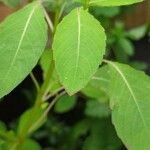
Impatiens pallida
Jewelweed · Pale touch-me-not · Pale snapweed · Yellow touch-me-not · Pale Jewelweed
Description
Source: leafsnapImpatiens pallida, commonly known as pale touch-me-not or yellow jewelweed, is a flowering plant in the family Balsaminaceae. Native to North America, it typically inhabits wetlands, stream and riverbanks, and other moist areas. The plant generally reaches heights of 1 to 2 meters and features yellow flowers that bloom from July to September. Its alternate, toothed leaves have a slightly sticky texture due to glandular hairs that secrete a clear liquid when touched. Traditionally, this liquid has been used as a natural remedy for skin irritations like poison ivy and insect bites because of its anti-inflammatory properties. Impatiens pallida serves as an important food source for various wildlife, including hummingbirds, bees, butterflies, and moths, which are attracted to its nectar-rich flowers. Although considered invasive in some regions outside its native range due to its rapid spread through seed dispersal mechanisms like explosive dehiscence, it remains a vital part of many ecosystems where it occurs naturally.
🌳 Although yellow jewelweed has not been widely noted for practical uses, recent studies indicate it may have potential in environmental science. In particular, yellow jewelweed appears promising for phytoremediation — the use of plants to cleanse contaminated soil, water, or air. Because it can grow under a range of conditions, including disturbed soils, it could be useful for reclaiming and restoring polluted sites. Research also suggests it might act as a bioindicator, detecting the presence of certain heavy metals in soil due to its sensitivity to those contaminants, thus offering a natural alert system for environmental monitoring.
🎭 Maternal love
Care Guide
💧 Water Every 3 days
Yellow jewelweed, native to moist environments, grows best in consistently moist soil but can also tolerate moderate drought conditions. It needs to be watered weekly to stay properly hydrated. As an outdoor herbaceous plant, it thrives with the help of rainwater during its growing season, which supports strong and healthy growth.
How should I water my Yellow jewelweed in the best way?
Yellow jewelweed can be watered using a garden hose with a spray nozzle, a watering can, or any common watering tool. They are not too particular about the type of water they receive, whether it is rainwater, tap water, or filtered water. However, it is best to avoid watering them from above as it can harm the leaves and flowers and potentially cause disease. A drip irrigation system is often the most effective method for watering Yellow jewelweed, as it provides even and direct watering to the soil. For container-grown plants, simply use a cup, watering can, or tap water to water the plant directly at the soil.
What should I do if I give my Yellow jewelweed too much or too little water?
To remedy underwatering the Yellow jewelweed, simply increase the frequency of watering when you notice it lacking moisture. Overwatering, on the other hand, can lead to more severe consequences if not detected early. It can cause diseases that result in decline and death of the plant. To prevent this, choose a growing location with ample sunlight to dry the soil and good drainage to prevent water from pooling. If you overwater a potted Yellow jewelweed, consider transferring it to a new pot with better soil drainage and efficient drainage holes.
How often should I give water to my Yellow jewelweed?
To keep your Yellow jewelweed healthy, it requires regular watering throughout the growing season. In spring, watering once per week is sufficient. As the weather gets warmer, you may need to increase watering to two to three times per week. However, be careful not to exceed this rate as it can harm the plant. It is important to keep the soil moist but not wet, regardless of how often you water. For potted Yellow jewelweed, you will generally need to water more frequently compared to plants in the ground. The soil in pots can heat up and dry out faster, so watering a few times per week is usually necessary.
How much water does my Yellow jewelweed plant need?
To determine how much water to give your Yellow jewelweed, there are a few methods you can try. One approach is to feel the soil to check for moisture and water until the top six inches are moist. Another option is to use a set measurement, like two gallons per week, depending on the weather and how quickly the soil dries out. However, be cautious about overwatering if your plant doesn't need that much. When growing Yellow jewelweed in a container, a different method is necessary. Make sure to water enough to moisten all dry soil layers, which you can test by sticking your finger in the soil or watching for excess water to trickle from the pot's drainage holes.
How can I know if I'm giving enough water to my Yellow jewelweed?
Avoiding overwatering your Yellow jewelweed can be a bit tricky. These plants have deep roots that need a weekly watering to keep the soil moist. However, Yellow jewelweed is prone to root rot, which can cause browning of the plant. Underwatering is less of a concern as these plants can survive for some time without additional water. But if you wait too long to water, the plant may wilt and the leaves may become dry.
☀️ Light Partial sun
Yellow jewelweed strongly prefers sites with moderate sunlight but can also adapt to shadier locations, which enhances its growth. Native to areas with dappled light, it does take in less sunlight during certain stages of its development. Both too much and too little sun exposure can affect its growth and overall health.
What are the sunlight requirements for yellow jewelweed?
Yellow jewelweed thrives in areas with moderate sunlight but can adapt to both partial and full shade environments, requiring about 3-6 hours of sunlight. For full shade, it needs less than 3 hours of sunlight. It's crucial to observe how sunlight moves through your garden to find the optimal balance for your plants, bearing in mind that both excessive and insufficient solar exposure can affect the plant’s growth and health.
How does artificial lighting support plant growth?
Indoor plants, including yellow jewelweed, benefit significantly from adequate lighting, especially when natural sunlight is insufficient. Artificial lighting, such as LED lights, can be tailored to provide specific wavelengths needed for optimal plant growth. For full sun plants, 30-50W/sq ft is recommended; partial sun plants require 20-30W/sq ft, and full shade plants need 10-20W/sq ft. The artificial light source should be placed 12-36 inches above the plant, mimicking natural sunlight conditions for 8-12 hours per day.
What are the symptoms of inadequate light for yellow jewelweed?
When yellow jewelweed is grown in insufficient light, it may display symptoms such as smaller new leaves, leggy growth, faster leaf drop, halted growth, lighter-colored new leaves, chlorosis, sunscald, leaf curling, wilting, and leaf scorching. These symptoms indicate either too much or too little sunlight, impacting the plant's ability to photosynthesize and maintain healthy growth.
What solutions can improve yellow jewelweed's light exposure?
To optimize yellow jewelweed's growth, gradually shift the plant to sunnier spots to receive 3-6 hours of sunlight daily, and consider artificial lighting for large or immovable plants, keeping lights on for at least 8 hours daily. Outdoors, avoid sudden changes in light to prevent sunburn. If your plant has been grown in the ground and faces sunlight obstructions, consider pruning surrounding trees or transplanting the plant during its dormant period to a location with ample sunlight and good drainage. Remember, parts of the plant affected by insufficient sunlight may not recover, but new growth can be healthy with improved light exposure.
🌡️ Temperature 0–35°C
Yellow jewelweed naturally occurs in habitats with temperatures between 68 and 95°F (20 to 35℃). The plant favors warm conditions and grows best within that temperature span. Changes to its surroundings may be required to regulate temperature, especially in colder seasons.
What is the native environment for Yellow jewelweed?
Yellow jewelweed thrives in environments where the temperature ranges from 68 to 95°F (20 to 35°C). It is native to areas that provide this warmth, allowing it to thrive best within these temperature ranges. To ensure its growth, adjustments may need to be made to its environment, especially during colder seasons, to manage the temperature effectively.
How does Yellow jewelweed handle cold temperatures?
Yellow jewelweed possesses strong cold resistance, meaning special frost protection measures are typically not necessary. However, if winter temperatures are expected to drop below the plant's growth limit temperature, it is important to provide cold protection. This can be achieved by covering the plant with soil or straw and watering it abundantly before the first freeze in autumn to ensure the soil remains moist and enters a frozen state. This approach aids in preventing drought and water scarcity during the winter and early spring months.
What should be done if Yellow jewelweed is exposed to low temperatures?
If Yellow jewelweed is exposed to temperatures below its suitable growth minimum during winter, it should be kept above its tolerable growing temperature minimum. Although the plant is cold-tolerant and may not show noticeable changes during winter, temperatures falling below its growth limit can result in decreased sprouting or no sprouting during spring. In such cases, removing parts that have failed to sprout in spring is recommended as a solution.
How does high temperature affect Yellow jewelweed and how can this be managed?
During summer, Yellow jewelweed should be kept below its suitable growth temperature maximum to avoid heat stress. Exceeding the tolerable growing temperature maximum can cause the leaves to lighten in color, become prone to curling, susceptible to sunburn, and in severe cases, lead to the wilting and drying of the entire plant. Managing high temperature stress involves trimming away sunburned and dried-up parts, moving the plant to a shaded location during midday and afternoon, or using a shade cloth to protect it. Additionally, watering the plant in the morning and evening helps keep the soil moist and supports the plant's health.
💨 Humidity
🪴 Soil 6-7
🌱 Fertilizer
Yellow jewelweed benefits from regular, dilute applications of fertilizer to encourage healthy leaf growth. You should fertilize Yellow jewelweed about once a month during the summer. Nitrogen is essential for foliage, and supplying nitrogen-rich sources helps Yellow jewelweed thrive.
🪴 Pot & Repot
✂️ Pruning
Yellow jewelweed thrives in moist woodlands and showcases delicate yellow flowers. To enhance its vigor and manage its size, it is best to prune it between early and late spring. Be sure to remove any dead stems to improve airflow. Avoid heavy pruning, and always use clean tools to prevent infections. These practices will promote the plant's health and encourage flower production.
🌿 Propagating
🐛 Diseases & pets
☠️ Toxicity
Characteristics
- Plant Type
- Herb
- Life Cycle
- Annual
- Genus
- Impatiens
- Family
- Balsaminaceae
- Hardiness Zone
- 3-9
- Mature Height
- 0.61 m to 1.83 m
- Mature Spread
- 30 cm to 61 cm
- Leaf Color
- Green
- Leaf Type
- Deciduous
- Flower Color
- Yellow
- Flower Size
- 2.54 cm
- Bloom Time
- Early summer, Mid summer
- Planting Time
- Autumn, Winter, Spring
- Harvest Time
- Mid summer