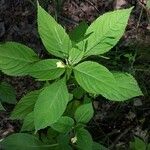
Impatiens parviflora
Βαλσαμίνη · Έρωτας · Small yellow balsam · Balsam · Small-flower touch-me-not
Description
Source: leafsnapImpatiens parviflora (small balsam, or small-flowered touch-me-not) is a species of annual herbaceous plants in the family Balsaminaceae, native to some areas of Eurasia, naturalized elsewhere and found in damp shady places. Impatiens parviflora can grow in sandy, loamy, and clay soils and prefer moist soil.
🌳 Small balsam is often considered a weed when it appears in gardens, but it can also serve a decorative purpose. Its attractive foliage and flowers make it suitable for planting in flower beds and containers. Additionally, it can be used as a border at the edge of gardens or along pathways. Because it provides ample shade, small balsam is also a good choice for shade gardens.
Care Guide
💧 Water
Small balsam thrives in moist environments and prefers consistently moist soil. To maintain the right balance, it should be watered weekly—this helps prevent both over-saturation and dryness. While it's usually grown outdoors, rainwater during the growing season can adequately meet its needs, reducing the necessity for extra watering.
How should I water my Small balsam plant?
To water Small balsam, you have a few options. You can use a garden hose with a spray nozzle, a watering can, or any other common watering tool. Small balsam is not too picky about how it's watered, as it can survive on rainwater, tap water, or filtered water. However, it's best to avoid watering from overhead as this can harm the leaves and flowers and possibly cause disease. Instead, a drip irrigation system is recommended for watering Small balsam because it applies water evenly and directly to the soil. If you have Small balsam in a container, you can follow a similar approach but change the tools. Use a cup, watering can, or tap to water the plant directly at the soil level.
What do I do if I give my Small balsam plant too much or too little water?
To remedy underwatering Small balsam, simply start watering it more regularly when you notice it lacking moisture. Overwatering, on the other hand, can be a more serious problem. If Small balsam is overwatered, it can develop diseases that cause it to decline and die. To prevent this, choose a growing location that gets plenty of sunlight to dry the soil and has good drainage to prevent water from pooling. If you overwater Small balsam in a pot, you may need to consider changing to a new pot with better drainage. When repotting, use loose soil and an efficiently draining pot.
How often do I need to water my Small balsam plant?
Small balsam requires regular watering during its growth season. In spring, you should water it once a week. As the season progresses and the weather gets warmer, you may need to increase watering to two or three times a week. However, be careful not to exceed this rate as it can harm the plant. It's important to keep the soil moist but not overly wet. Watering small balsam in a pot is slightly different. Potted soil tends to dry out faster, so you'll need to water container-grown small balsam more frequently. Typically, a few times a week is necessary for potted plants, compared to just once a week for those planted directly in the ground.
How much water does my little balsam plant need?
Determining how much water to give to your Small balsam can be approached in a few different ways. One method is to check the soil moisture by feeling it, and then watering until the top six inches feel damp. Another approach is to use a specific measurement, such as two gallons per week, adjusting for factors like temperature and soil dryness. However, following strict guidelines can result in overwatering if your plant requires less water. When growing Small balsam in a container, you'll need to use a different method. In this case, make sure to moisten all dry layers of soil, which you can test by sticking your finger in the soil or observing water drainage from the pot's holes.
How can I know if I'm watering my Small balsam plant enough?
Avoiding overwatering your Small balsam can be challenging due to conflicting watering needs. While these plants require weekly soil moisture due to their deep roots, they are prone to root rot and browning if overwatered. Underwatering is less likely, as Small balsam can survive without additional watering for some time. However, prolonged periods without water can cause wilting and dry leaves.
☀️ Light Full sun
Small balsam grows best in full sun but can still develop satisfactorily in locations with filtered sunlight. Its native habitat receives abundant sunlight. Insufficient light can impede its growth, while too much sun can cause wilting.
How many hours of sunlight does Small balsam need each day to grow well?
To ensure the well-being of your plants, it is important to provide them with at least 6 to 8 hours of sunlight each day. Ideally, they should receive more sunlight in the morning, especially during the summer. The Small balsam, in particular, thrives in full sun and benefits greatly from increased sunlight. The more light these plants receive, the better they can produce food, showcase stunning blooms, and overall, survive effectively.
What kind of sunlight does Small balsam require?
The Small balsam thrives in full sunlight, so it's important not to overcrowd them and allow each plant to receive even sunlight. Ensure that the leaves are not deprived of sunlight. If you plant them in pots, place them in windows with direct sunlight all year round. Avoid partial or filtered light, as this can result in weak stems and unhealthy flowers. It's best for the Small balsam to be consistently exposed to the sun.
Is sunlight bad for plants? How can I protect Small balsam from damage caused by the sun and heat?
When the temperature rises above 90℉(32℃), the Small balsam can be damaged by extreme heat, especially if it receives prolonged sun exposure. Therefore, it is important to provide some shade in the afternoon during the summer months. It's worth noting that summer sunlight is stronger and lasts longer than winter sunlight. If the Small balsam is under too much stress from the sun, it is necessary to keep them well-watered. Water them when the top of the soil is about 2 inches dry, and consider moving container plants indoors on hot days. It is normal for the plant leaves to wilt during the day, as they typically recover at night. However, if the Small balsam is noticeably drooping, this indicates rapid water loss and they should be watered promptly.
Should I keep Small balsam away from the sun?
The Small balsam is a sun-loving plant that does not need protection from the sun. Some species are even heliotropic, meaning they naturally move towards the sun. If possible, plant them in south-facing gardens so they can enjoy sun exposure from morning to afternoon. However, it's worth noting that while the sun is beneficial for these plants, they can still get sunburned. If you notice sunburn, consider providing shade in the afternoon and midday through a tree or wall. It's not possible to grow Small balsam in shady areas because their larger flowers require a lot of energy to grow and bloom. To achieve the best results, always provide full sun conditions when planting Small balsam.
What will happen if Small balsam doesn't get enough sunlight?
When Small balsam plants do not receive enough sunlight, their photosynthetic process slows down. This lack of sunlight causes the stems to become leggy as they stretch and thin out in an attempt to find more light. As a result, these plants will not bloom or produce seeds in shaded areas. In addition, insufficient sunlight can lead to the death of older leaves, lighter coloration in new leaves compared to older foliage, and smaller new growth. While Small balsam plants thrive in sunny conditions, they can wilt when exposed to excessive heat and ultraviolet light during the summer. To protect them, consider covering them with a net that provides a green shade, especially during the hottest months. When keeping these plants indoors, use a fan to help reduce the heat.
🌡️ Temperature 5–25°C
Small balsam is native to habitats where temperatures usually fall between 68 and 95 °F (20 to 35 ℃). This temperature preference should be taken into account when growing it. As the seasons change, the surrounding temperature should likewise be adjusted as needed.
What is the native temperature range for small balsam, and how should it be cultivated?
Small balsam (Impatiens parviflora) thrives in native environments where temperatures typically range from 68 to 95 °F (20 to 35 °C). When cultivating small balsam, it's crucial to mimic these temperature preferences, adjusting the surroundings with the changing seasons as necessary. This plant is remarkably cold-tolerant, requiring no special frost-protection measures in winter. However, to prepare for the first freeze in autumn, generously watering the plant is advised to ensure the soil remains moist and enters a frozen state. This preparation helps prevent water scarcity and drought conditions for the plant during the winter and early spring months.
How does small balsam react to temperatures below -25°C during winter, and what should be done in spring?
Small balsam is noted for its exceptional cold tolerance. However, should winter temperatures drop below -25°C, there might not be visible changes during the winter itself, but a decreased sprouting rate or absence of sprouting might be noticed in spring. To address this, any parts of the plant that have failed to sprout by spring should be removed to encourage new growth and maintain the health of the plant.
What should be done if small balsam experiences temperatures above 35°C?
When temperatures exceed 35°C, small balsam's growth can halt, and the plant becomes prone to rot due to its intolerance to high temperatures. To combat this, it's recommended to trim away any sunburned or dried-up parts of the plant. Then, move the plant to a cooler location with shade from the midday and afternoon sun or use a shade cloth to protect it. Ensuring the soil remains moist by watering the plant in the morning and evening can also help mitigate the effects of high temperatures.
💨 Humidity
🪴 Soil 5-7
🌱 Fertilizer
Small balsam responds well to regular, light applications of fertilizer to encourage healthy leaf development. Fertilize Small balsam about once a month during the summer. Nitrogen is essential for foliage, and providing nitrogen-rich sources helps Small balsam thrive.
🪴 Pot & Repot
✂️ Pruning
Small balsam, known for its abundant small flowers, thrives in shaded areas. To encourage growth, improve air circulation, and prevent fungal diseases, prune it from early to late spring. Make sure to use clean, sharp tools for precise cuts, helping the small balsam stay healthy and attractive.
🌿 Propagating
🐛 Diseases & pets
☠️ Toxicity
It can be harmful raw but is destroyed by thoroughly cooking or drying the plant. People with a tendency to rheumatism, arthritis, gout, kidney stones and hyperacidity should take especial caution if including this plant in their diet.
Characteristics
- Plant Type
- Herb
- Life Cycle
- Annual
- Genus
- Impatiens
- Family
- Balsaminaceae
- Hardiness Zone
- 5
- Mature Height
- 20 cm to 91 cm
- Mature Spread
- 20 cm to 40 cm
- Leaf Color
- Light Green
- Leaf Type
- Deciduous
- Flower Color
- Yellow
- Flower Size
- 1.02 cm to 1.52 cm
- Bloom Time
- Early summer, Mid summer
- Planting Time
- Spring
- Harvest Time
- Mid summer
- Native Area
- Uzbekistan, Afghanistan, Tajikistan, Kyrgyzstan, Kazakhstan, Mongolia, Turkmenistan, China