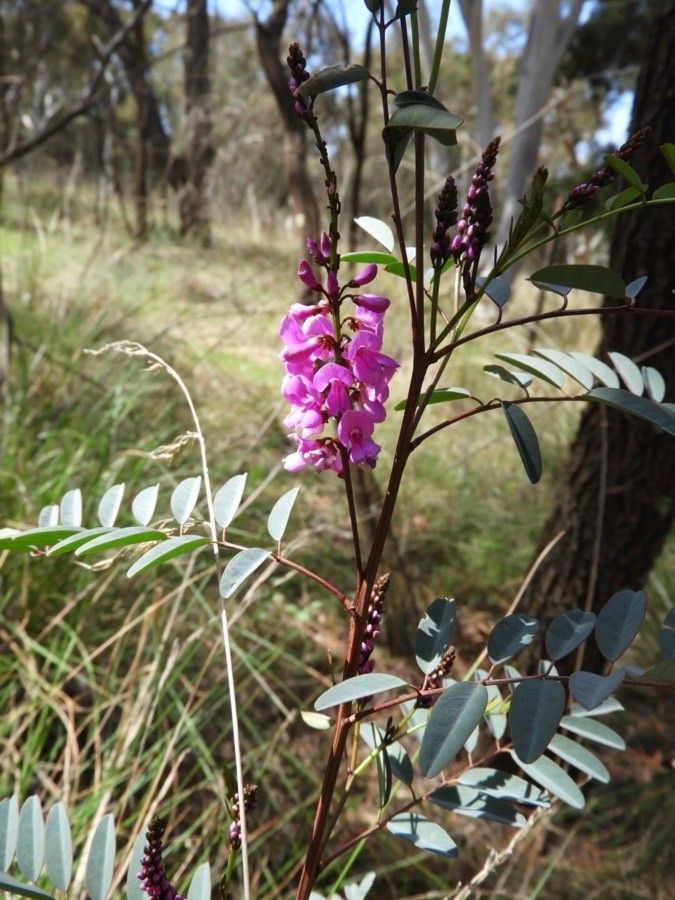
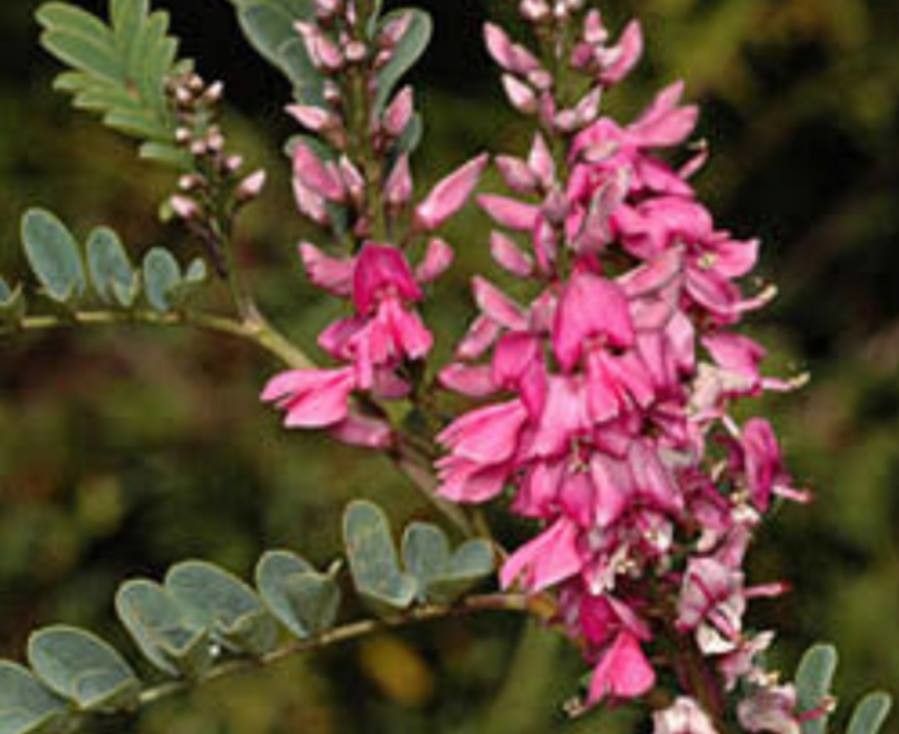
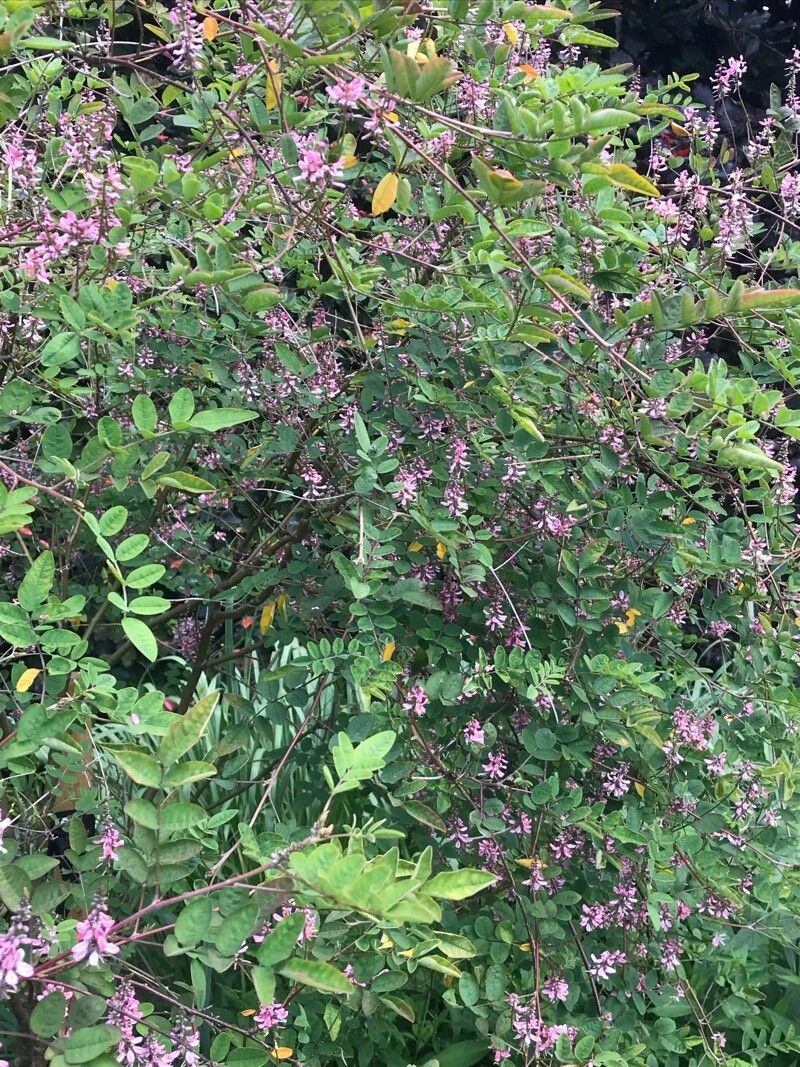
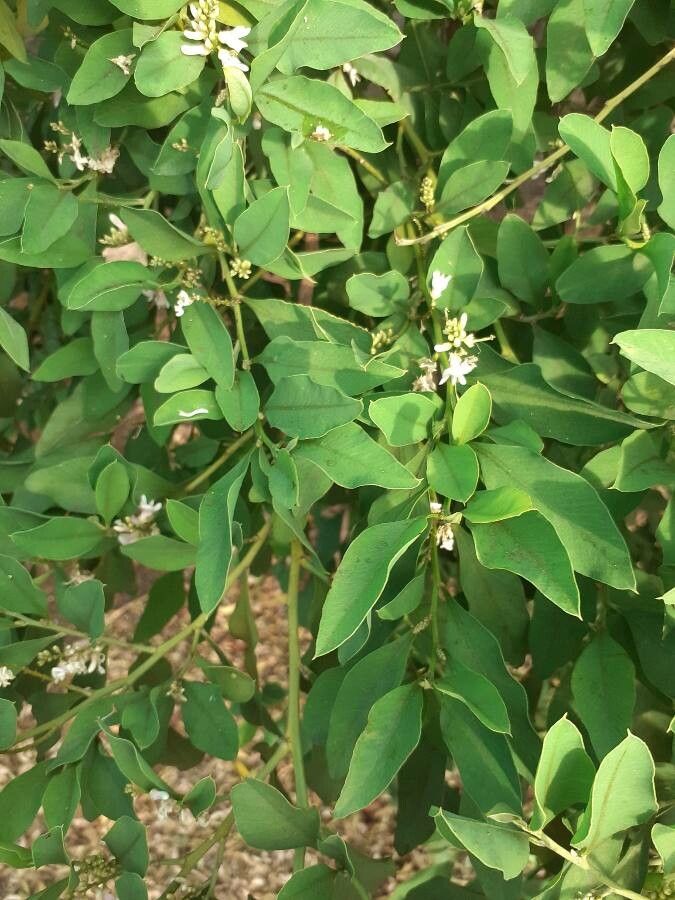
Indigofera australis: The Australian Indigo Shrub Indigofera australis, commonly known as Australian indigo, is a shrub native to Australia and a member of the Fabaceae family. It thrives in various habitats, including woodlands, heathlands, and along watercourses. The plant can grow up to 2 meters tall, featuring slender stems and small, alternately arranged leaves. The flowers of Indigofera australis are pink or purple and bloom from spring through summer. The plant produces small pods containing seeds that are dispersed by animals or the wind. Indigenous Australians have traditionally used Indigofera australis for medicinal purposes, such as treating skin conditions, coughs, and colds. Furthermore, the plant has potential applications in land restoration projects due to its ability to fix nitrogen in the soil. Overall, Indigofera australis is an important native Australian shrub with both cultural significance and potential ecological benefits.
Australian indigo demonstrates strong resistance to disease and is generally not prone to illnesses. Regarding upkeep, this plant is fairly low maintenance. When grown outdoors it needs only minimal watering, and larger specimens typically do not require pruning. Smaller plants, however, should be pruned after they finish blooming. Australian indigo is appropriate for anyone with an outdoor area, such as a garden or deck, and does not demand much care experience.
How to keep Indigofera Australis.
Light
The australian indigo does best with moderate sunlight, similar to the conditions of its native habitat. Excessive sun can be harmful, potentially causing wilting or bleaching. Conversely, too little light can prevent it from achieving optimal growth and flowering. Every stage of growth of this botanic specimen is well-suited to that sunlight regimen.
Water
Australian indigo thrives best in conditions similar to its natural habitat, where it experiences both wet and dry periods. This plant has a moderate tolerance for drought and grows well in well-drained soil, needing watering only every two weeks. Primarily grown outdoors, Australian indigo benefits from seasonal rains, which support its optimal growth without frequent human intervention.
Temperature
Australian indigo is naturally adapted to temperatures of 68 to 100.4 °F (20 to 38 ℃), matching the climate of its native habitat. Adjust temperatures each season to maintain its optimal growth.
Fertilizer
The best time to fertilize an Australian indigo is in early spring, as it comes out of dormancy. This stimulates overall growth and flower development. Fertilization improves the foliage, stems, and branches, while encouraging large, vibrant, and long-lasting flowers. It helps move nutrients from the roots to the flowers and boosts the plant's health and resistance to disease.
Pruning
Australian indigo showcases vibrant bluish-green foliage and blooms in the spring. For optimal growth, prune the plant carefully in late spring after it has finished flowering. Trim back one-third of the growth to encourage a denser appearance. It's also important to remove any dead branches to improve air circulation and maintain the plant's health. Be sure to use clean tools to minimize stress on the Australian indigo.
Botanical profile.
- Plant Type
- Shrub
- Life Cycle
- Perennial
- Genus
- Indigofera
- Family
- Fabaceae
- Hardiness Zone
- 9-11
- Mature Height
- 2.13 m
- Mature Spread
- 0.91 m to 2.13 m
- Leaf Color
- Green, Blue
- Leaf Type
- Evergreen, Deciduous
- Flower Color
- Pink, Purple
- Flower Size
- 1.27 cm
- Bloom Time
- Spring
- Planting Time
- Spring, Summer, Autumn
- Harvest Time
- Summer
Other names.
Reader questions.
How should I water my Australian indigo plant?
Your Australian indigo plant is not particular about how you water it. You can use any common watering tool, such as a watering can, hose, or cup, to moisten the soil. Regardless of the tool you choose, make sure to water the soil directly and evenly to provide sufficient water to all parts of the root system. It is recommended to use filtered water instead of tap water, as tap water may contain harmful particles. Additionally, using water that is at or slightly above room temperature is beneficial because very cold or hot water can be too much for the Australian indigo plant. However, the Australian indigo generally adapts well to any type of water.
Why should I put fertilizer on my Australian indigo?
Fertilization plays a crucial role in enhancing the overall health and well-being of an Australian indigo. By providing the right combination of energy and nutrients, fertilization promotes the growth of healthy foliage and robust stems and branches. The flowers of an Australian indigo are particularly valued by gardeners, and fertilization plays a significant role in their development. With the right fertilizer, the plant can efficiently transfer energy from its roots to its flowers, resulting in larger, more vibrant, and longer-lasting blooms. Additionally, proper fertilization helps maintain the plant's overall health, improving its resistance to diseases.
How much sunlight does Australian indigo need daily?
Australian indigo plants thrive when they receive plenty of indirect, filtered, or dappled light indoors. It's best to keep them in a sunny spot all day. The number of natural daylight hours can vary with the season, but it's a general rule to provide at least 6 hours of light, including 3-6 hours of direct sunlight. Australian indigo can handle many hours of indirect sun, so only direct sunlight needs to be monitored.
What temperature is best for Australian indigo to grow well?
To help your tropical plants thrive, it's best to maintain a temperature range of 75℉ to 90℉ (25-32℃). While different species can tolerate temperatures outside this range, sticking within a few degrees of these limits will ensure optimal growth. However, there are extreme temperature limits to be aware of. Anything below 50℉ (10℃) or above 95℉ (35℃) can hinder growth and cause issues with the leaves and stems. Low temperatures are particularly damaging, as even a light frost can lead to the death of your tropical plants. In fact, cellular death can occur rapidly, with some species dying within 12 to 24 hours.
What should I do if I give my Australian indigo plant too much or too little water?
Outdoor plants, especially newly planted ones or seedlings, are prone to not getting enough water. It's important to make sure you water them adequately for a few months while they're small or just planted. Once the roots are established, Australian indigo plants can rely on rain most of the time. When Australian indigo plants are in pots, overwatering is more likely. If you accidentally overwater your Australian indigo, you should take immediate steps to fix the situation. First, stop watering the plant to minimize the overwatering effect. Then, remove the plant from its pot and check its roots. If no root rot is found, you can put the plant back in the pot. However, if you do find signs of root rot, trim the affected roots and consider applying a fungicide to prevent further damage. Finally, repot the plant in well-draining soil. On the other hand, if your Australian indigo is underwatered, simply water it more frequently. Underwatering is usually easy to fix. If you notice the plant's leaves drooping, drying out, and falling off, just water it enough and the leaves will quickly regain their fullness. Make sure to adjust your watering frequency as soon as you notice the plant being underwatered.
When should I fertilize my Australian indigo plant for the best results?
To keep your Australian indigo plant healthy and thriving, consider fertilizing it during the early spring when it is coming out of its dormant phase and getting ready to bloom. This helps provide the plant with the energy it needs for overall growth and flowering. However, fertilizing during this time is not the only opportunity to feed the plant. Another option is to provide a smaller amount of fertilizer at the end of the season, specifically during the fall months. It can also be a personal preference to fertilize the plant during the planting process, although it is not always necessary.
What kind of sunlight does Australian indigo require?
Australian indigo, when it grows in the wild, is exposed to ample sunlight all day long. However, this sunlight is not direct, but instead filtered through the lush canopies of tall trees. When growing Australian indigo indoors, it is important to replicate this environment by providing bright indirect light, either through a sunny windowsill or using grow lights.
Do different stages of growing Australian indigo need different temperatures?
Australian indigo does not require temperature changes to enter different growing phases, but it is crucial to maintain consistency. Fluctuations in temperature can slow down growth, regardless of the current phase, so it is best to keep the plant in a controlled environment. The optimal temperature range is between 75℉ and 90℉ (25-32℃), with it being especially important to stay above the lower limit. Going above 90℉ (32℃) is not ideal, but as a tropical plant, it can tolerate higher temperatures. However, temperatures below 50℉ (10℃), and especially 40℉ (5℃), will directly harm this heat-loving plant species.
How often do I need to water my Australian indigo plant?
Natural outdoor plants can usually thrive with rainfall. If your area doesn't get much rain, make sure to water the plants every 2 weeks in spring and fall. Watering more often is necessary in the summer, while less water is needed in winter when plants grow slower. Young or newly planted Australian indigo plants require more frequent watering to establish growth and adapt to drought conditions. For potted plants, there are two ways to determine watering frequency for Australian indigo. One way is to follow a set watering schedule, such as once a week or every other week. However, this method doesn't consider the specific growing conditions for your plant. Alternatively, you can check the soil moisture and wait until the top two to four inches of soil have dried out before watering again. Adjust your watering frequency based on the season, as the plant's water needs are highest during summer.
When should I not put fertilizer on my Australian indigo plant?
During the winter, Australian indigo plants are in a dormant phase and do not require fertilization. They do not need to gain much energy from the soil for new growth at this time. Fertilizing during winter increases the risk of overfertilization, which can have negative consequences. The best times to fertilize Australian indigo plants are in early spring and fall. Therefore, during most of the spring and summer, fertilizer is not needed. Additionally, if the plant is experiencing excessively hot or dry conditions, it is advisable to delay fertilization.
Should Australian indigo stay away from the sun?
Australian indigo should not completely avoid sun exposure, but they should be mindful of the type of sunlight they receive. It is recommended that they are not exposed to more than 6 hours of direct sunlight per day. Direct sun refers to sunlight that directly hits the plant, while indirect light could come from reflections off nearby objects or filtered sunlight through a sheer curtain. Therefore, it is important to protect Australian indigo from excessive direct sun.
Does the Australian indigo plant require varying temperatures for different seasons?
Australian indigo does not have different temperature requirements for different seasons. The key to caring for it is to maintain the temperature within the optimal range. So, it is advisable to keep this plant indoors to have control over the temperature regardless of the outside climate. For tropical species like the indigo, light is also crucial, but they prefer partial side-level sun exposure. This means they should receive dappled or filtered light, and bright but indirect light is ideal when growing indoors. Exposing the plant to excess direct sunlight can harm its leaves and hinder its growth.