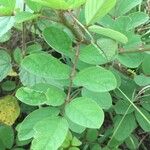
Indigofera hirsuta
Hairy indigo · Rough hairy indigo · Roughhairy indigo
Description
Source: leafsnapIndigofera hirsuta, commonly known as Hairy Indigo or Hairy Indigofera, is a perennial plant belonging to the Fabaceae family. It is native to tropical and subtropical regions of Africa, Asia, and Australia. The plant can grow up to 1 meter in height and spread out to a meter wide. The leaves of Indigofera hirsuta are pinnate, with small leaflets that are hairy on both sides. Its flowers are pink or purple and are arranged in clusters on long spikes that emerge from the leaf axils. The plant produces fruit in the form of pods containing several seeds. Indigofera hirsuta is valued for its medicinal properties and has been traditionally used to treat various ailments, including fever, coughs, skin diseases, wounds, and snake bites. The plant contains compounds such as indigotin, which have anti-inflammatory properties. In addition to its medicinal uses, Indigofera hirsuta has ecological importance. It can fix nitrogen from the atmosphere into the soil through its root nodules, thereby improving soil fertility. Overall, Indigofera hirsuta is a significant medicinal herb with ecological benefits that can be easily grown in tropical regions for its various advantages.
Care Guide
💧 Water Every 7 days
Hairy indigo thrives in moist, tropical environments and needs consistent weekly watering to stay healthy. While it can tolerate moderate drought, it benefits greatly from rainwater, which supplies essential nutrients and a balanced pH. Usually grown outdoors, this plant prefers warmer climates to truly flourish.
How should I water my Hairy indigo plant?
Hairy indigo can be watered using various common watering tools like a garden hose with a spray nozzle or a watering can. They are not too particular about the type of water they receive and can thrive with rainwater, tap water, or filtered water. Avoid watering Hairy indigo from above as it can harm the leaves, flowers, and potentially cause disease. A drip irrigation system is often the best method for watering this plant, as it provides even and direct water to the soil. If you have a Hairy indigo in a container, you can use a cup, watering can, or tap water to water it directly into the soil.
What should I do if I give my Hairy indigo too much water or not enough water?
The solution for underwatering Hairy indigo is simple: when you notice your plant lacks moisture, start watering it more regularly. On the other hand, overwatering can have more serious consequences, especially if you don't catch it early. Overwatered Hairy indigo can develop diseases that lead to decline and death. To avoid this, choose a suitable growing location with ample sunlight to dry the soil and good drainage to prevent water from pooling. If you overwater a potted Hairy indigo, consider transferring it to a new pot with better drainage and loose soil.
How frequently should I water my Hairy indigo plant?
Hairy indigo needs regular watering throughout the growing season. In the spring, water this plant about once per week. As the season heats up, increase watering to two to three times per week, but avoid excessive watering. Keep the soil moist but not wet. When growing in a pot, watering frequency should increase as potted soil dries out faster than ground soil. Generally, water a container-grown Hairy indigo a few times per week, compared to once per week for an in-ground plant.
How much water does my Hairy indigo plant need?
There are a few different ways to determine how much water your Hairy indigo needs. Some gardeners like to feel the soil for moisture and water until the first six inches are moist. Another approach is to use a specific measurement, like two gallons per week, adjusting for temperature and soil dryness. However, following strict guidelines might lead to overwatering if your plant needs less. When growing Hairy indigo in a container, you need to use a different method. Make sure all layers of soil are moist by checking with your finger or watering until you see excess water draining from the pot.
Am I giving enough water to my Hairy Indigo plant?
Avoiding overwatering can be challenging for Hairy indigo plants because they have deep roots that require weekly watering. However, these plants are highly prone to root rot and may experience browning if overwatered. Underwatering is less likely to be a problem as Hairy indigo can tolerate periods without supplemental watering, but if deprived of water for too long, the plant will start to wilt and its leaves may become dry.
☀️ Light Full sun
Hairy indigo grows best when exposed to direct sunlight, which is essential for its strong growth. It can tolerate shaded conditions, but those can reduce its vigor. Its preference for sun comes from originating in an environment with a clear sky. However, both excessive and insufficient light can stunt the plant's development.
What are the sunlight requirements for Hairy Indigo?
Hairy Indigo requires full sun, which means it thrives best in areas that receive more than 6 hours of direct sunlight per day. It can also tolerate partial sun conditions, receiving around 3-6 hours of sunlight. However, it's crucial to ensure it gets enough light, as both excessive and insufficient light can stunt the plant's growth. Observing how sunlight moves through your garden will help you choose the optimal spots for your plants, ensuring they get the right balance of light and shade.
How does artificial lighting affect Hairy Indigo growth?
Artificial lighting is essential for Hairy Indigo's growth, particularly when natural sunlight is insufficient, like in winter or less sunny spaces. For optimal growth under artificial lights, full sun plants like Hairy Indigo need 30-50W per square foot. The right type of artificial light, such as LED, which can provide specific wavelengths, should be chosen. The light source should be placed 12-36 inches above the plant, mimicking natural sunlight's distance, and kept on for 8-12 hours per day to simulate natural daylight hours.
What are the symptoms of light deficiency in Hairy Indigo?
When Hairy Indigo suffers from inadequate light, it might show symptoms such as smaller new leaves, leggy or sparse growth, faster leaf drop, slower or no new growth, and lighter-colored new leaves. Sunscald, where leaves develop necrotic areas due to intense sunlight exposure, and chlorosis, the condition of leaves turning yellow due to the breakdown of chlorophyll, are also common. Additionally, leaf curling, wilting, and leaf scorching can occur under extreme sunlight conditions.
How can I address light deficiency in Hairy Indigo?
To address light deficiency in Hairy Indigo, gradually move plants to a sunnier location each week to reach at least 6 hours of direct sunlight daily. For indoor plants, consider using a south-facing window or artificial light, keeping a lamp on for at least 8 hours daily or using professional grow lights. For outdoor plants, it's crucial to avoid sudden changes in light intensity to prevent sunburn. Minimizing obstructions, such as pruning trees that block sunlight, or transplanting to a sunnier location can also help. Note that parts of the plant damaged by insufficient sunlight may not recover, but new growth should be healthy with increased light exposure.
🌡️ Temperature 15–37.8°C
Hairy indigo naturally grows in areas with temperatures between 68 and 100 °F (20 to 38 ℃). It favors warmer climates, and temperature adjustments may be necessary during colder seasons to maintain healthy growth.
What are the ideal temperature conditions for growing Hairy Indigo?
Hairy Indigo thrives in warmer climates, with an ideal temperature range between 68 to 100 °F (20 to 38 °C). It has some cold tolerance but generally does not require any special measures when the temperature remains above 0°C. However, during colder seasons or if temperatures are expected to drop below 0°C, temporary cold protection measures are advisable. This could include wrapping the plant in plastic film, fabric, or other materials to ensure its health. Once temperatures rise, these protective measures should be promptly removed.
How does Hairy Indigo react to low temperatures and what are the remedies?
Hairy Indigo has a moderate tolerance to low temperatures but thrives best when temperatures are above 20°C. If temperatures drop below -10°C, the leaves may droop, and in severe cases, leaves will wilt and eventually fall off. To protect from low temperatures, the frost-damaged parts should be trimmed off, and protective measures such as wrapping the plant with non-woven fabric or cloth and constructing a wind barrier should be deployed to shield it from cold winds.
What measures should be taken if Hairy Indigo experiences high temperatures?
During the summer, it's important to keep Hairy Indigo's temperature below 38°C to prevent stress on the plant. If temperatures exceed 43°C, you may notice the leaves' color lightening, leaf tips becoming dry and withered, and the leaves curling, indicating a higher risk of sunburn. To combat these symptoms, trim away the sunburned and dried parts of the plant. Move the plant to a shaded location or use a shade cloth to protect it from the midday and afternoon sun. It's also beneficial to water the plant in the morning and evening to maintain soil moisture.
💨 Humidity
🪴 Soil 6-7
🌱 Fertilizer
Hairy indigo can benefit from frequent, weak doses of fertilizer to encourage healthy leaf growth. You should fertilize Hairy indigo about once a month during the summer months. Nitrogen is important for foliage, and supplementing with nitrogen-rich sources helps Hairy indigo thrive.
🪴 Pot & Repot
✂️ Pruning
Hairy indigo is a leguminous plant known for its hairy leaves and small purple flowers. For best results, prune the plant from early to late spring. This helps to remove dead branches, encourage new growth, and maintain its shape. Regular pruning not only enhances blooming but also reduces the risk of disease. Always use clean, sharp tools to ensure optimal care.
🌿 Propagating
🐛 Diseases & pets
☠️ Toxicity
Characteristics
- Plant Type
- Herb
- Life Cycle
- Annual, Perennial
- Genus
- Indigofera
- Family
- Fabaceae
- Hardiness Zone
- 8-11
- Mature Height
- 30 cm to 91 cm
- Mature Spread
- 61 cm to 91 cm
- Leaf Color
- Green
- Leaf Type
- Evergreen
- Flower Color
- Orange, Red, Gold
- Flower Size
- 1.27 cm
- Bloom Time
- Summer, Early fall, Mid fall
- Planting Time
- Spring, Summer
- Harvest Time
- Late summer, Fall, Early winter
- Native Area
- Sri Lanka, Burkina Faso, India, Malaysia, Angola, Namibia, Madagascar, Nigeria, Kenya, Niger, Uganda, Tanzania, Zimbabwe, Mali, Guinea-Bissau, Benin, Sierra Leone, Indonesia, Cambodia, Equatorial Guinea, Liberia, Mozambique, Cameroon, Burundi, Ghana, Ethiopia, Botswana, Congo, Central African Republic, Malawi, South Africa, Zambia, Sudan, Bangladesh, Laos, Guinea, Chad, China, Vietnam, Myanmar, Togo, Papua New Guinea, Senegal, Côte d'Ivoire, Ecuador, Gambia, Congo (DRC), Thailand, Gabon