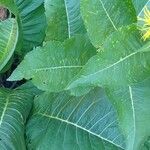
Inula helenium
Elecampagne · Elecampane · Scabwort · Velvet-dock · Elecampane Inula
Description
Source: leafsnapInula helenium, commonly known as elecampane, is a perennial herbaceous plant that belongs to the Asteraceae family. Native to Europe and Asia, it has also been naturalized in North America. The plant can reach heights of up to 2 meters and features large leaves that are hairy on their undersides. The bright yellow, daisy-like flowers of Inula helenium can have a diameter of up to 7 cm. These flowers bloom in late summer and early autumn on tall stems that rise above the foliage. The roots of this plant have been utilized for medicinal purposes for centuries, known for their anti-inflammatory, expectorant, and diuretic properties. Inula helenium thrives in moist soil conditions but can tolerate some drought once established. It grows best in full sun or partial shade and is often used as an ornamental plant in gardens due to its attractive flowers. In summary, Inula helenium is a striking herbaceous perennial with notable medicinal properties, making it a valuable addition to any garden or herbal medicine cabinet.
🌳 Elecampane is a versatile perennial herb commonly grown in both culinary and medicinal gardens. Its tall growth and abundance of daisy-like flowers can create a striking visual impact when planted in garden borders, whether as a single specimen or in groups. Additionally, the flowers attract bees, making elecampane an excellent choice for pollinator-friendly gardens.
🎭 Love, Protection, Psychic powers
Care Guide
💧 Water
☀️ Light Full sun
🌡️ Temperature 5–25°C
💨 Humidity
🪴 Soil 6-7
🌱 Fertilizer
🪴 Pot & Repot
✂️ Pruning
🌿 Propagating
🐛 Diseases & pets
☠️ Toxicity
Characteristics
- Plant Type
- Herb
- Life Cycle
- Perennial, Annual, Biennial
- Genus
- Inula
- Family
- Asteraceae
- Hardiness Zone
- 5
- Mature Height
- 0.91 m to 1.52 m
- Mature Spread
- 61 cm to 91 cm
- Leaf Color
- Green
- Leaf Type
- Deciduous
- Flower Color
- Yellow
- Flower Size
- 5.08 cm
- Bloom Time
- Early summer, Mid summer
- Planting Time
- Spring
- Harvest Time
- Mid summer
- Native Area
- Eurasia