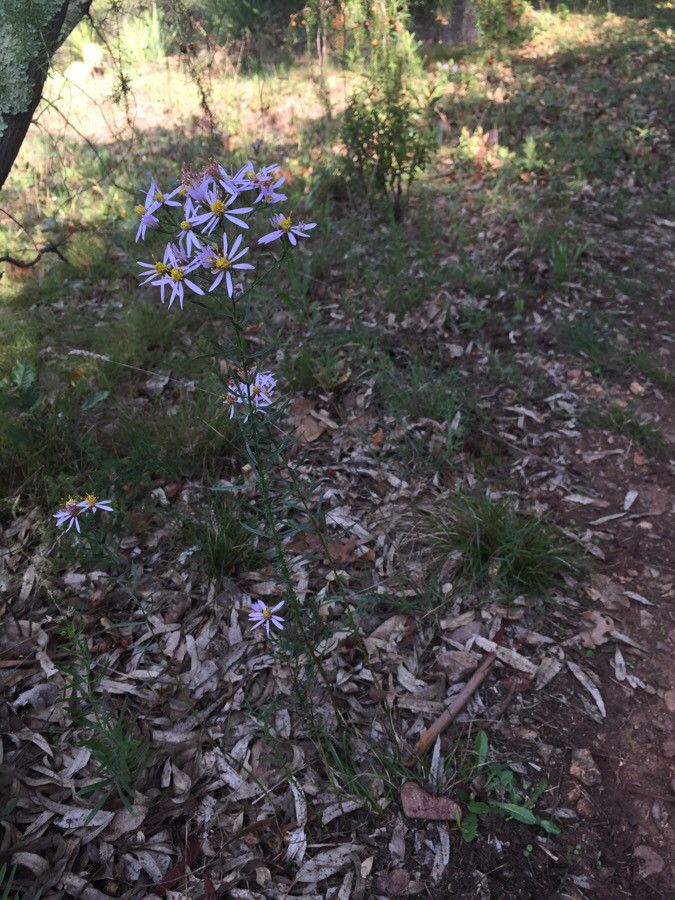
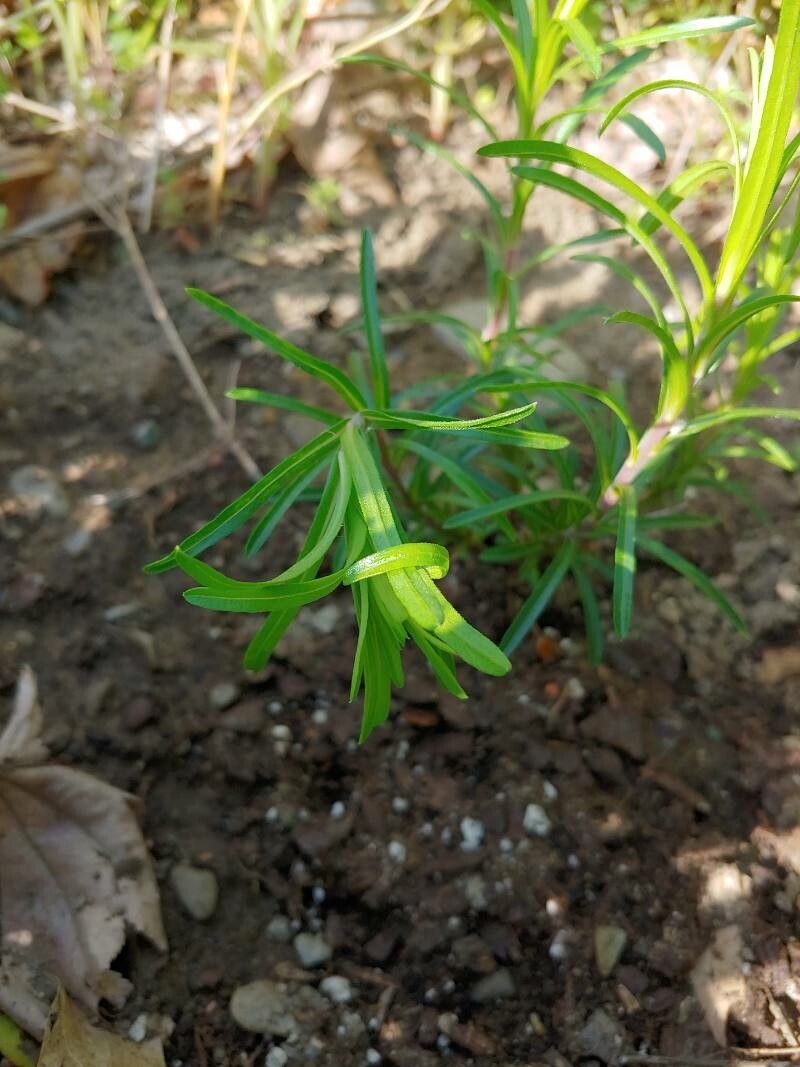
Ionactis linariifolia also known as the flax-leaf ankle-aster, flaxleaf whitetop or simply aster is a North American species of plants in the family Asteraceae. Ionactis linariifolia grows across much of eastern and central North America from Florida north as far as Québec and New Brunswick, and west to extreme eastern Texas. It is found in a variety of habitats such as moist sites, oak pine woods, ridges, and bluffs.Ionactis linariifolia is an herb up to 70 cm (28 inches) tall. Leaves are green, long and narrow, up to 4 cm (1.6 inches) long. The plant usually produces several flower heads in a flat-topped array. Each head has blue, white, or violet ray flowers surrounding numerous yellow disc flowers.It was initially classified by Carolus Linnaeus as Aster linariifolius, known as the stiff-leafed aster. Ionactis was classified as a separate genus by Edward Lee Greene in 1897.
The savory-leaf aster is fairly disease-resistant and typically does not suffer from many illnesses. However, it can be vulnerable to pests and pathogens present in its surroundings. Such infections are generally mild. Regarding care, the plant needs a moderate level of attention. Regular pruning is necessary to keep it looking tidy and to encourage healthy growth. Applying fertilizer can also help stimulate flowering. The savory-leaf aster is a good choice for anyone with outdoor space like a garden or patio and does not require extensive gardening experience. When grown indoors, it may need more care.
How to keep Ionactis Linariifolia.
Light
The savory-leaf aster does best when it gets abundant sunlight throughout the day. Regular exposure to the sun greatly improves the plant’s health and growth. It is naturally sturdy and tolerates light conditions that many other plants would not. Neither too much nor too little light bothers it, which shows its resilience.
Water
The savory-leaf aster thrives in rocky and sandy soils and prefers moderate moisture with consistent hydration. It requires weekly watering to stay healthy. In temperate regions, it benefits from natural rainfall, which provides enough water without over-saturating the plant.
Temperature
Savory-leaf aster can tolerate a wide range of temperatures, but its distribution may still be restricted by particular combinations of water and heat. It does best in warm summer conditions with sufficient rainfall or watering. Extended periods of cloudy, rainy weather or prolonged high temperatures increase the likelihood of the plant dying. In winter, adequate protection from cold can raise its chances of survival.
Fertilizer
The best time to fertilize a Savory-leaf aster is in early spring, as it comes out of dormancy and begins active growth. Fertilizing supplies essential nutrients for healthy growth. Although the Savory-leaf aster has fairly low fertilizer requirements, applying fertilizer annually can improve its survival and encourage better, longer-lasting flowers.
Pruning
Prune the savory-leaf aster in early to late spring by removing any dead or damaged stems and lightly shaping the plant. Deadheading the spent flowers encourages more blooms. Pruning also improves air circulation and reduces the risk of disease, promoting healthy growth and enhancing the plant's aesthetic appeal.
Botanical profile.
- Plant Type
- Herb
- Life Cycle
- Perennial
- Genus
- Ionactis
- Family
- Asteraceae
- Hardiness Zone
- 4-8
- Mature Height
- 30 cm to 61 cm
- Mature Spread
- 15 cm to 30 cm
- Leaf Color
- Green
- Leaf Type
- Deciduous
- Flower Color
- Lavender
- Flower Size
- 2.54 cm
- Bloom Time
- Late summer, Early fall, Mid fall
- Planting Time
- Spring, Summer
- Harvest Time
- Mid fall, Late fall
Other names.
Reader questions.
How should I water my Savory-leaf aster plant?
To properly water the Savory-leaf aster, use room temperature filtered water. Tap water may contain harmful particles, so filtered water is recommended. The plant prefers warm conditions, so avoid using cold water as it can be a shock. Instead of overhead watering, apply the filtered water directly to the soil until it is completely soaked. This allows the roots to absorb moisture and spread through the soil for optimal nutrient collection.
Why should I put fertilizer on my Savory-leaf aster?
The Savory-leaf aster relies on its leaves for structure, and fertilization is crucial for ensuring they look good and serve their purpose. Proper fertilization results in consistent color and a healthy texture of the leaves. Additionally, fertilization supports root growth and maintenance below the soil, leading to better nutrient absorption in the future. Essentially, fertilization benefits both the current and future health of your Savory-leaf aster.
What kind of sunlight does the Savory-leaf aster require?
Savory-leaf aster thrives in full sun and requires a minimum of six hours of sunlight to maintain healthy leaves, roots, and blooms. While most perennials also need six hours of sunlight per day, plants like the Orange Daylily or Giant Coreopsis can survive on just three hours of direct sunlight. However, it's important to note that these perennial flowering plants won't thrive as well as they would in sunnier conditions.
What should I do if I give my Savory-leaf aster too much or too little water?
Both overwatering and underwatering can harm your Savory-leaf aster's health, but overwatering is more common. When this plant receives too much water, its stems and leaves may wilt and turn yellow. Over time, overwatering can also cause diseases like root rot, mold, and mildew, which can kill the plant. Underwatering is less likely for the Savory-leaf aster because it tolerates drought well. However, it can still happen, resulting in brittle and brown leaves. It's important to identify signs of overwatering as soon as possible. Some diseases caused by overwatering, like root rot, may be irreversible if not addressed promptly. If you notice early signs of overwatering, reduce watering immediately. Check the soil quality where the plant grows. If it drains poorly, replace it with a loose, well-draining potting mix. On the other hand, if your Savory-leaf aster shows signs of being underwatered, simply water it more regularly until the signs disappear.
When should I fertilize my Savory-leaf aster?
If you grow your Savory-leaf aster outdoors each year, new growth shoots out in early spring. This means it's time to start fertilizing. Usually, a single application of fertilizer in the spring is enough for a Savory-leaf aster to do well. But if you want maximum growth, you can fertilize multiple times in the spring and early summer. If you choose this option, feed your Savory-leaf aster once every month to a month and a half.
Does sunlight harm Savory-leaf aster? How can I shield Savory-leaf aster from sun and heat damage?
In warm climates, some Perennial Flowering Plants may struggle with excessive heat and suffer from sun damage. They can wilt, dry out, or even experience growth problems if they are consistently exposed to the intense afternoon sun. However, not all plants require protection from the light afternoon sun. For those that are harmed by intense afternoon exposure, it is recommended to provide them with some shade in warmer climates. Gardeners can achieve this by planting these plants in areas that do not receive direct heat during the afternoon, such as under trees or behind bushes.
How frequently should I water my Savory-leaf aster plant?
If your Savory-leaf aster plant is in a pot, the best way to check if it needs water is to insert your finger into the soil. If the top two to three inches of soil are dry, it's time to water it. If you are growing the Savory-leaf aster outdoors in the ground, you can use the same finger test. Once the top few inches of soil have dried out, it's time to water. In the spring and early fall, you'll typically need to water this plant about once a week. During extremely hot weather, you may need to water it twice or more per week. However, it's worth noting that mature, well-established Savory-leaf asters can withstand drought well.
When should I not put fertilizer on my Savory-leaf aster?
During late fall and winter, your Savory-leaf aster goes into a dormant phase, during which it stops producing new growth. It's best to avoid fertilizing your Savory-leaf aster during this time. If you choose to fertilize in spring and summer, start reducing the frequency as summer approaches because the growth rate also slows down. It's never recommended to fertilize your Savory-leaf aster when the weather is hot or the soil is very dry as it can stress the plant and cause it to die prematurely.
Do I need to keep Savory-leaf aster out of direct sunlight?
Certain perennial plants require ample sunlight to reach their maximum bloom. However, in warmer climates, some of these plants actually benefit from less sun. For instance, individuals residing in hotter regions might find it beneficial to shade their flowering perennials during the intense afternoon sun, especially during summer months. Although many perennial flowering plants prefer partial shade in the hottest climates, there are exceptions. Take the Giant Coreopsis, for example, as it is not bothered by excessive sun exposure. These plants can flourish even when placed in the full sun during scorching weather.
How much water does my Savory-leaf aster require?
To properly water your Savory-leaf aster, you should generously water it when the top couple of inches of soil are dry. Make sure to thoroughly saturate the soil until water drains out of the pot's drainage holes. If you don't see water draining, you may not be giving enough water. However, be cautious not to let water accumulate, as this can harm the plant. If the water doesn't drain, it may indicate poorly draining soil, which is harmful to the plant. For outdoor plants, one inch of rain per week should be enough.
Which fertilizer should I use for my Savory-leaf aster?
Choosing the best fertilizer for a Savory-leaf aster is a straightforward task. These plants will thrive on a general-purpose garden fertilizer with equal amounts of nitrogen, phosphorus, and potassium, such as a 10-10-10 ratio. Avoid fertilizers with high nitrogen content if unsure. The most effective fertilizers for a Savory-leaf aster will typically be granular and slow-release, making them easy to apply to the soil. Using an organic soil amendment like compost can also be helpful for feeding your Savory-leaf aster.
What will happen if the Savory-leaf aster doesn't get enough sunlight?
If you're growing Savory-leaf aster and not getting enough sunlight, you'll notice signs of inadequate requirements in your plants. They will produce fewer blooms than if they had full sun exposure. Some plants may develop dry spots on their leaves, but most will still bloom even in inadequate sun. However, the flowers will be smaller and less full.