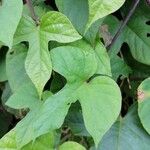
Ipomoea hederacea
Ivy-leaved Morning-glory · Ivy-leaf morning-glory · Entireleaf Morningglory · Ivy-leaved morning glory · Ivyleaf Morning-glory
Description
Source: leafsnapIpomoea hederacea, the ivy-leaved morning glory, is a flowering plant in the bindweed family. The species is native to tropical parts of the Americas, and has more recently been introduced to North America. It now occurs there from Arizona to Florida and north to Ontario and North Dakota. Like most members of the family, it is a climbing vine with alternate leaves on twining stems. The flowers are blue to rose-purple with a white inner throat and emerge in summer and continue until late fall. The leaves are typically three-lobed, but sometimes may be five-lobed or entire. Flowers occur in clusters of one to three and are 2.5-4.5 cm long and wide. The sepals taper to long, recurved tips and measure 12–24 mm long. The species shares some features with the close relative Ipomoea purpurea.
🌳 Ivy-leaved morning-glory has been found growing in soils with varying levels of heavy metals, suggesting it may be useful for bioremediation. Researchers are investigating how ivy-leaved morning-glory and related species might indicate soil health and assist in the recovery of contaminated environments.
🎭 Either love or being mortal
Care Guide
💧 Water Twice per week
Ivyleaf morning-glory thrives in conditions of high humidity and consistently moist soil. To meet these needs, it should be watered twice a week. When grown indoors, misting the plant can help replicate its natural tropical environment. Being an evergreen, the ivyleaf morning-glory requires a consistent watering routine throughout the year to maintain its moisture levels.
What's the easiest way to water my Ivyleaf morning-glory plant?
To properly water the Ivyleaf morning-glory, it is best to use filtered water at room temperature. Tap water may contain harmful particles, so filtered water is preferred. It is important to note that the water should be at room temperature or slightly warmer, as cold water can shock the plant. To avoid complications with the foliage, it is recommended to not water from overhead. Instead, gently apply the filtered room temperature water to the soil until it is completely soaked. This is beneficial for the plant as it helps moisten the roots and promote the spread of nutrients throughout the soil.
What do I do if I give too much or too little water to my Ivyleaf morning-glory plant?
Overwatering is a common issue that can harm your Ivyleaf morning-glory. It can cause wilting and yellowing of the stems and leaves, and lead to diseases like root rot, mold, and mildew that can kill your plant. Underwatering is less likely, but still possible. If it occurs, the leaves may become brittle and brown. It's important to recognize the signs of overwatering early. Some diseases caused by overwatering may be irreversible if you wait too long. Reduce your watering schedule if you notice these signs and consider using well-draining soil. If you see signs of underwatering, simply water more regularly until the signs go away.
How frequently should I water my Ivyleaf morning-glory?
If your Ivyleaf morning-glory is potted, the most precise way to know when it needs water is to check the soil by sticking your finger into it. If the top two to three inches of soil feel dry, then it's time to water. If your Ivyleaf morning-glory is grown outside in the ground, you can also test the soil using the same method. When the top few inches of soil are dry, it's time to water. Generally, during spring and early fall, you'll need to water this plant about once a week using this method. However, in extremely hot weather, you may need to water it twice a week or even more. Nevertheless, mature and well-established Ivyleaf morning-glories have a remarkable ability to survive drought conditions.
How much water does my Ivyleaf morning-glory plant need?
To properly water your Ivyleaf morning-glory, make sure the top two to three inches of soil are dry before watering. It's important to give it a generous and thorough watering, making sure to soak the entire soil. The water should be enough to cause excess water to flow out through the drainage holes at the bottom of the pot. If you don't see excess water draining, you may have not given enough water. However, be careful not to let the water accumulate in the soil, as it can harm the plant. If there's no drainage, it could indicate poorly draining soils, which should be avoided for the plant's health. If the plant is outdoors, 1 inch of rain per week should be enough.
How do I water my Ivyleaf morning-glory at different times while it is growing?
The water needs of the Ivyleaf morning-glory can change depending on different growth stages. When the plant is in its early years or has just been transplanted, it will require more water than usual. During these stages, the plant focuses on sprouting new roots to support future growth, so providing slightly more moisture is beneficial. However, after a few seasons, the Ivyleaf morning-glory will require less water. Another growth stage that may require more water is during the bloom period when the plant is developing flowers. Flower development uses a significant amount of moisture, so additional water might be needed during this time.
☀️ Light Full sun
Ivy-leaved morning-glory does best in spots that get continuous light for most of the day, though it can adjust to locations with less sun. It originated in areas with many sunny days each year, and both sufficient or inadequate sunlight can stunt its growth—sufficient light causing pale leaves and inadequate light reducing flowering.
What are the sunlight requirements for Ivyleaf morning-glory?
Ivyleaf morning-glory requires full sun, which means it needs above 6 hours of sunlight daily to thrive. However, it can also tolerate partial sun, about 3-6 hours of sunlight per day. It's crucial to observe the movement of sunlight through your garden to find spots that offer the right balance of light and shade, ensuring the plants' optimal growth and happiness.
Can Ivyleaf morning-glory adapt to different sunlight conditions?
Yes, Ivyleaf morning-glory is adaptable to varying sunlight conditions. Originating from regions with a high number of sunny days annually, it prefers continuous light exposure but can adjust to less direct sunlight as well. Regardless, both excessive and inadequate sunlight can negatively affect its growth, leading to pale leaves or reduced flowering, respectively.
How can artificial lighting support Ivyleaf morning-glory's growth indoors?
Indoor Ivyleaf morning-glories can benefit significantly from artificial lighting, especially when natural sunlight is scarce, like in winter or shaded areas. Optimal growth is supported by adequate artificial lighting, which mimics natural sunlight conditions. LED lights, being customizable to specific plant needs, are ideal. For full sun plants, 30-50W/sq ft of light is recommended, 20-30W/sq ft for partial sun, and 10-20W/sq ft for full shade. The light source should be placed 12-36 inches above the plant and turned on for 8-12 hours daily to simulate the natural daylight hours.
What are the symptoms of inadequate light for indoor Ivyleaf morning-glory?
When Ivyleaf morning-glory doesn’t receive sufficient light indoors, it might show symptoms like smaller new leaves, leggy or sparse growth, faster leaf drop, slower or no new growth, and lighter-colored or chlorotic leaves. Excessive sunlight, conversely, can cause sunscald, leaf curling, wilting, or leaf scorching. These symptoms highlight the plant's struggle with inadequate or excessive light, affecting its ability to photosynthesize efficiently and maintain health.
What solutions can help overcome light-related issues for Ivyleaf morning-glory?
To address light-related issues for Ivyleaf morning-glory, gradually increase its exposure to direct sunlight until it receives at least 6 hours daily. This can be done by moving the plant closer to a south-facing window or using artificial light sources for indoor plants that can't be moved easily, ensuring they're on for at least 8 hours a day. Outdoors, adapt plants to sunlight changes by moving them progressively over weeks to prevent sunburn. Reducing obstructions or transplanting during dormant periods can also enhance sunlight exposure. While parts of the plant previously affected might not recover, new growth will be healthy with improved lighting.
🌡️ Temperature 10–37.8°C
Ivy-leaved morning-glory originates from areas with temperatures ranging from 68 to 100 °F (20 to 38 ℃). It thrives best in warmer conditions. In regions with extreme weather, seasonal adjustments to recreate its native environmental conditions may be necessary.
What are the ideal temperatures for growing Ivyleaf morning-glory?
Ivyleaf morning-glory thrives within a temperature range of 68 to 100°F (20 to 38°C), preferring warmer climates for optimal growth. This plant possesses strong cold resistance, which typically negates the need for special frost protection measures in winter. However, in environments where winter temperatures are expected to fall below the critical growth limit, it's still crucial to prevent cold damage. To protect the plant from cold, wrapping the trunk and branches with non-woven fabric or cloth is advised. Additionally, watering the plant abundantly before the first freeze in autumn helps keep the soil moist and prevents drought and water scarcity during winter and early spring.
How does Ivyleaf morning-glory respond to low temperatures?
Ivyleaf morning-glory is considerably cold-tolerant, but for optimal health, it is best kept above the minimum suitable growth temperature. During winter months, maintaining temperatures above the tolerable growth minimum is crucial. If winter temperatures dip below a certain limit, while the plant may not show noticeable symptoms during the colder season, its branches might turn brittle and dry by spring, failing to produce new shoots. The best practice for handling this issue is to prune any dead branches in spring, encouraging the growth of new leaves.
What should be done if Ivyleaf morning-glory experiences high temperatures?
During the summer, it's important to ensure that the temperature around Ivyleaf morning-glory remains below the maximum suitable growth threshold. Exceeding the maximum tolerable growth temperature can lead to symptoms such as lighter-colored leaves, dry and withered tips, and increased susceptibility to sunburn. Addressing these issues involves trimming away the sunburned and dried parts, relocating the plant to a shadier area or using a shade cloth to protect it from the harsh midday and afternoon sun. Additionally, watering the plant in the morning and evening can help maintain soil moisture and alleviate stress from high temperatures.
💨 Humidity
🪴 Soil 6-7
🌱 Fertilizer
Ivy-leaved morning-glory responds well to regular, light applications of fertilizer to encourage healthy leaf growth. Apply fertilizer about once a month during the summer. Nitrogen is important for foliage, and adding nitrogen-rich sources helps Ivy-leaved morning-glory thrive.
🪴 Pot & Repot
When repotting Ivy-leaved morning-glory, choose a pot that's 1-2 inches (2.5–5.1 cm) larger in diameter and ensure it has good drainage. Use a well-draining potting mix and consider adding perlite for extra drainage. Repot in spring or early summer, water thoroughly afterward, and place it in a shady spot at first.
✂️ Pruning
Ivyleaf morning-glory is a fast-growing plant. To maintain its health, prune any diseased or weak branches during its winter dormancy. This practice helps improve air circulation, reduces plant density, and lowers the risk of pests and diseases.
🌿 Propagating
🐛 Diseases & pets
☠️ Toxicity
Characteristics
- Plant Type
- Vine, Herb
- Life Cycle
- Annual
- Genus
- Ipomoea
- Family
- Convolvulaceae
- Hardiness Zone
- 6-11
- Mature Height
- 3.05 m
- Mature Spread
- 3.05 m
- Leaf Color
- Green
- Leaf Type
- Evergreen, Deciduous
- Flower Color
- Purple, Blue, Pink, Lavender
- Flower Size
- 2.54 cm to 4.57 cm
- Bloom Time
- Summer
- Planting Time
- Autumn
- Harvest Time
- Mid summer, Late summer, Early fall
- Native Area
- Honduras, Mexico, Cuba, Bahamas