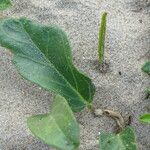
Ipomoea imperati
Fiddle-leaf morning-glory · White-flower beach · Beach morning-glory · Seafoam morning glory · Beach morningglory
Description
Source: leafsnapIpomoea imperati, the beach morning-glory (a name it shares with Ipomoea pes-caprae), is a species of flowering plant in the family Convolvulaceae. Like Ipomoea pes-caprae, its seeds disperse by floating in seawater. It has been found on the sandy shores of every continent except Antarctica.Ipomoea imperati and I. pes-caprae can be easily can be distinguished in that I. imperati has white flowers and I. pes-caprae usually has purple flowers. The leaves of I. imperati are more linear or lanceolate while those of I. pes-caprae tend to be more circular or ovate.It is considered an invasive species in some places.
Care Guide
💧 Water Every 7 days
Beach morning-glory thrives in coastal sands, adapting well to sporadic rainfall and moderate humidity. It withstands salt spray and drought but requires weekly watering. Its efficient root system allows it to absorb sparse rainwater while resisting strong beach winds, making it an ideal choice for outdoor shoreline environments.
How should I water my Beach morning-glory?
To properly water the Beach morning-glory plant, it is best to use filtered water that is at room temperature. Tap water may contain harmful particles, so it is best to avoid using it for this plant. The plant prefers water that is at room temperature or slightly warmer, as it is native to warm environments and cold water can be jarring for its system. It is also important to avoid overhead watering, as this can cause issues with the foliage. Instead, water the plant by applying filtered room temperature water directly to the soil until it is fully saturated. This helps to nourish the roots and allows them to spread throughout the soil and absorb the necessary nutrients.
What do I need to do if I give too much or too little water to my Beach morning-glory?
Overwatering and underwatering can harm your Beach morning-glory. However, overwatering is more common and can cause wilting, yellowing leaves, and diseases like root rot, mold, and mildew. Underwatering is less likely, but it can make the leaves brittle and brown. To care for your plant, it's important to recognize the signs of overwatering early. If you notice them, reduce your watering immediately and check the soil drainage. If the soil is not draining well, replace it with a loose, well-draining potting mix. If your plant shows signs of receiving too little water, simply water more regularly until the signs go away.
How frequently do I need to water my Beach morning-glory?
If your Beach morning-glory is in a pot, you can check if it needs water by sticking your finger in the soil. If the top two to three inches of soil are dry, then it's time to water it. If you have planted your Beach morning-glory in the ground, you can use the same method to test the soil. When the top few inches of soil are dry, it's time to water. Usually, during spring and early fall, you'll need to water it about once a week, but in extremely hot weather, you may need to water it twice a week or even more. However, it's worth noting that mature and well-established Beach morning-glory plants can tolerate drought well.
How much water does my Beach morning-glory plant need?
When watering your Beach morning-glory, don't hold back on the amount of water you give. Wait until the soil is dry about two to three inches down, then give it a good, deep watering. Make sure the water soaks the soil completely and flows out through the drainage holes at the bottom of the pot. If you don't see any excess water draining out, you may not have given enough water. But be careful not to let the water accumulate inside the soil, as this can harm the plant. On the other hand, if water doesn't drain through the pot easily, it could indicate poor soil drainage, which is bad for the plant's health. If the plant is outside, about one inch of rain per week should be enough.
How do I water my Beach morning-glory when it is growing in different stages?
The water requirements of the Beach morning-glory can vary depending on its growth stages. In the first few years or after being transplanted, it will need more water due to the focus on developing new roots for future growth. These roots perform best with slightly higher moisture levels. However, as the plant matures, it will require less water. Another stage that may require more water is during blooming, as flower development uses a significant amount of moisture.
☀️ Light Full sun
The beach morning-glory does best with abundant light, comparable to unobstructed summer sunshine. This need comes from its coastal origin, where light is plentiful. When exposed to only moderate light, its health can decline noticeably. Growth may stall from insufficient photosynthesis, while too much exposure can scorch the leaves.
What are the sunlight requirements for Beach morning-glory?
Beach morning-glory thrives in environments that replicate the unobstructed sunshine found on coastlines, where it originates. It requires full sun exposure, defined as above 6 hours of sunlight daily, to maintain optimal health. Partial sun, or about 3-6 hours of sunlight, may lead to significant health decline due to insufficient photosynthesis. It's crucial to observe your garden's sunlight patterns to find spots with the right balance of light and shade, ensuring the plant's well-being.
How can artificial lighting be used for Beach morning-glory?
When natural sunlight is insufficient, especially during winter or in less sunny spaces, artificial lighting becomes essential for Beach morning-glory's growth. LED lights are recommended due to their ability to provide specific light wavelengths needed by plants. For full sun plants, 30-50W/sq ft of artificial light is needed, while partial sun plants require 20-30W/sq ft, and full shade plants need 10-20W/sq ft. The light source should be placed 12-36 inches above the plant for optimal growth, mimicking natural daylight hours, typically 8-12 hours per day.
What symptoms indicate Beach morning-glory is not receiving enough light?
Symptoms of inadequate lighting in Beach morning-glory include smaller new leaves, leggy or sparse growth, faster leaf drop, slower or no new growth, and lighter-colored or yellow leaves indicating chlorosis. Excessive sunlight exposure can lead to symptoms like sunscald, leaf curling, wilting, and leaf scorching, which damage the plant's tissues and reduce its health.
How can I ensure my Beach morning-glory receives enough light?
To optimize growth, gradually acclimate Beach morning-glory to receive at least 6 hours of direct sunlight daily. For indoor plants, use a south-facing window or provide artificial light for at least 8 hours a day. For outdoor plants, moving them step by step to sunnier spots helps them adapt without risk of sunburn. If obstructions like trees block sunlight, consider pruning them or transplanting smaller plants to sunnier locations. Remember, parts of the plant damaged by insufficient light might not recover, but new growth will be healthy with increased light exposure.
🌡️ Temperature 15–35°C
Beach morning-glory comes from warm climates and needs temperatures of 59 to 95 °F (15 to 35 ℃). In colder seasons, make sure its surroundings stay within that preferred temperature range to preserve healthy growth.
What is the optimal temperature range for Beach morning-glory?
Beach morning-glory thrives in warm regions, requiring a temperature range of 59 to 95 °F (15 to 35 °C). To maintain healthy growth, especially during colder seasons, it's crucial to keep its environment within this preferred temperature range. The plant exhibits some cold tolerance and typically doesn't need extra protection when the temperature remains above its minimum tolerable threshold. However, if temperatures are expected to fall below this minimum, taking temporary measures like wrapping the plant with plastic film, fabric, or other materials for cold protection is necessary. These protective measures should be removed as soon as the temperature rises to suitable levels again.
How does Beach morning-glory handle low temperatures?
Beach morning-glory has moderate tolerance to low temperatures, performing best when the temperature is maintained above its suitable growth minimum. During the winter months, it's important to ensure the temperature stays above this minimum tolerable level to prevent damage. If the temperature dips below its growth limit, the plant's leaves may droop, and while they can recover in mild cases, severe cold can cause leaves to wilt and eventually fall off. To protect Beach morning-glory from frost and cold, trim off any frost-damaged parts and before the cold hits again, wrap the plant with non-woven fabric or cloth and construct a wind barrier to shield it from cold winds.
What should I do if Beach morning-glory experiences high temperatures?
During the summer, it's crucial to ensure Beach morning-glory's temperature remains below its suitable growth maximum to prevent stress and damage. Exceeding this temperature can lead to lighter leaf colors, dry and withered leaf tips, curled leaves, and an increased risk of sunburn. To mitigate these issues, trim away any sunburned or dried parts of the plant. Relocate the plant to a shaded location away from the harsh midday and afternoon sun or use a shade cloth for protection. Additionally, watering the plant in the morning and evening will help keep the soil moist and further reduce temperature stress.
💨 Humidity
🪴 Soil 6-7
🌱 Fertilizer
The best time to fertilize a Beach morning-glory is in early spring, as it emerges from dormancy and starts active growth. Fertilizing supplies essential nutrients for healthy development. While Beach morning-glory has relatively low fertilizer requirements, applying fertilizer annually can improve its survival and encourage better, longer-lasting blooms.
Do I have to put fertilizer on my Beach morning-glory plant?
The leaves of the Beach morning-glory are important for its structure, and fertilization is key to keeping them looking good and functioning properly. When you fertilize, it helps the leaves maintain a consistent color and healthy texture. Fertilization also benefits the plant below the soil's surface by promoting new root growth and maintaining existing roots. This not only keeps your plant healthy now but also helps it absorb nutrients from the soil better in the future.
When should I fertilize my Beach morning-glory for the best results?
When you grow your Beach morning-glory outside, it will start growing new leaves in early spring. This is when you should start fertilizing it for the year. Usually, one round of fertilizer in the spring is enough for the Beach morning-glory to do well. However, if you want it to grow even more, you can fertilize it multiple times during the spring and early summer. If you choose to do this, you can feed it once every month to a month and a half.
When is the best time to not fertilize my Beach morning-glory?
During the late fall and winter, your Beach morning-glory will go into a dormant phase and stop growing. It is best to avoid fertilizing it during this time. In the spring and summer, if you do choose to fertilize, start reducing the amount as summer approaches and the growth rate slows down. It is not recommended to fertilize the Beach morning-glory during extremely hot weather or when the soil is excessively dry. Fertilizing in these conditions can put stress on the plant and cause it to die earlier.
What kind of fertilizer does my Beach morning-glory plant require?
Choosing the right fertilizer for a Beach morning-glory is actually quite simple. These plants thrive on a general-purpose garden fertilizer with equal amounts of nitrogen, phosphorus, and potassium. A fertilizer with a ratio of 10-10-10 or something similar will work well. Avoid fertilizers with high nitrogen levels if you're not sure. Granular fertilizers are most commonly recommended for Beach morning-glory, particularly slow-release ones that are easy to apply to the soil. Additionally, feeding the plant with organic soil amendments like compost can be beneficial.
How can I make my Beach morning-glory plant grow better?
To ensure optimal growth, wait for your Beach morning-glory plant to just break through the soil's surface in early spring. Once you spot this, apply a granular slow-release fertilizer with a balanced formula to the soil around the base of the plant. You can repeat this process later in the season if desired. Remember to always apply the fertilizer to the soil at the base of the plant, rather than directly on the plant itself. Occasionally, you may need to move some leaves aside to access the soil above the roots. It's also a good idea to water your Beach morning-glory before and after fertilizing.
🪴 Pot & Repot
✂️ Pruning
Beach morning-glory grows quickly. To promote better airflow and reduce the risk of pests and diseases caused by overcrowding, prune any diseased or weak branches during the plant's winter dormancy.
🌿 Propagating
🐛 Diseases & pets
☠️ Toxicity
Characteristics
- Plant Type
- Herb, Vine
- Life Cycle
- Perennial
- Genus
- Ipomoea
- Family
- Convolvulaceae
- Hardiness Zone
- 8-10
- Mature Height
- 3 cm to 15 cm
- Mature Spread
- 9.14 m
- Leaf Color
- Green
- Leaf Type
- Evergreen
- Flower Color
- White
- Flower Size
- 5.08 cm
- Bloom Time
- Summer, Fall
- Planting Time
- Spring, Summer, Autumn
- Harvest Time
- Late summer, Fall, Early winter
- Native Area
- Libya, Egypt, Turkey, Malaysia, Belize, Angola, Mexico, Guatemala, Morocco, Guinea-Bissau, Benin, Cuba, Sierra Leone, Cameroon, Liberia, Mozambique, Venezuela, Ghana, Congo, Honduras, Mauritania, Cyprus, Guinea, Panama, Lebanon, Colombia, Bahamas, Togo, Guyana, Senegal, Nicaragua, Costa Rica, Ecuador, Algeria, Côte d'Ivoire, Gambia, Thailand, Gabon