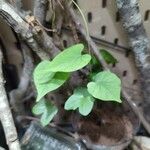
Ipomoea lacunosa
White morning-glory · White-star · Small-flowered white morning-glory · Pitted morningglory · White morningglory
Description
Source: leafsnapIpomoea lacunosa, commonly known as white morning glory or pitted morning glory, is a species of flowering plant in the Convolvulaceae family. Native to North America, it thrives in various habitats such as fields, roadsides, and disturbed areas. The plant features heart-shaped leaves and produces white or pale pink, trumpet-shaped flowers that bloom from June to September. These flowers are pollinated by bees and other insects. Traditionally, Native Americans have utilized Ipomoea lacunosa for its laxative properties. However, the plant also contains toxic compounds that can cause gastrointestinal distress if ingested in large quantities. In some regions, the species is considered a weed due to its ability to spread rapidly through seed dispersal. Additionally, it can be challenging to control because of its deep taproot system. Overall, Ipomoea lacunosa is a fascinating plant with both beneficial and potentially harmful properties, depending on how it is used or encountered.
🎭 Power, fondness
Care Guide
💧 Water Every 7 days
White morning-glory thrives in moist environments, needing consistent hydration and evenly moist soil. While it can tolerate drought to some extent, weekly watering is essential for its best growth. Usually grown outdoors, this plant exhibits vigorous growth, which is dependent on sufficient water to maintain its lush foliage.
What is the easiest way to water my White morning-glory plant?
To make sure the White morning-glory stays healthy, it's best to use filtered water at room temperature. Tap water may have harmful particles, so it's important to filter it. The plant prefers warm conditions, so avoid using cold water as it can be a shock. Instead of watering from above, it's better to water the soil directly until it's completely soaked. This helps moisturize the roots and allows them to spread and gather nutrients.
What should I do if I give my White morning-glory plant too much or too little water?
Both overwatering and underwatering can harm your White morning-glory, but overwatering is a more common problem. Excessive watering can cause wilting, yellowing of stems and leaves, and even diseases like root rot, mold, and mildew, which can be fatal to your plant. While underwatering is less likely to occur with the White morning-glory, it is still a possibility. In such cases, the leaves may become brittle and brown. It is important to promptly recognize signs of overwatering as certain diseases like root rot may become irreversible if left untreated. If you notice early signs of overwatering, reduce your watering schedule and consider using a well-draining potting mix if the current soil is not suitable. Conversely, if you observe signs of underwatering, increase the frequency of watering until the signs improve.
How often should I give water to my White morning-glory?
If your White morning-glory is in a pot, the best way to check if it needs water is by sticking your finger into the soil. If the top few inches are dry, it’s time to water it. If you’re growing the White morning-glory outside in the ground, you can use the same method. Once the top layer of soil has dried out, it’s time to water. During spring and early fall, watering once a week is usually enough. In extremely hot weather, you might need to water twice a week or even more. However, mature White morning-glory plants have a good ability to withstand drought.
How much water does my White morning-glory plant need?
To properly water your White morning-glory, don't hold back on the amount of water. When the top two to three inches of soil are dry, it's time for a thorough watering. Make sure to fully saturate the soil, allowing excess water to flow out of the drainage holes at the bottom of the pot. If you don't see any excess water draining, it means you haven't watered enough. However, be careful not to let the water accumulate inside the soil as it can harm the plant. On the other hand, if the water doesn't drain through the pot, it may indicate poorly draining soil which is harmful to the plant's health. Lastly, if the plant is outdoors, receiving about 1 inch of rain per week should be sufficient.
How should I water my White morning-glory when it's growing at different stages?
The water requirements of the White morning-glory vary depending on its growth stages. In the first few years and after being transplanted, it needs more water to support root growth. These new roots are important for future growth and require extra moisture. As the plant matures, it will need less water. Another stage that requires additional water is the bloom period, as flower development relies on a significant amount of moisture.
☀️ Light Full sun
White morning-glory grows best when exposed to full daylight, which promotes healthy development. Both young and mature plants can tolerate conditions with light somewhat obscured, although this tolerance comes from having developed in environments rich in sunlight. Too much or too little light can impede its growth and cause health problems.
What are the sunlight requirements for White morning-glory (Ipomoea lacunosa)?
White morning-glory requires 'Full sun' conditions, meaning it needs above 6 hours of direct sunlight daily to thrive. In 'Partial sun' conditions, it should receive about 3-6 hours of sunlight. It's important to observe the movement of sunlight through your garden to find the best spots that offer the right balance of light and shade for these plants, ensuring their happiness and health.
How should White morning-glory be cared for in terms of light exposure?
White morning-glory thrives with exhaustive daylight exposure, crucial for its healthy development through both immature and mature stages. While it can endure slightly masked light conditions, its growth and health are optimal when it originates from an environment abundant in sunlight. Inadequate or excessive light exposure may negatively affect the plant's growth, leading to various health issues. To supplement natural light, especially in less illuminated indoor spaces or during winter, artificial lighting such as LED lights can be used to promote faster, healthier growth. Proper artificial lighting involves choosing the right type of light, setting the correct distance and duration of exposure to mimic natural sunlight conditions.
What symptoms indicate light-related issues in White morning-glory?
When White morning-glory is grown in inadequate light conditions, it might show symptoms such as small new leaves, leggy or sparse growth, faster leaf drop, slower or no new growth, lighter-colored new leaves, chlorosis (leaves losing their green color and turning yellow), sunscald (damage from intense sunlight exposure), leaf curling, wilting, and leaf scorching. These symptoms can result from both insufficient and excessive sunlight exposure, indicating the plant's struggle to adapt to its light environment.
What solutions can help improve White morning-glory’s growth in terms of lighting?
To enhance the growth of White morning-glory, gradually exposing the plant to more sunlight is crucial. For indoor plants, moving them to a sunnier spot, such as a south-facing window, can increase direct sunlight exposure to at least 6 hours daily. Additionally, using artificial light, like desk or ceiling lamps for at least 8 hours a day, or professional grow lights can supplement natural sunlight. Outdoors, selecting the optimal spot requires gradual exposure adaptation to prevent sunburn, considering the plant’s ability to adjust to sudden changes in light intensity. Reducing sunlight obstructions, such as pruning trees to allow more light through, or transplanting to a sunnier location with good drainage, can significantly benefit the plant's access to adequate sunlight.
🌡️ Temperature 15–37.8°C
White morning-glory originates from habitats where temperatures typically range from 68 to 100 °F (20 to 38 ℃). It does well in this moderate to hot climate. In cooler seasons, if possible, adjust its surroundings to approximate those preferred temperatures.
What is the ideal temperature range for White morning-glory?
White morning-glory thrives in environments where temperatures typically range from 68 to 100 °F (20 to 38 °C). This plant is comfortable in moderate to hot climates and exhibits some degree of cold tolerance, generally not requiring additional measures when temperatures are above 0°C. However, in cooler seasons or if temperatures are expected to fall below 0°C, it's advisable to take temporary measures for cold protection, such as wrapping the plant with materials like plastic film or fabric.
How does White morning-glory react to low temperatures?
White morning-glory has a moderate tolerance to low temperatures and prefers the temperature to be above 20°C. During winter, it's important to keep the plant above 0°C. Exposure to temperatures below -10°C may cause the leaves to droop; they might recover in mild cases but will wilt and eventually fall off in severe instances. If frost damage occurs, you should trim off the affected parts. To prepare for low temperatures, wrapping the plant with non-woven fabric or cloth and constructing a wind barrier can help protect it from cold winds.
What should I do if White morning-glory is exposed to high temperatures?
During the summer, it's important to ensure that White morning-glory is kept below 38°C, as temperatures exceeding 43°C can lead to discoloration of the leaves, drying and withering of leaf tips, curling leaves, and increased susceptibility to sunburn. To mitigate these issues, you can trim away sunburned and dried-up parts of the plant. Relocating the plant to a shaded area during the midday and afternoon or using a shade cloth can help. Additionally, watering the plant in the morning and evening can help maintain soil moisture.
💨 Humidity
🪴 Soil 6-6
🌱 Fertilizer
White morning-glory benefits from regular, light applications of fertilizer to encourage healthy leaf growth. You should fertilize White morning-glory about once a month during the summer months. Nitrogen is essential for foliage, and providing nitrogen-rich sources helps White morning-glory thrive.
🪴 Pot & Repot
✂️ Pruning
The white morning-glory grows quickly, so it's important to prune any diseased or weak branches during its winter dormancy. Doing so improves air circulation, prevents excessive crowding, and reduces the risk of pests and diseases.
🌿 Propagating
🐛 Diseases & pets
☠️ Toxicity
Characteristics
- Plant Type
- Vine, Herb
- Life Cycle
- Annual
- Genus
- Ipomoea
- Family
- Convolvulaceae
- Hardiness Zone
- 8-11
- Mature Height
- 3.96 m
- Mature Spread
- 91 cm
- Leaf Color
- Green
- Leaf Type
- Deciduous
- Flower Color
- White
- Flower Size
- 2.54 cm
- Bloom Time
- Summer
- Planting Time
- Spring
- Harvest Time
- Mid summer, Late summer, Early fall