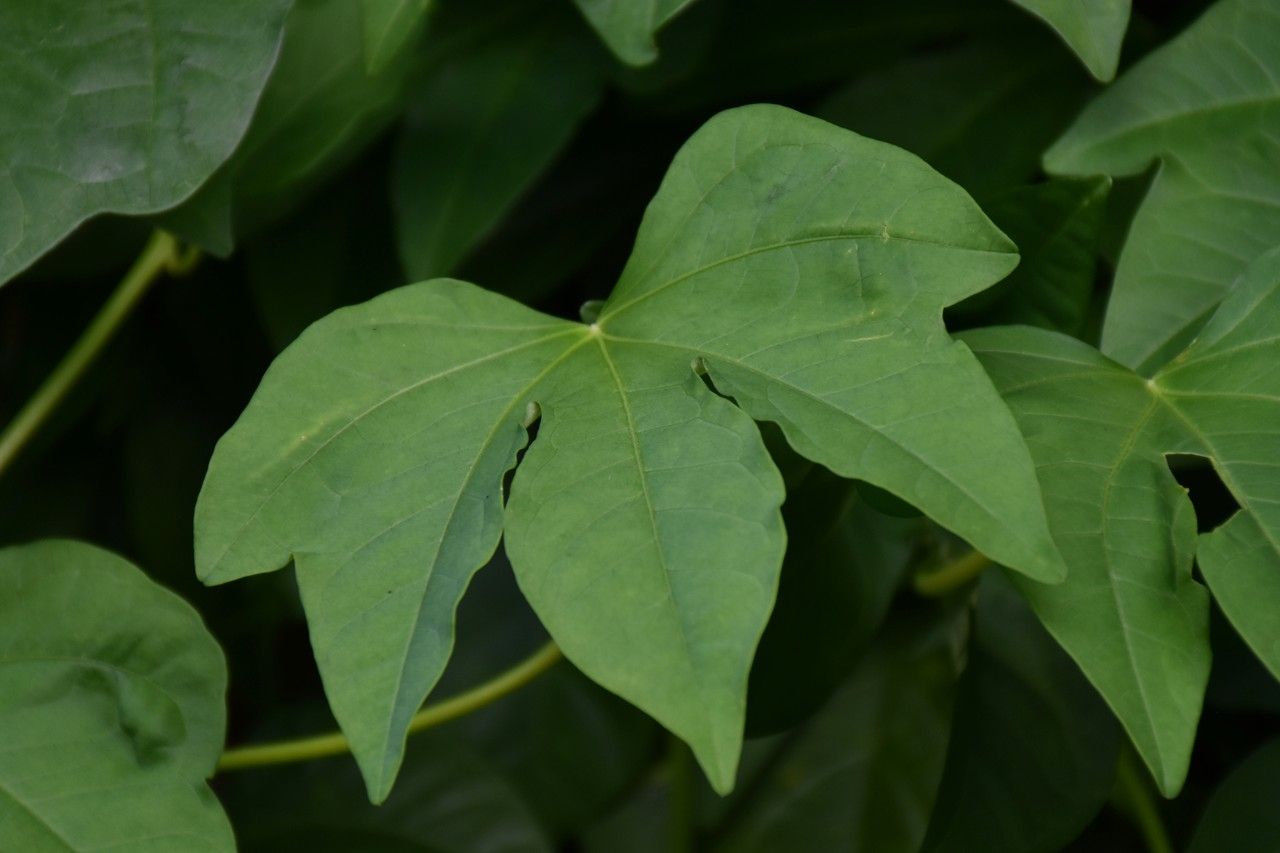
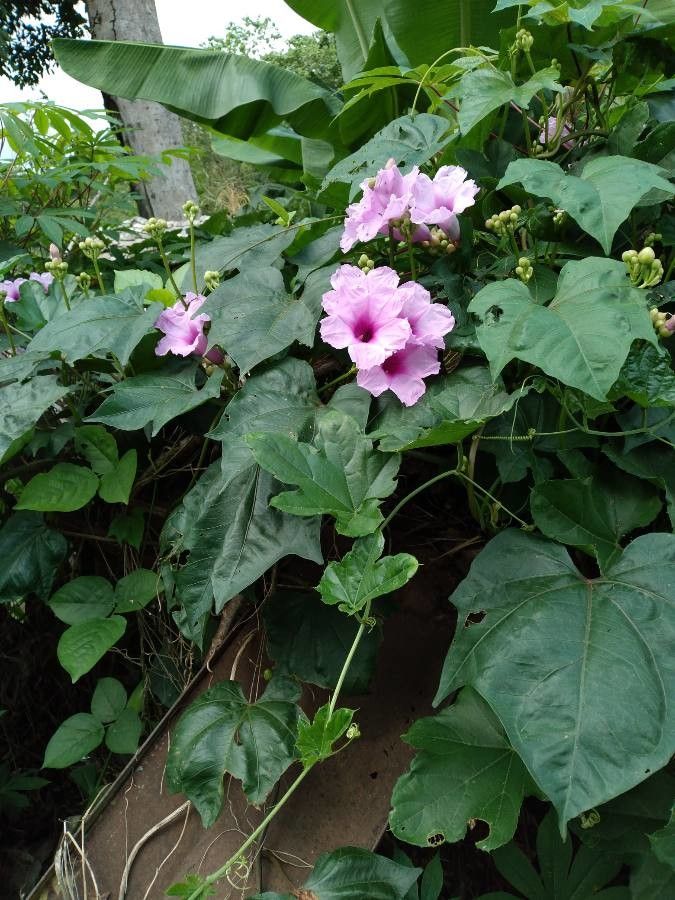
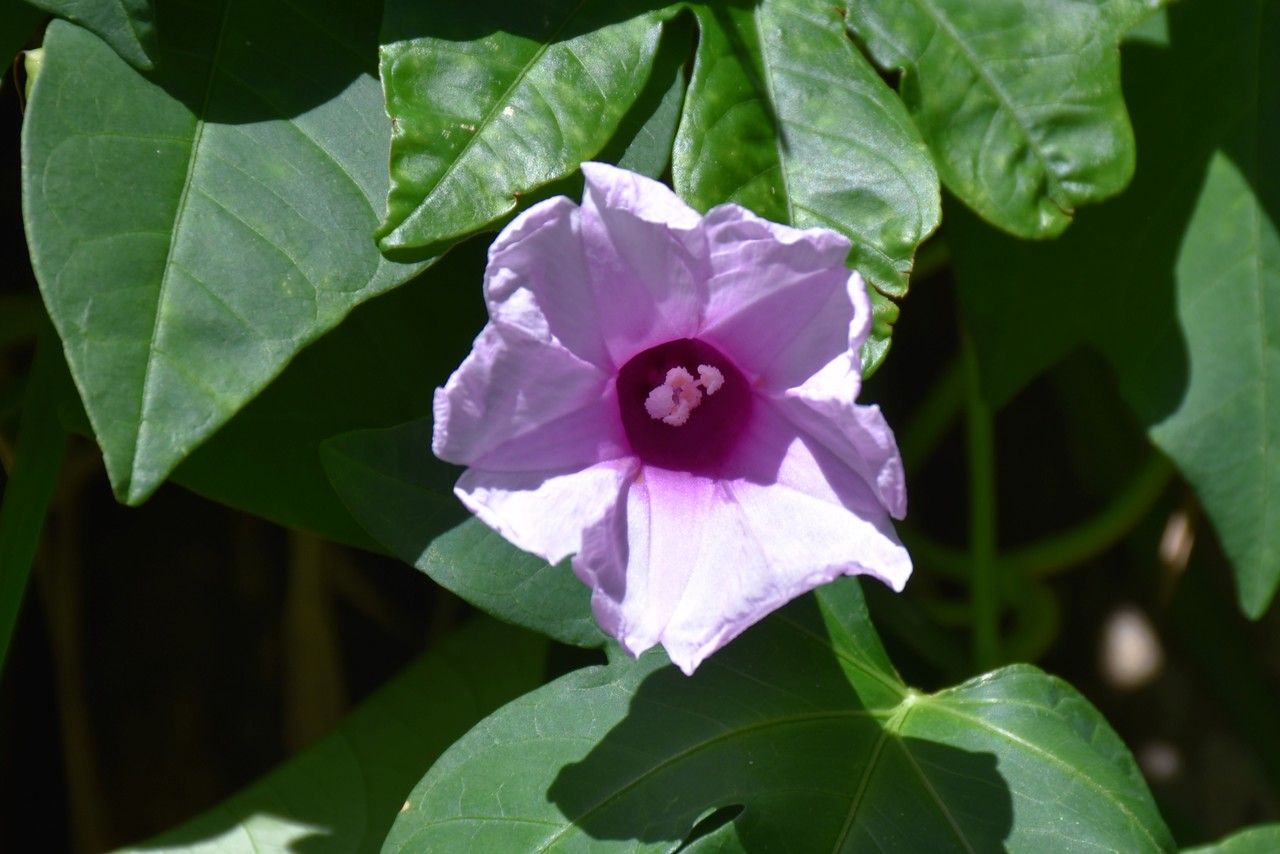
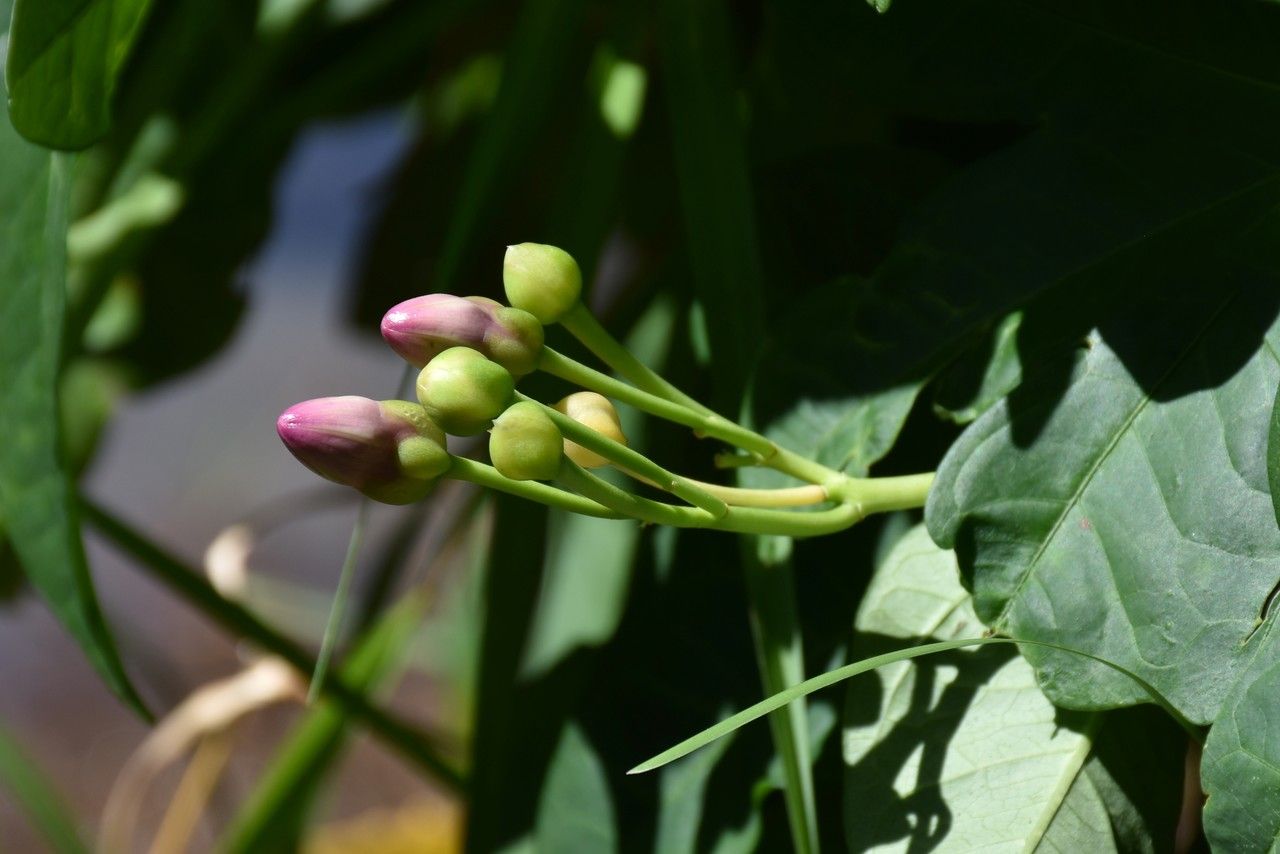
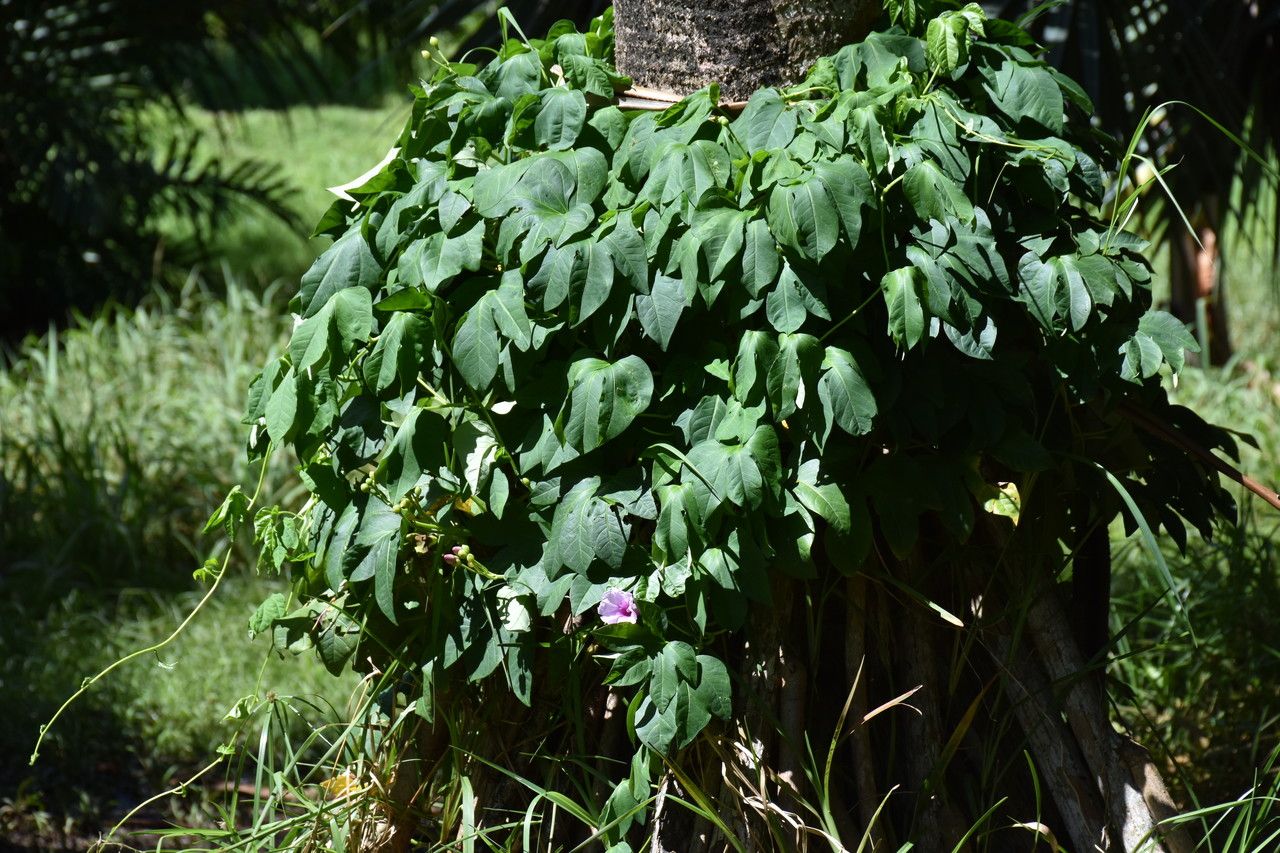
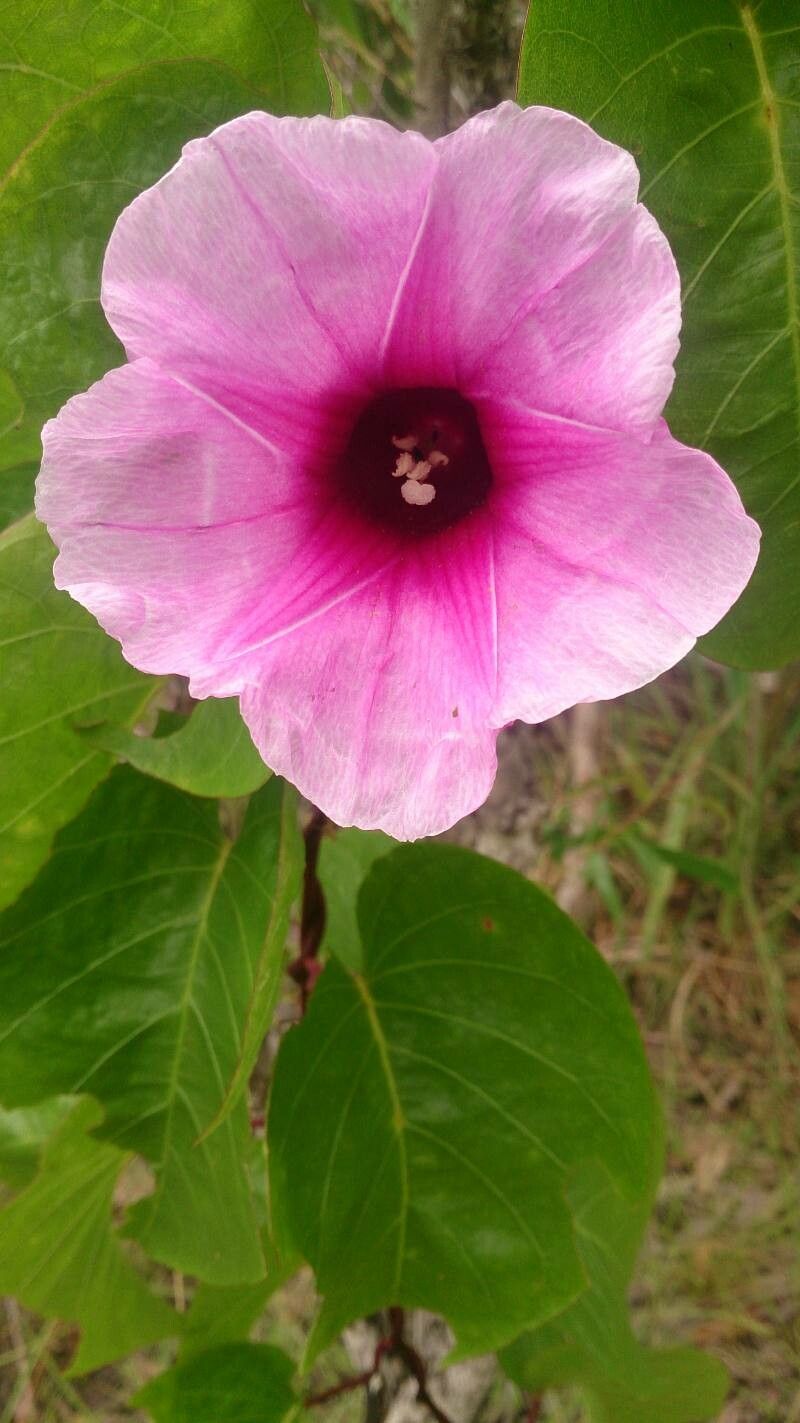
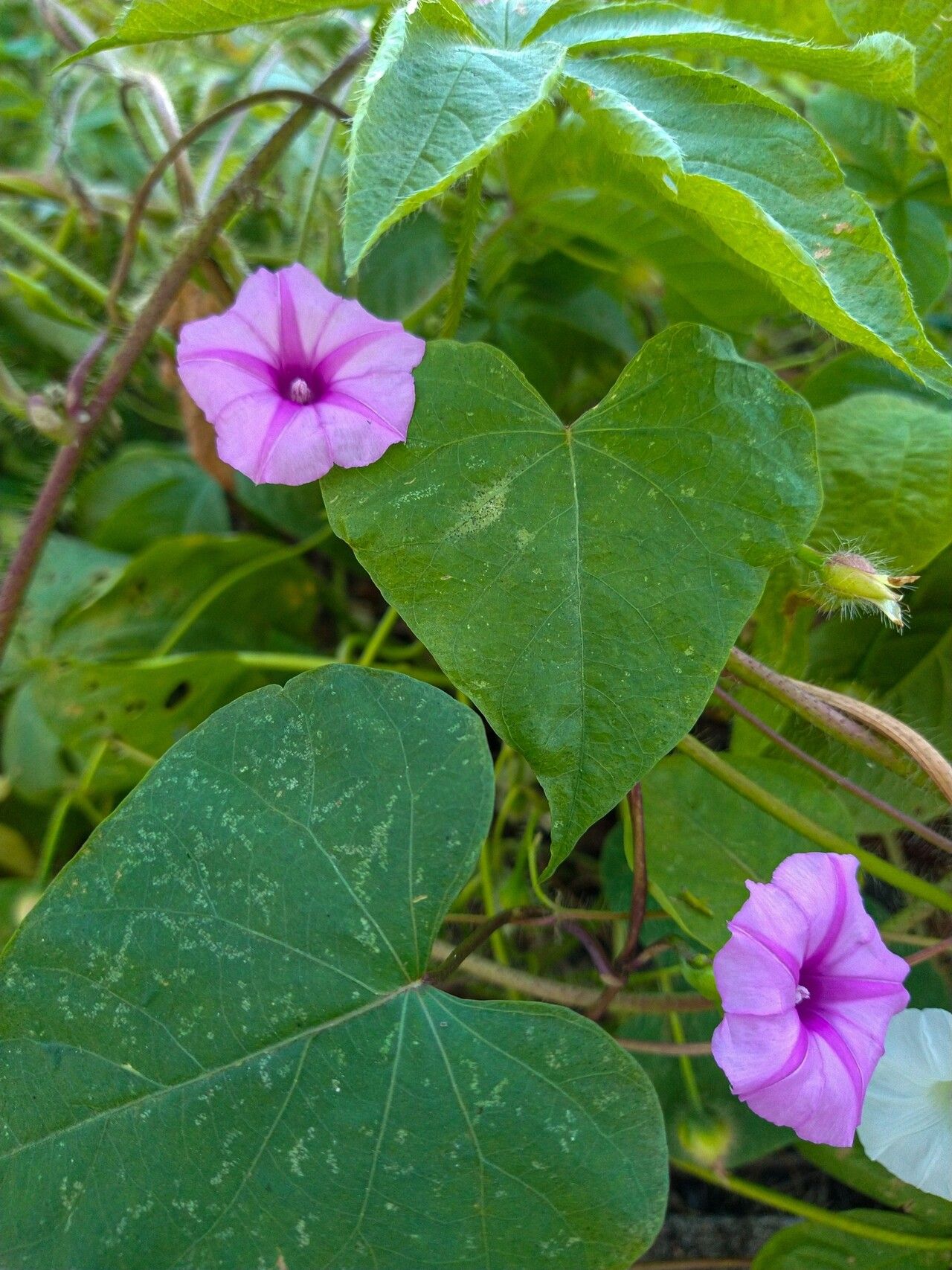
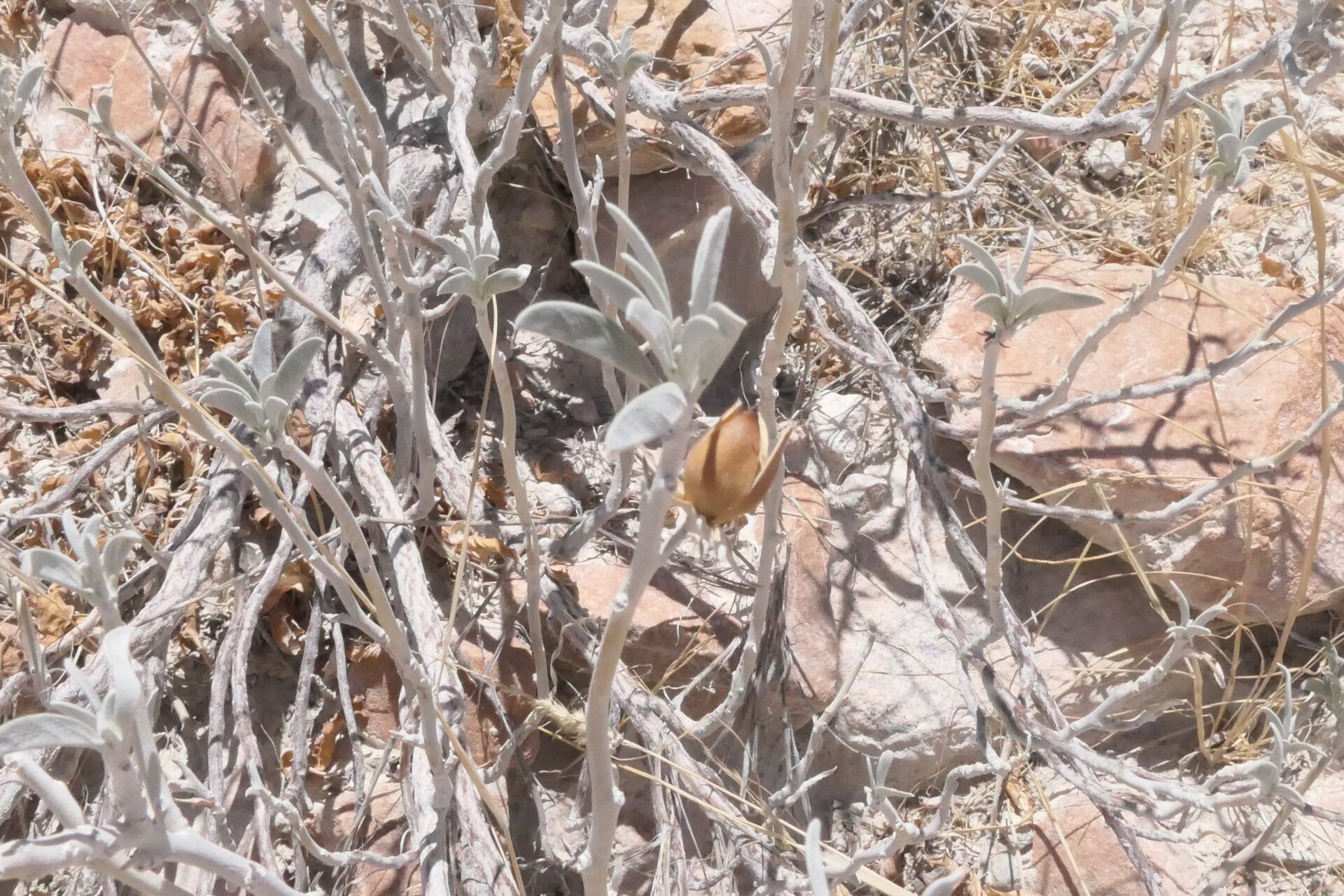
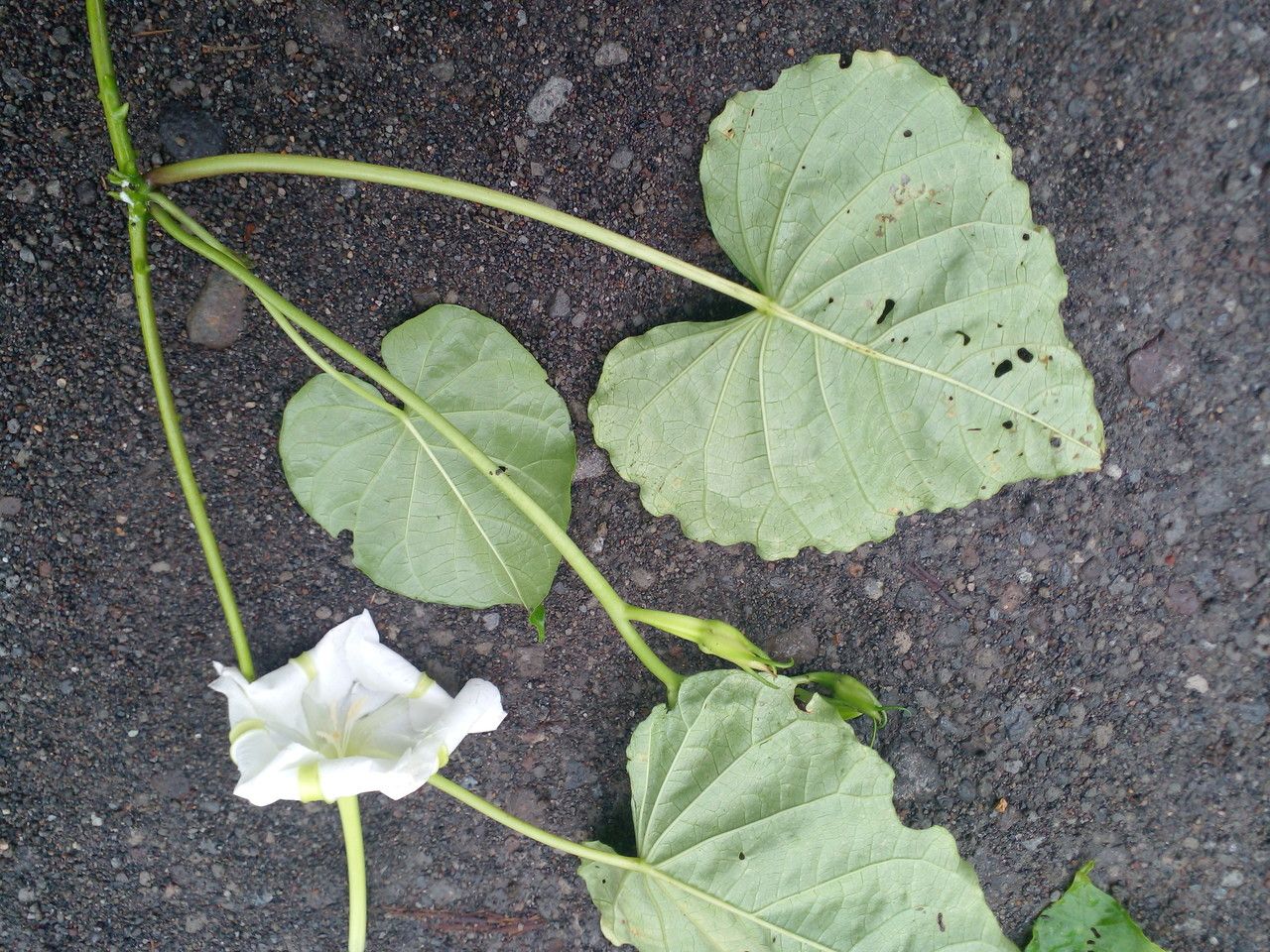
Ipomoea mauritiana is a type of morning glory plant. Like the sweet potato, it belongs to the genus Ipomoea. It grows as a vine. Its origins are uncertain, but it has been recorded in West Africa, including in Gambia and the riparian forests of Benin, as well as Australia's Northern Territory. It is naturalised in many parts of the world, including Taiwan.Specimens have been collected or observations taken in Australia, Belize, Benin, Brunei, Cambodia, Cameroon, China, Colombia, DRC, Costa Rica, Côte d'Ivoire, Ecuador, Equatorial Guinea, Gabon, Ghana, Guinea, Honduras, Indonesia, Laos, Liberia, Madagascar, Mauritius, Micronesia, Federated States of Myanmar, New Caledonia, Nicaragua, Nigeria, Panama, Papua New Guinea, Peru, Senegal, Sudan, Tanzania, Thailand, Togo and Venezuela.
Mauritanian convolvulus shows good resistance to disease and is generally not prone to illnesses. Regarding care, this plant is fairly low-maintenance. When grown outdoors it needs minimal watering, and larger plants typically do not require pruning. Smaller plants, however, should be trimmed after they have finished blooming. Mauritanian convolvulust is appropriate for anyone with an outdoor area, such as a garden or deck, and does not demand much gardening experience.
How to keep Ipomoea Mauritiana.
Light
Mauritanian convolvulus comes from open habitats, such as sunny meadows and forest edges, which provide plentiful light. It flourishes in Full Sun but can also tolerate Partial Sun, doing well under a range of sunlight conditions.
Water
The Mauritanian convolvulus flourishes in moist soil, so it's important to water it when the surface dries out. Make sure the water is fully absorbed to promote the healthy growth of both stems and leaves. During the summer, water the plant 1-2 times a day, ideally in the morning and again around 4 p.m., while avoiding the midday hours to minimize evaporation.
Temperature
Mauritanian convolvulus comes from tropical areas where the climate is generally warm and humid. Therefore, it is well adapted to high temperatures and humidity. It does not tolerate sudden temperature shifts and prefers a steady temperature environment, so avoiding temperature fluctuations indoors is important. It typically cannot withstand cold and needs warmer conditions to grow. If the surrounding temperature drops too low, the plant may stop growing or even die.
Pruning
The Mauritanian convolvulus is a climbing vine known for its large, heart-shaped leaves and tubular flowers. To encourage growth and blooming, prune the plant in early to late spring by removing weak stems and managing its size. Be sure to use clean, sharp tools to prevent disease and ensure healthy cuts.
Botanical profile.
- Plant Type
- Vine
- Life Cycle
- Annual
- Genus
- Ipomoea
- Family
- Convolvulaceae
- Hardiness Zone
- 10-12
- Mature Height
- 3.05 m to 4.57 m
- Mature Spread
- 2.13 m to 3.96 m
- Leaf Color
- Green, Dark Green
- Leaf Type
- Semi-evergreen
- Flower Color
- Purple, Lavender
- Flower Size
- 5.08 cm to 7.62 cm
- Bloom Time
- Summer, Early fall, Mid fall
- Planting Time
- Spring, Summer
- Harvest Time
- Late summer, Fall, Early winter
- Native Area
- Sri Lanka, Burkina Faso, Belize, India, Malaysia, Angola, Madagascar, Kenya, Uganda, Tanzania, Zimbabwe, Jamaica, Mali, Guinea-Bissau, Fiji, Benin, Indonesia, Cambodia, Cameroon, Mozambique, Venezuela, Congo, Nepal, Malawi, Central African Republic, Honduras, Peru, South Africa, Zambia, Sudan, Philippines, Laos, Bangladesh, Guinea, Panama, Chad, China, Colombia, Bolivia, Vietnam, Myanmar, Japan, Togo, Guyana, Senegal, Singapore, Nicaragua, Ecuador, Costa Rica, Côte d'Ivoire, Gambia, Thailand, Gabon
Other names.
Reader questions.
What amount of sunlight does the Mauritanian convolvulus (Ipomoea mauritiana) require?
The Mauritanian convolvulus, also known as Ipomoea mauritiana, thrives in different sunlight conditions depending on your garden's exposure. For optimal growth, it requires 'Full sun' which means the plant should receive above 6 hours of sunlight daily. Alternatively, it can also grow under 'Partial sun' conditions, meaning it should get about 3-6 hours of sunlight each day. It's important to observe how sunlight moves through your garden to find spots that offer the ideal mix of light and shade. This ensures that your plants stay happy and healthy.
What is the Mauritania convolvulus?
Mauritania convolvulus, known scientifically as Ipomoea mauritiana, is a plant that does not have detailed information provided about its essentials or symptoms in the given data. More research would be necessary to fully understand its characteristics, uses, and any possible health implications.