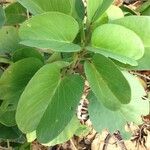
Ipomoea pes-caprae
نیلوفر رونده گرمسیری، پا بزی · Bayhops · Brazilian bayhops · Beach moning glory · Railroad-vine
Description
Source: leafsnapIpomoea pes-caprae, commonly known as beach morning glory or goat's foot, is a species of flowering plant in the family Convolvulaceae. This perennial vine thrives along the sandy beaches and dunes of tropical and subtropical regions worldwide. The plant features thick, fleshy leaves shaped like a goat's foot, which can grow up to 15 cm in length. Its trumpet-shaped flowers, consisting of five petals, bloom in colors ranging from pink to purple or white. Although they bloom throughout the year, these flowers are most abundant during the summer months. Beach morning glory plays a crucial role in coastal ecosystems by stabilizing sand dunes. Its roots trap sand, thereby preventing erosion caused by wind and waves. Additionally, the plant provides a habitat for various species of insects, birds, reptiles, and mammals. In traditional medicine practices around the world, different parts of this plant have been used to treat ailments such as asthma, coughs, feverish conditions, and skin diseases like eczema. Despite its ecological importance and medicinal properties, Ipomoea pes-caprae can become invasive if not managed properly. When it spreads beyond its natural range, it can outcompete native plants for resources, leading to a loss of biodiversity. Overall, Ipomoea pes-caprae is a fascinating coastal vine with significant ecological value and traditional medicinal uses, deserving of preservation and careful management.
🌳 Bayhops plays a frequently overlooked part in ecological restoration, especially in stabilizing sand dunes and in land reclamation. Its extensive root network holds the sand in place, reducing erosion and supporting the health of coastal ecosystems. This ability emphasizes its potential to lessen the impacts of sea-level rise and to act as a natural protective barrier for shorelines.
🎭 Love or death
Care Guide
💧 Water Every 7 days
Bayhops flourish in coastal areas, demonstrating a remarkable tolerance for both drought and saline conditions. This plant needs watering every three weeks and spreads rapidly along shorelines. It efficiently stores water, allowing it to adapt to the varying moisture levels typical of beach environments.
How should I water my Bayhops in the most effective way?
To properly water the Bayhops plant, it is best to use filtered water that is at room temperature. Tap water may contain harmful particles that can damage the plant's health, so filtered water is preferred. It is important to use water that is at room temperature or slightly warmer because the Bayhops plant originates from a warm environment and cold water can shock its system. Additionally, it is advisable to avoid overhead watering as it can cause issues with the plant's foliage. Instead, gradually apply the filtered room temperature water to the soil until it is completely soaked. This method helps to moisturize the roots and supports their growth and nutrient absorption within the soil.
What should I do if I give my Bayhops too much water or too little water?
Overwatering can cause significant damage to your Bayhops, while underwatering is less common but still possible. When the Bayhops receives too much water, its stems and leaves may wilt and turn yellow. Prolonged overwatering can lead to diseases like root rot, mold, and mildew, which can be fatal to the plant. On the other hand, underwatering is less likely due to the plant's tolerance to drought. However, if underwatering occurs, the leaves may become brittle and brown. It is important to be vigilant for signs of overwatering when caring for your Bayhops. Some diseases resulting from overwatering, such as root rot, may become irreversible if not addressed promptly. If you notice early signs of overwatering, reduce your watering schedule immediately. Additionally, assess the soil quality in which your Bayhops is growing. If the soil drains poorly, replace it with a loose, well-draining potting mix. Conversely, if signs of underwatering are present, simply increase your watering frequency until the symptoms improve.
How frequently do I need to water my Bayhops?
If your Bayhops plant is in a pot, the most precise way to determine if it needs water is by checking the soil with your finger. If the top two to three inches of soil feel dry, it's time to water it. For Bayhops plants grown outdoors in the ground, you can use a similar method to test the soil. When the top few inches of soil have dried out, it's time to add water. Typically, during spring and early fall, watering once a week is sufficient. However, during extremely hot weather, you may need to water twice a week or even more. It's worth noting that mature and well-established Bayhops plants have the ability to endure drought conditions.
How much water does my pet bunny need?
When watering your Bayhops, it is important to give an adequate amount of water. Make sure the first two to three inches of soil are dry before watering. Give a long, thorough watering that completely soaks the soil. The amount of water should be enough to cause excess water to flow out of the drainage holes at the bottom of the pot. If you don't see excess water draining from the pot, you may not have given enough water. However, be careful not to let the water accumulate in the soil as that can harm the plant. Additionally, if water is not draining properly from the pot, it may indicate poorly draining soil, which is not good for the plant's health. If the plant is outside, 1 inch of rain per week is sufficient.
How should I water my Bayhops at different stages of growth?
The water requirements of Bayhops change depending on their growth stages. When a Bayhops is in the early years of its life or has been recently transplanted, it needs more water than usual. During these stages, the plant puts a lot of energy towards growing new roots, which need extra moisture to support future growth. However, as the plant matures, it will require less water. Another stage where Bayhops may need more water is during the bloom period, as flower development requires a significant amount of moisture. Therefore, it is important to provide additional water during this time.
☀️ Light Full sun
Bayhops does best in places where it receives constant sunlight and cannot tolerate its absence. Its natural habitat is richly sunlit. Lack of the required light can negatively affect the plant's health and growth, causing stunting, whereas excessive light does not cause harm.
What are the sunlight requirements for Bayhops?
Bayhops thrives best in environments with abundant sunlight. It requires full sun, which means it needs more than 6 hours of sunlight daily. However, it can also tolerate partial sun conditions, about 3-6 hours of sunlight. To ensure your Bayhops plants' happiness and health, it's crucial to observe how sunlight moves through your garden over the day, choosing locations that offer an optimal balance of light and shade.
How does inadequate sunlight affect Bayhops?
In environments where Bayhops does not receive the necessary sunlight, its health and growth can be negatively affected. Inadequate sunlight leads to stunted growth of the plant. Despite this, Bayhops is quite resilient to excessive sunlight exposure and primarily suffers from the lack of it rather than overexposure. Its natural habitat is characterized by abundant sunlight, indicating its high preference and dependence on sunlight for optimal growth.
Can artificial lighting be used for Bayhops and how?
Yes, artificial lighting can be a viable solution for Bayhops, particularly when natural sunlight is insufficient. This is often necessary during winter or in less sunny indoor areas. Optimal growth under artificial lighting requires selecting the right type of light, such as LED lights, which can be customized for the plant's light wavelength needs. Full sun plants might need 30-50W/sq ft, partial sun plants 20-30W/sq ft, and full shade plants 10-20W/sq ft of artificial light. Proper placement involves setting the light source 12-36 inches above the plant to mimic natural sunlight, and simulating natural daylight hours, typically ensuring 8-12 hours of light per day.
What are the symptoms of light deficiency in Bayhops?
Symptoms of light deficiency in Bayhops might not be immediately noticeable but can include smaller new leaves, leggy or sparse growth, early leaf drop to conserve resources, halted or delayed growth, and pale or irregularly colored new leaves indicating chlorophyll and nutrient deficiency. Also, chlorosis, or yellowing of leaves due to breakdown of chlorophyll, and sunscald, which presents as damaged leaves or stems, can occur from excessive sunlight. Other symptoms include leaf curling, wilting, and leaf scorching, which indicate stress due to incorrect light levels.
What solutions can be implemented for Bayhops experiencing improper sunlight conditions?
For indoor Bayhops plants, gradually moving them to sunnier spots where they can receive at least 6 hours of direct sunlight daily or using artificial light sources for at least 8 hours a day can address light deficiency. For outdoor plants, a gradual relocation to better-lit areas is recommended, avoiding sudden changes to prevent sunburn. To improve sunlight access, reduce obstructions by pruning trees or relocating plants to sunnier areas, ensuring locations have ample sunlight and good drainage for optimal growth. Note that parts of the plant affected by previous insufficient sunlight may not recover, but new growth should be healthy with improved light conditions.
🌡️ Temperature 15–37.8°C
Bayhops is native to regions where temperatures range from 59 to 100 °F (15 to 38 ℃). The plant favors warmer climates but can adapt to cooler temperatures if it receives proper care during the winter months.
What is the ideal climate for Bayhops?
Bayhops is indigenous to climates with temperatures ranging from 59 to 100 °F (15 to 38 °C), preferring warmer climates. It has some cold tolerance and can adjust to cooler temperatures if properly cared for during the winter months. Generally, it does not require additional cold protection measures when the temperature is above -5°C. However, if temperatures are expected to drop below -5°C, it is necessary to take temporary cold protection measures, such as wrapping the plant with plastic film, fabric, or other materials, removing these once temperatures rise again.
How does Bayhops react to low temperatures?
Bayhops has moderate tolerance to low temperatures, thriving best when temperatures are above 15°C. It should be kept above -5°C during winter. When temperatures fall below -10°C, the leaves may droop; in mild cases, they can recover, but in severe instances, leaves will wilt and eventually fall off. To mitigate frost damage, trim off the frost-damaged parts, wrap the plant with non-woven fabric or cloth, and construct a wind barrier to protect it from cold winds before encountering low temperatures again.
How does Bayhops react to high temperatures?
During summer, it's important to keep Bayhops below 38°C. When temperatures exceed 43°C, the leaves may lighten in color, tips can dry and wither, leaves may curl, and the plant becomes more prone to sunburn. To address these issues, trim away sunburned and dried parts, move the plant to a location that provides shade during the midday and afternoon, or use a shade cloth. Ensuring the soil remains moist by watering in the morning and evening is also beneficial.
💨 Humidity
🪴 Soil 6-7
🌱 Fertilizer
The best time to fertilize a Bayhops is in early spring, when it is coming out of dormancy and beginning active growth. Fertilization supplies essential nutrients needed for healthy growth. Although Bayhops has relatively low fertilizer requirements, applying fertilizer annually can improve its survival and encourage better, longer-lasting flowers.
Why do I have to put fertilizer on my Bayhops?
Fertilization is important for the Bayhops for multiple reasons. Primarily, it provides essential nutrients that promote the plant's growth both above and below the ground. However, Bayhops have relatively low fertilization requirements. In some cases, they can survive without any fertilization. Nevertheless, annual fertilization can greatly benefit the Bayhops by enhancing its survival and potentially improving the longevity of its flowers. Therefore, individuals who wish to optimize their Bayhops' appearance should consistently provide annual fertilization.
What is the ideal time to fertilize my Bayhops?
The best time to fertilize a Bayhops plant is in late winter or early spring. This is when the plant is coming out of its dormant phase and beginning to grow actively. Fertilizing at this time promotes healthy growth and sets the plant up for a successful season. Although early spring is generally the most advantageous time for fertilization, it is also acceptable to fertilize in the fall. However, it is not recommended to feed the Bayhops plant during the summer or winter seasons.
When is it a bad idea to fertilize my Bayhops?
To properly care for your Bayhops plant, it's important to understand the best times to fertilize. Late winter and early spring are the only suitable times for fertilization, as the plant has low fertilization needs and one annual feeding is sufficient. Fertilizing during spring, summer, and fall can result in overfertilization and its associated issues, unless you skipped fertilizing in spring, in which case fall fertilization is acceptable. Additionally, it's unnecessary to fertilize the plant during winter, as it will be in a dormant growth phase and won't produce new growth. Hence, it is not recommended to fertilize throughout most of the winter.
What kind of fertilizer does my Bayhops plant need?
When fertilizing Bayhops, any general-purpose fertilizer with balanced amounts of the main plant nutrients will do the job. However, there are specific nutrient blends that can be more beneficial. Some gardeners believe that higher levels of phosphorus promote stronger roots and better flowers, which is ideal for flowering plants like Bayhops. Whether you choose a granular or liquid form, the fertilizer should have plenty of nutrients. In addition to synthetic fertilizers, organic options such as compost and manure can also enhance the soil for Bayhops, creating a healthier growing environment.
How can I help you with fertilizing my Bayhops?
To fertilize a Bayhops, apply a granular or pellet fertilizer to the soil around the plant. The perfect time to do this is when the plant is transitioning from its winter dormant growth phase to an active growth phase. In early spring, wait until the plant starts to emerge from the soil before applying the fertilizer. Alternatively, you can opt for a liquid fertilizer, which should be diluted with water before application. Whether using granular or liquid fertilizer, make sure to moisten the soil before, during, and after fertilization.
🪴 Pot & Repot Every 12 months
✂️ Pruning
Bayhops is a robust perennial vine that benefits from light pruning between late winter and early spring. This encourages new growth and helps manage its spread. To improve airflow, remove any damaged stems and thin out crowded areas. Be cautious to avoid heavy pruning, as it can cause stress to the plant. Proper pruning results in denser foliage and enhances the plant's ornamental appeal and resilience.
🌿 Propagating
🐛 Diseases & pets
☠️ Toxicity
Characteristics
- Plant Type
- Herb
- Life Cycle
- Perennial
- Genus
- Ipomoea
- Family
- Convolvulaceae
- Hardiness Zone
- 8-11
- Mature Height
- 10 cm
- Mature Spread
- 91 cm
- Leaf Color
- Green
- Leaf Type
- Evergreen
- Flower Color
- Pink, Lavender
- Flower Size
- 5.08 cm to 7.62 cm
- Bloom Time
- All year round
- Planting Time
- Spring, Summer, Autumn
- Harvest Time
- Spring, Summer, Fall
- Native Area
- Southeastern United States, Mexico, and South America