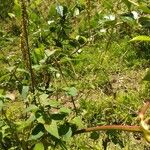
Iresine diffusa
Bloodleaf · Juba's-bush · Jubba bush · Kitenge · Bloody Mary
Description
Source: leafsnapIresine diffusa, or Juba's bush, is a species of plant in the family Amaranthaceae.
Care Guide
💧 Water Every 7 days
Juba's bush is native to tropical regions and flourishes in high humidity and consistently moist environments. To maintain its health, water it weekly to keep the soil evenly moist, but be careful not to overwater and cause waterlogging. In indoor settings, you can occasionally mist the plant to enhance humidity, which will help support its lush foliage and vibrant colors.
How should I water my Juba's bush to make it happy and healthy?
To water Juba's bush, there are several options you can choose from. You can use a garden hose with a spray nozzle, a watering can, or any other common watering tool. Juba's bush is not too particular about the type of water it receives - it can survive on rainwater, tap water, or even filtered water. However, it's generally best to avoid watering this plant from overhead, as it can harm the leaves and flowers and potentially lead to disease. Instead, consider setting up a drip irrigation system, which distributes water evenly and directly to the soil. If you have a Juba's bush in a container, you can use a similar watering method but with different tools. Simply use a cup, watering can, or your tap to water the plant directly at the soil.
What should I do if I give my Juba's bush too much or too little water?
To remedy an underwatered Juba's bush, simply water it more regularly when you notice it lacks moisture. On the other hand, overwatering can lead to more serious problems. Overwatered Juba's bushes can develop diseases that cause them to decline and die. To prevent this, choose a growing location with ample sunlight to dry the soil and good drainage to avoid waterlogged soils. If your overwatered Juba's bush is in a pot, consider transferring it to a new pot with better drainage. When repotting, use loose soil and ensure the new pot can drain efficiently.
How much should I water my Juba's bush?
To properly take care of your Juba's bush, it's important to water it regularly during the growing season. In the beginning of spring, aim to water it once a week. As the season progresses and temperatures rise, you may need to increase watering to two to three times per week. However, be cautious not to exceed this rate, as it can harm the bush. Regardless of the watering frequency, make sure the soil is consistently moist but not soggy. When it comes to watering a Juba's bush in a pot, there are some differences. Potted soil tends to heat up and dry out faster than ground soil, so you'll generally need to water it more frequently. In most cases, plan to water a Juba's bush in a pot a few times per week, compared to once a week for an in-ground plant.
How much water does my Juba's bush have to have?
Determining how much water to give your Juba's bush can be done in a few ways. Some gardeners rely on feeling the soil to determine when to water. They suggest watering until the top six inches of soil feel moist. Another method is using a set measurement. For Juba's bushes, about two gallons of water per week is typically recommended, but it can vary depending on temperature and soil dryness. However, following strict guidelines may result in overwatering if your plant doesn't need that much. When growing Juba's bush in a container, a different approach is needed. Moistening all the dry layers of soil is recommended. To check, simply stick your finger in the soil or water until you see some water coming out of the drainage holes.
How can I know if I'm giving enough water to my Juba's bush?
It can be challenging to avoid overwatering your Juba's bush due to conflicting factors. On one hand, these plants have deep roots that need weekly soil moisture. On the other hand, Juba's bush are highly prone to root rot, which can result in browning. Underwatering is less common as these plants can survive without regular watering, but if deprived for too long, wilting and dry leaves may occur.
☀️ Light Full sun
Juba's bush thrives where it receives steady, ample sunlight, which boosts its health and growth. The plant tolerates some shade, but extended periods of shading can negatively affect its growth. Excessive shade or too much sun can both impede development, reflecting the balanced light conditions of its native habitat.
What does full sun and partial sun mean?
Full sun means a location receives above 6 hours of sunlight daily, while partial sun refers to about 3-6 hours of sunlight each day. It's crucial to observe how sunlight moves through your garden to choose the best spots for your plants, ensuring they get a perfect balance of light and shade for optimal growth.
How does sunlight affect the growth of Juba's bush?
Juba's bush thrives in environments with consistent sunlight exposure, which is critical for its health and growth. Although it tolerates some shade, too much or too little sunlight can hinder its development, emphasizing the need for a balanced light condition similar to its native habitat. In cases where natural sunlight is insufficient, especially during winter or in less sunny spaces, artificial lighting can be an effective solution to ensure optimal growth.
What kind of artificial lighting is suitable for indoor plants?
Indoor plants require adequate lighting for optimal growth, with LED lights being a popular choice because they can be customized to provide specific wavelengths needed by your plants. For full sun plants, 30-50W/sq ft of artificial light is needed; partial sun plants require 20-30W/sq ft, and full shade plants need 10-20W/sq ft. Place the light source 12-36 inches above the plant to mimic natural sunlight, and ensure to provide 8-12 hours of light per day, mimicking natural daylight hours for your plant species.
What are the symptoms of inadequate light for Juba's bush?
When Juba's bush receives insufficient light, it may show various symptoms including smaller new leaves, leggy or sparse growth, faster leaf drop, slower or no new growth, lighter-colored new leaves, chlorosis, sunscald, leaf curling, wilting, and leaf scorching. These symptoms underline the importance of providing adequate light to maintain the health and vitality of your plant.
How can I enhance sunlight exposure for my Juba's bush?
To improve sunlight exposure for Juba's bush, gradually move the plant to a sunnier location each week until it receives at least 6 hours of direct sunlight daily. For indoor plants that are large or not easily movable, consider using artificial light, keeping a desk or ceiling lamp on for at least 8 hours daily or invest in professional plant grow lights. For outdoor plants, avoid sudden light intensity changes which may cause sunburn. Minimize obstructions such as pruning branches or trees blocking sunlight and consider transplanting smaller plants to sunnier spots with good drainage during their dormant period.
🌡️ Temperature 20–37.8°C
Juba's bush comes from tropical areas, where the climate is generally warm and humid. As a result, it is well suited to high heat and moisture. It does not tolerate abrupt temperature changes and prefers a steady thermal environment, so avoiding temperature fluctuations indoors is important. It typically cannot endure cold and needs higher temperatures to grow. If the ambient temperature falls too low, the plant may stop growing or even die.
What is Juba's bush?
Juba's bush, known botanically as Iresine diffusa, is a plant species. There is no additional information provided about its essentials or symptoms.
💨 Humidity
🪴 Soil 5-6
🌱 Fertilizer
Juba's bush benefits from regular, light applications of fertilizer to encourage healthy leaf growth. You should fertilize Juba's bush about once a month during the summer. Nitrogen is essential for foliage, and providing nitrogen-rich sources helps Juba's bush thrive.
🪴 Pot & Repot
✂️ Pruning
Juba's bush is known for its vibrant red stems and striking foliage. To keep the plant healthy and looking its best, prune it mainly from early to late spring. Focus on removing dead branches and shaping any overgrown stems. Be sure to use clean, sharp tools to encourage growth, maximize sunlight exposure, and improve air circulation, ensuring both the health and visual appeal of the bush.
🌿 Propagating
🐛 Diseases & pets
☠️ Toxicity
Characteristics
- Plant Type
- Herb
- Life Cycle
- Annual, Perennial
- Genus
- Iresine
- Family
- Amaranthaceae
- Hardiness Zone
- 10-12
- Mature Height
- 61 cm to 91 cm
- Mature Spread
- 30 cm to 61 cm
- Leaf Color
- Green, Blue
- Leaf Type
- Semi-evergreen
- Flower Color
- White
- Flower Size
- 0.20 cm to 0.25 cm
- Bloom Time
- Summer, Fall
- Planting Time
- Spring, Summer, Autumn
- Harvest Time
- Late summer, Fall, Early winter, Mid winter
- Native Area
- Belize, Honduras, Mexico, Guatemala, Peru, Dominican Republic, Panama, Jamaica, Uruguay, Colombia, Cuba, Paraguay, Argentina, Haiti, Bolivia, Venezuela, Brazil, Guyana, El Salvador, Nicaragua, Ecuador, Suriname, Costa Rica