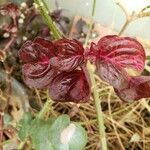
Iresine herbstii
آیریسین سبز و یا آشلانتوس سبز · Bloodleaf · Herbst's bloodleaf · Beefsteak plant · Beef plant
Description
Source: leafsnapIresine herbstii, commonly known as Bloodleaf or Chicken Gizzard, is a tropical perennial plant in the Amaranthaceae family, native to South America. Widely cultivated for its ornamental value in gardens and landscapes, this plant features striking foliage in shades of red, pink, purple, or green, depending on the cultivar. The leaves of Iresine herbstii are ovate to lanceolate in shape, have a glossy texture, and can grow up to 6 inches long. They are alternately arranged on stems that typically range in color from reddish-brown to purple. Iresine herbstii thrives in well-drained soil with moderate moisture levels but is also tolerant of some drought conditions once established. It grows best in full sun but can also perform well in partial shade. Regular pruning is essential for maintaining the plant's shape and encouraging bushy growth. Propagation is easily achieved through stem cuttings taken during the spring or summer months. Overall, Iresine herbstii is an excellent choice for gardeners seeking a low-maintenance yet visually stunning addition to their garden beds or containers. Its vibrant foliage adds year-round interest to any landscape.
🌳 The beguiling bloodleaf is more than mere decoration with its bright leaves and crimson stems. Untapped potential lies in the essential oils of its foliage, poised to make an impact in the fragrance world. Though largely unexplored, these oils could one day scent perfumes and balms with their exotic aroma. Additionally, the leaf liquid shows promise as a natural dye, ready to add color to everything from artwork to fashion. Bloodleaf's influence may soon reach far beyond ornamental gardens.
Care Guide
💧 Water Every 7 days
Water your Bloodleaf regularly during the growing season. Take care not to waterlog your plants to prevent the leaves from dropping or browning. In the winter, cut back and only water once the soil dries out.
☀️ Light Full sun
Bloodleaf grows best when given plenty of sunlight. It can survive with limited sun, but ample light leads to healthier growth. Native to sun-drenched environments, this plant prospers in abundant sunlight. Both too much and too little light can affect its health, resulting in wilting or stunted development.
🌡️ Temperature 20–37.8°C
Bloodleaf is native to climates that commonly have temperatures from 68 to 100 °F (20 to 38 °C). It favors this range and may need seasonal adjustments to temperature depending on its environment.
💨 Humidity high (>60%)
This plant needs special care because it loves high humidity levels of 60-80% or more. The best way to achieve this is by placing a humidifier near the plant. Daily misting is also essential! Make sure the room has good ventilation.
🪴 Soil 5-7
🌱 Fertilizer
Adequate fertilization is essential for Bloodleaf's health and appearance. Fertilize Bloodleaf in summer, repeating the application monthly throughout the season. Nutrients power growth and support the plant's parts. Regular fertilization improves Bloodleaf's floral display, ensuring the best blooms.
🪴 Pot & Repot
✂️ Pruning
Bloodleaf is typically grown as a foliage plant. You may pinch off its small, greenish-white flowers to redirect the plant’s energy toward beautiful, full foliage.
🌿 Propagating
🐛 Diseases & pets
☠️ Toxicity
Characteristics
- Plant Type
- Herb
- Life Cycle
- Perennial, Annual
- Genus
- Iresine
- Family
- Amaranthaceae
- Hardiness Zone
- 10-12
- Mature Height
- 0.61 m to 1.52 m
- Mature Spread
- 61 cm to 91 cm
- Leaf Color
- Yellow, Gold, Green, Red, Variegated, White
- Leaf Type
- Evergreen, Semi-evergreen
- Flower Color
- White
- Flower Size
- 2.54 cm
- Bloom Time
- All year round
- Planting Time
- Spring
- Harvest Time
- All year round
- Native Area
- Brazil