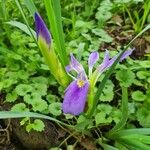
Iris brevicaulis
Short-stem iris · Zigzag iris · Lamance iris · Short-stemmed iris · Leafy blue flag
Description
Source: leafsnapIris brevicaulis, commonly known as the Zigzag Iris, is a perennial herbaceous plant belonging to the family Iridaceae. Native to the southeastern United States, it thrives in wetlands, swamps, and along stream banks. Reaching up to 60 cm in height, this plant features narrow leaves arranged in a fan-like pattern. Its showy flowers display shades of blue-violet or purple, accented with yellow or white markings on the falls (the lower petals). These blooms appear on tall stems above the foliage from late spring through early summer. Iris brevicaulis holds significant ecological value, providing nourishment for various pollinators, such as bees and butterflies, and serving as a host plant for several moth species. Beyond its ecological role, Iris brevicaulis was used by Native Americans for medicinal purposes, including the treatment of skin conditions and digestive issues. In summary, Iris brevicaulis is an attractive native species that plays a vital role in its ecosystem and holds cultural significance.
Care Guide
💧 Water Every 7 days
The zigzag iris flourishes in swampy areas, as it can handle both moisture and short dry periods. While it prefers consistent moisture and benefits from weekly watering, it is an herbaceous perennial capable of enduring temporary flooding. This resilience makes it an excellent choice for rain gardens or places with fluctuating water levels.
How should I water my Zigzag iris plant?
When watering the Zigzag iris, it is recommended to use filtered water at room temperature. Tap water should be avoided as it may contain harmful particles. The Zigzag iris prefers warm water because it is native to warm environments and cold water can be a shock to its system. Additionally, overhead watering should be avoided to prevent foliage issues. Instead, simply water the soil with filtered room temperature water until it is completely soaked. This helps to moisten the roots and promote their growth and nutrient absorption.
What do I need to do if I give my Zigzag iris too much water or too little water?
The health of your Zigzag iris can be negatively affected by both overwatering and underwatering, but overwatering is a more common problem. When this plant gets too much water, its stems and leaves may wilt and turn yellow. Overwatering for a long time can also cause diseases like root rot, mold, and mildew, which can be fatal to your plant. While underwatering is less likely to occur with the Zigzag iris due to its drought tolerance, it is still a possibility. When underwatering happens, the leaves of your Zigzag iris may become brittle and brown. It is important to detect signs of overwatering early when taking care of your Zigzag iris. Some diseases caused by overwatering, such as root rot, may be irreversible if you delay taking action. If you notice early signs of overwatering, reduce your watering schedule immediately. You should also check the quality of the soil in which your plant grows. If the soil drains poorly, replace it with a loose, well-draining potting mix. Conversely, if you notice signs of underwatering, simply water your plant more consistently until those signs disappear.
How frequently should I water my Zigzag iris plant?
If your Zigzag iris is in a pot, the best way to know if it needs water is by sticking your finger into the soil. If the top two to three inches of soil are dry, it's time to water it. For Zigzag irises grown outdoors in the ground, you can use the same method to test the soil. When the top few inches have dried out, it's time to water. In spring and early fall, watering once a week should be sufficient. However, during extremely hot weather, you may need to water twice or more per week. It is worth noting that mature, well-established Zigzag irises can handle drought conditions quite well.
How much water does my Zigzag iris plant need?
To properly water your Zigzag iris, you should not hesitate to give it a generous amount of water. Make sure the top two to three inches of soil are dry before watering. When you do water, make sure to thoroughly soak the soil. You should add enough water so that it flows out through the drainage holes at the bottom of the pot. If you don't see excess water draining, it means you haven't watered enough. However, be careful not to let the water accumulate inside the soil, as that can harm the plant. On the other hand, if water doesn't drain through the pot, it could be a sign of poorly draining soil, which is not good for the plant's health. If the plant is outside, it should receive about 1 inch of rain per week.
How do I water my Zigzag iris plant as it grows?
The water needs of the Zigzag iris can vary at different growth stages. In the early years or after transplantation, extra water is necessary as the iris focuses on developing new roots for future growth. These roots perform best with slightly higher moisture levels. As the iris matures over a few seasons, it will require less water. Additionally, during the bloom period, when the flowers are developing, the Zigzag iris may need additional water due to the increased moisture demands.
☀️ Light Full sun
Zigzag iris is a sun-loving, perennial herbaceous plant native to open habitats and often prospers in meadows and grasslands. It prefers full sun but can also tolerate partial sun.
What are the sunlight requirements for Zigzag iris?
Zigzag iris thrives best in full sun conditions, requiring above 6 hours of sunlight per day, but it can also tolerate partial sun conditions, which means about 3-6 hours of sunlight daily. It's important to observe the movement of sunlight through your garden to find spots that offer the right balance of light and shade, ensuring the plant's health and happiness.
How can artificial lighting support Zigzag iris growth indoors?
Indoor Zigzag iris plants can benefit greatly from artificial lighting, especially when natural sunlight is insufficient. LED lights are a good choice because they can provide the specific wavelengths of light needed by the plant. For full sun plants, 30-50W per square foot is recommended; for partial sun plants, 20-30W per square foot; and for full shade plants, 10-20W per square foot. The light source should be placed 12-36 inches above the plant to mimic natural sunlight, and the plants typically need 8-12 hours of light per day.
What are the symptoms of light deficiency in Zigzag iris?
Light deficiency in Zigzag iris can lead to several symptoms including small leaves, leggy or sparse growth, faster leaf drop, slower or no new growth, lighter-colored new leaves, chlorosis, sunscald, leaf curling, wilting, and leaf scorching. These symptoms indicate the plant's struggle with inadequate light conditions, and addressing the issue promptly can help prevent further damage and promote healthier growth.
What are effective solutions for light deficiency in Zigzag iris?
To address light deficiency for Zigzag iris, gradually move plants to sunnier locations to receive at least 6 hours of direct sunlight daily. For indoor plants, use a south-facing window or consider artificial lighting, such as desk lamps or professional grow lights, for at least 8 hours daily. For outdoor plants, avoid sudden changes in light exposure to prevent sunburn. Pruning obstructive branches or transplanting to a sunnier location with good drainage can also help improve light access. It's important to note that while affected parts may not recover, new growth can flourish with proper light exposure.
🌡️ Temperature 5–35°C
Zigzag iris can adjust to a wide range of temperature conditions, but its distribution may still be limited by various combinations of water and heat. It grows best in warm summer climates with sufficient rainfall or watering. Extended periods of cloudy, rainy weather or prolonged high temperatures can increase the likelihood of the Zigzag iris dying. In winter, shielding the plant from cold can improve its chances of survival.
What is Zigzag iris?
Zigzag iris, known botanically as Iris brevicaulis, does not have detailed information provided regarding its essentials, symptoms, or additional aspects in the provided data. The name 'Zigzag iris' refers to its unique characteristic or appearance, presumably related to the shape or pattern of its iris, but without further information, specific details about its cultivation, care, or role in ecosystems or gardens cannot be accurately described.
💨 Humidity
🪴 Soil 6-7
🌱 Fertilizer
The best time to fertilize a Zigzag iris is in early spring, as it is coming out of dormancy and starting active growth. Fertilizing supplies essential nutrients for healthy development. Although the Zigzag iris has relatively low fertilizer requirements, applying fertilizer once a year can improve its survival and encourage better, longer-lasting blooms.
Why do I have to give nutrients to my Zigzag iris?
The main structure of the Zigzag iris is composed of its leaves. One important way to maintain the health and appearance of these leaves is through fertilization. By properly fertilizing your Zigzag iris, you can ensure that its leaves remain vibrant and textured. Fertilization also has benefits below the soil's surface, promoting the growth of new roots and maintaining the existing root system. This not only keeps your plant healthy in the present but also enhances its ability to absorb nutrients from the soil in the future.
When should I put fertilizer on my Zigzag iris plant?
If you grow your Zigzag iris outdoors, it will start growing new leaves in early spring. This is a signal that it's time to fertilize the plant for the year. Usually, one application of fertilizer in spring is enough for the Zigzag iris to do well. However, if you want to encourage maximum growth, you can fertilize it multiple times during spring and early summer. In this case, you can feed your Zigzag iris approximately once every month to a month and a half.
When is it a good idea to not use fertilizer on my Zigzag iris plant?
During the late fall and winter, your Zigzag iris will go dormant and stop growing. Avoid fertilizing it during this period. If you fertilize multiple times in the spring and summer, reduce the frequency as summer approaches because the growth rate of the Zigzag iris slows down. In general, it's not recommended to fertilize when the weather is extremely hot or the soil is very dry. Fertilizing under these conditions can stress and possibly kill your Zigzag iris prematurely.
What kind of fertilizer does my Zigzag iris plant need?
Choosing the right fertilizer for a Zigzag iris is actually quite simple. These plants do well with a general-purpose garden fertilizer that has equal parts nitrogen, phosphorus, and potassium. Look for a fertilizer with a ratio of 10-10-10 or something similar, as this will be effective. It's best to avoid fertilizers with high nitrogen content if you're unsure. Granular fertilizers are usually the top choice for Zigzag irises. They should be slow-release and easy to apply to the soil. Additionally, feeding your Zigzag iris with organic compost can be beneficial.
How do I make my Zigzag iris plant healthy and strong?
To ensure optimal growth for your Zigzag iris, wait until the first leaves appear in early spring before applying a granular slow-release fertilizer with a balanced formula to the soil surrounding the base of the plant. You can repeat this process later in the season if desired. When reapplying fertilizer, focus on the soil at the base of the plant rather than the plant itself. Sometimes, you may need to move some leaves to access the soil above the roots. It is also recommended to water your Zigzag iris before and after fertilizing.
🪴 Pot & Repot
✂️ Pruning
The zigzag iris is a hardy, low-maintenance flowering plant known for its distinctive zigzag stems. To promote healthy growth, prune this plant from early to late spring by removing dead foliage and spent blooms. After the plant has finished blooming, cut back the old stems to improve vigor and air circulation. Always use sterile tools when pruning to prevent infection.
🌿 Propagating
🐛 Diseases & pets
☠️ Toxicity
Characteristics
- Plant Type
- Herb
- Life Cycle
- Perennial
- Genus
- Iris
- Family
- Iridaceae
- Hardiness Zone
- 4-9
- Mature Height
- 0 cm to 30 cm
- Mature Spread
- 30 cm to 46 cm
- Leaf Color
- Green
- Leaf Type
- Semi-evergreen
- Flower Color
- Blue, Violet
- Flower Size
- 2.54 cm to 7.62 cm
- Bloom Time
- Late spring, Early summer
- Planting Time
- Spring, Summer, Autumn
- Harvest Time
- Mid summer, Late summer, Early fall