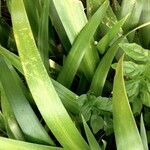
Iris ensata
Japanese iris · Beaked iris · Jade cicada-flower · Japanese water iris · Sword-leaf iris
Description
Source: leafsnapIris ensata, commonly known as Japanese iris, is a herbaceous perennial plant belonging to the Iridaceae family. Native to Japan and other parts of Asia, it is widely cultivated for its strikingly beautiful flowers. The plant can grow up to 3 feet tall and features long, narrow leaves arranged in a fan-like pattern. Its large, showy flowers have six petals and come in various shades of blue, purple, pink, or white, often adorned with intricate patterns. Japanese iris prefers moist soil conditions but can tolerate some drought once established. It thrives best in full sun or partial shade and requires regular watering during the growing season. Blooming from late spring to early summer, its flowers add vibrant color to any landscape. Iris ensata has been cultivated for centuries in Japan, where it holds cultural significance as a symbol of purity and elegance. Besides its ornamental value, the plant has also been used medicinally for treating fever and inflammation. In summary, Iris ensata is an attractive garden perennial that enhances any landscape design with its vibrant colors and cultural significance.
💡 Iris ensata is hardy in temperatures as low as -20°C and is commonly cultivated as an ornamental plant in temperate climates. Several cultivars have received the Royal Horticultural Society’s Award of Garden Merit, such as 'Alpine Majesty', 'Frilled Enchantment', 'Returning Tide', and 'Hue and Cry'.
🌳 Apart from its ornamental value, japanese Iris roots have demonstrated potential for natural water purification. The plant’s dense root systems can take up pollutants and heavy metals, indicating potential for use in constructed wetlands for wastewater treatment and underscoring an eco-friendly exploitation potential.
Care Guide
💧 Water Every 7 days
Originating from water-rich habitats in Japan, Japanese Iris thrives in consistently moist conditions and has some tolerance for moderate drought. To promote optimal growth, water the Japanese Iris twice weekly, ensuring the soil remains evenly moist. These plants flourish along pond edges, requiring well-draining soil that retains moisture without becoming stagnant.
☀️ Light Full sun
The Japanese iris performs best when it receives sunlight for most of the day, though it can tolerate situations with less intense light. This mirrors the conditions of its native habitat, where full sun exposure was typical. Excessive sun can cause it to wilt, while too little light can restrict its growth.
What are the sunlight requirements for Japanese Iris?
Japanese Iris thrives best in environments where it receives sunlight for the majority of the day, aligning with its preference for full sun conditions, which means above 6 hours of sunlight daily. However, it can also tolerate partial sun, approximately 3-6 hours of sunlight. It's crucial to observe how sunlight moves through your garden to place your plants in spots that offer a good balance of light and shade, ensuring their well-being and happiness.
Can Japanese Iris tolerate indoor conditions and artificial lighting?
Yes, Japanese Iris can grow indoors under the right conditions, especially with the aid of artificial lighting when natural sunlight is insufficient. Indoor plants benefit significantly from artificial lights, like LED lights, which can be customized to provide specific light wavelengths. For optimal growth, full sun plants require 30-50W/sq ft of artificial light, partial sun plants need 20-30W/sq ft, and shade plants require 10-20W/sq ft. The artificial light should be placed 12-36 inches above the plant for 8-12 hours per day to mimic natural sunlight conditions effectively.
What are common symptoms of light deficiency in Japanese Iris?
When Japanese Iris are placed in indoor settings or areas with insufficient light, they may exhibit symptoms such as small leaves, leggy or sparse growth, faster leaf drop, slower or halted new growth, lighter-colored new leaves, and symptoms of overexposure like chlorosis, sunscald, leaf curling, wilting, and leaf scorching. These signs indicate either a lack of or too much light, affecting the plant's ability to photosynthesize and maintain its health.
How can I address light deficiency in Japanese Iris?
To address light deficiency in Japanese Iris, gradually introduce your plants to sunnier locations, aiming for at least 6 hours of direct sunlight daily for outdoor plants. Utilize a south-facing window or provide artificial light for indoor plants, keeping them illuminated for at least 8 hours daily. If plants are outdoors, ensure gradual adaptation to prevent sunburn. Remove any obstructions like tree branches that block sunlight. If needed, consider transplanting smaller plants to sunnier spots, especially during their dormant periods for better growth and health.
🌡️ Temperature 5–35°C
Native to temperate climates, japanese Iris requires temperatures between 41 and 95 °F (5 and 35 °C). It prefers cooler conditions but can adapt to warmer environments. Seasonal temperature adjustments may be needed to replicate its natural growth environment.
What are the essential care requirements for Japanese Iris?
Japanese Iris, known botanically as Iris ensata, is native to temperate climates and thrives in temperatures ranging from 41 to 95 °F (5 to 35 °C). It adapts well to cooler conditions but can also tolerate warmer climates. To ensure its healthy growth, it might be necessary to adjust temperatures seasonally to replicate its natural habitat. Due to its strong resistance to cold, special frost protection is generally not required in winter. However, if temperatures are expected to fall below its growth limit, providing cold protection with soil or straw cover is advisable. It's also recommended to water the plant abundantly before the first freeze of autumn to keep the soil moist, which helps in preventing drought and water scarcity during the winter and early spring.
How does low temperature affect Japanese Iris, and what are the solutions?
Japanese Iris is notably cold-tolerant and performs best when temperatures are kept above its minimum suitable growth temperature. During winter, temperatures should not fall below its minimum tolerable growing temperature. Should the temperature drop below its growth limit, you may not observe immediate negative effects during the colder months, but there may be a reduction in spring sprouting, or in some cases, no sprouting at all. The solution for plants affected by low temperatures is to remove any parts that failed to sprout in spring.
What should be done if Japanese Iris experiences high temperatures?
During the summer months, it's important to keep the Japanese Iris below its maximum suitable growth temperature. Exceeding its maximum tolerable growing temperature can cause the leaves to lighten in color, become prone to curling, suffer from sunburn, and in extreme cases, lead to the wilting and drying out of the entire plant. To mitigate these issues, trim away sunburned and dried-up parts of the plant. Relocate the plant to a shadier area during the midday and afternoon sun or use a shade cloth. Additionally, maintaining soil moisture is crucial, so water the plant in the morning and evening.
💨 Humidity
🪴 Soil
🌱 Fertilizer
Japanese Iris grows best in humus-rich soil. To ensure healthy growth, fertilize in early spring, early fall, and just before blooming. Use phosphorus-rich fertilizers with an NPK ratio of 5-10-5 or balanced fertilizers with an NPK ratio of 20-20-20. Organic fertilizers can also be beneficial. After fertilizing, water the plants immediately to ensure optimal nutrient absorption.
🪴 Pot & Repot
To promote optimal growth and maintain health, Japanese Irises need pots with excellent drainage. This prevents water retention and root rot.
✂️ Pruning
Japanese Iris features vibrant flowers and graceful leaves. For optimal growth, prune them from early to late spring and remove dead foliage in the fall. Regular pruning helps improve air circulation and prevents overcrowding. Be sure to use clean, sharp tools to minimize damage and promote quicker healing.
🌿 Propagating
🐛 Diseases & pets
☠️ Toxicity
Characteristics
- Plant Type
- Herb
- Life Cycle
- Perennial
- Genus
- Iris
- Family
- Iridaceae
- Hardiness Zone
- 4-9
- Mature Height
- 76 cm to 91 cm
- Mature Spread
- 61 cm to 91 cm
- Leaf Color
- Green
- Leaf Type
- Deciduous
- Flower Color
- Purple, Lavender, White
- Flower Size
- 8.89 cm to 10.16 cm
- Bloom Time
- Late spring, Early summer, Mid summer
- Planting Time
- Spring
- Harvest Time
- Mid summer
- Native Area
- Russia, Japan, Koppen, South Korea, China