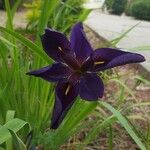
Iris giganticaerulea
Giant blue iris
Description
Source: leafsnapThe Iris giganticaerulea, commonly known as the giant blue iris, is a species of flowering plant belonging to the iris family. Native to the wetlands and swamps of the southeastern United States, particularly Louisiana and Mississippi, this plant typically reaches a height of up to 1.5 meters. It produces large blue flowers adorned with yellow markings on its petals. The leaves of Iris giganticaerulea are long, narrow, and bluish-green, adding an attractive element to gardens and landscapes. While the plant thrives in moist soil conditions, it can also tolerate some drought once established. For centuries, Native American tribes have used Iris giganticaerulea for medicinal purposes due to its anti-inflammatory properties. Additionally, the plant has been employed in dyeing fabrics, thanks to its vibrant blue color. Overall, Iris giganticaerulea is a stunning addition to any garden or landscape, boasting striking blue flowers and unique foliage. Its historical medicinal uses further enrich its appeal, making it a fascinating species from both aesthetic and cultural perspectives.
Care Guide
💧 Water Every 7 days
The giant blue iris prospers in wetland habitats, needing consistently moist soil and weekly watering for optimal growth. It does not tolerate drought well and thrives outdoors in regions with plenty of rainfall, which aligns with its preference for high moisture levels.
☀️ Light Full sun
The giant blue iris is a herbaceous perennial that prefers sunny conditions and originates in open habitats, frequently thriving in meadows and grasslands. It favors full sun but can also tolerate partial sun.
What kind of sunlight conditions are necessary for Giant blue iris?
Giant blue iris is a sun-loving perennial herb that thrives best in full sun, requiring more than 6 hours of sunlight daily. However, it can also grow well under partial sun conditions, which means about 3-6 hours of sunlight daily. It's important to observe how sunlight moves through your garden to choose the best spots that offer the right balance of light and shade, ensuring the plant's health and happiness.
Can Giant blue iris grow with artificial lighting?
Yes, Giant blue iris can grow with artificial lighting, especially when natural sunlight is insufficient, such as in winter or in less sunny spaces indoors. Artificial lights, particularly LED lights, are recommended because they can be customized to provide specific wavelengths needed by plants. Full sun plants need 30-50W per square foot, partial sun plants need 20-30W per square foot, and full shade plants need 10-20W per square foot of artificial light. The light source should be placed 12-36 inches above the plant, and most plants require 8-12 hours of light per day to mimic natural daylight hours.
What are the symptoms of light deficiency in Giant blue iris?
Symptoms of light deficiency in Giant blue iris include smaller new leaves compared to older ones, leggy or sparse growth, faster leaf drop, slower or no new growth, lighter-colored new leaves, and issues such as chlorosis, sunscald, leaf curling, wilting, and leaf scorching. These symptoms indicate that the plant is not receiving adequate sunlight, leading to various growth and health problems.
How can I better accommodate Giant blue iris’s sunlight needs?
To accommodate the sunlight needs of Giant blue iris, for indoor plants, gradually move them to a sunnier location each week until they receive at least 6 hours of direct sunlight daily. Use a south-facing window and keep curtains open for maximum exposure. For large plants, consider artificial light if not easily movable, keeping a desk or ceiling lamp on for at least 8 hours daily. For outdoor plants, avoid sudden changes in light intensity by gradually moving them to sunnier spots. If parts of a plant have suffered from insufficient sunlight, focus on encouraging new, healthy growth after increasing light exposure. Additionally, for ground plants, reduce obstructions by pruning trees or transplanting smaller plants during their dormant period to a brighter location.
🌡️ Temperature 15–37.8°C
Giant blue iris adapts well to temperature, tolerating higher heat and broader temperature swings. In hot weather, attention should be paid to watering and providing suitable shade to prevent sunburn. However, it is relatively sensitive to low temperatures; it can endure some cold, but very cold conditions can cause frost damage.
💨 Humidity
🪴 Soil 5-7
🌱 Fertilizer
The best time to fertilize a Giant blue iris is in early spring, when it is coming out of dormancy and beginning active growth. Fertilizing supplies essential nutrients needed for healthy development. Although the Giant blue iris has relatively low fertilizer requirements, applying fertilizer annually can improve its survival and encourage better, longer-lasting flowers.
🪴 Pot & Repot
✂️ Pruning
The giant blue iris displays vibrant blue flowers and thrives when pruned regularly from late winter to early spring. Removing dead or faded leaves encourages blooming and helps reduce disease. Pruning also improves air circulation and promotes healthy growth, so it's important to use clean, sharp tools to make your cuts in order to protect the plant's well-being.
🌿 Propagating
🐛 Diseases & pets
☠️ Toxicity
Characteristics
- Plant Type
- Herb
- Life Cycle
- Perennial
- Genus
- Iris
- Family
- Iridaceae
- Hardiness Zone
- 7-11
- Mature Height
- 91 cm
- Mature Spread
- 0.91 m to 1.52 m
- Leaf Color
- Green
- Leaf Type
- Evergreen
- Flower Color
- Blue, Purple
- Flower Size
- 12.70 cm to 15.24 cm
- Bloom Time
- Mid spring, Late spring
- Planting Time
- Spring, Summer
- Harvest Time
- Early summer, Mid summer