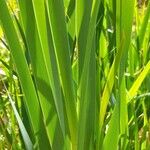
Iris halophila
Description
Source: wikipedia (CC BY-SA)Iris halophila is a species in the genus Iris. It is also in the subgenus Limniris and in series Spuriae. It is a rhizomatous perennial plant, with yellow, white or violet flowers. It is cultivated as an ornamental plant in temperate regions. It comes from a wide range from eastern Europe to China in Asia. It was known for a long while as a subspecies of Iris spuria, before being treated as a separate species in its own right.
Care Guide
💧 Water
The salt-loving blue iris thrives in saline marshes and requires consistent moisture, needing to be watered weekly. It flourishes outdoors in full sun and tolerates a range of temperatures. This adaptability is vital for its vigorous growth and optimal flowering during the active season.
☀️ Light Full sun
The salt-loving blue iris is a perennial herbaceous plant that favors sunny sites and comes from open habitats, commonly growing in meadows and grasslands. It prefers full sun but can also tolerate partial sun.
🌡️ Temperature 5–35°C
Salt-loving blue iris can tolerate a wide range of temperatures, but its distribution may still be limited by different combinations of moisture and heat. It grows best in warm summers with adequate rainfall or irrigation. Extended periods of cloudy, rainy weather or prolonged high temperatures can raise the risk of the plant dying. In winter, providing proper protection from cold can improve its chances of survival.
💨 Humidity
🪴 Soil 6-7
🌱 Fertilizer
The best time to fertilize a Salt-loving blue iris is in early spring, as it comes out of dormancy and starts active growth. Fertilization supplies essential nutrients for healthy development. Although the Salt-loving blue iris needs relatively little fertilizer, giving it an annual feeding can improve its survival and encourage better, longer-lasting blooms.
🪴 Pot & Repot
✂️ Pruning
The salt-loving blue iris flourishes in saline environments, showcasing its striking blue flowers. To ensure optimal growth, prune the plant in early spring or late winter. This involves removing any dead foliage and thinning out crowded areas to improve air circulation. Additionally, deadhead any spent blooms and remove seedpods to focus the plant's energy on root development. This practice encourages healthier growth and results in more vibrant blooms.
🌿 Propagating
🐛 Diseases & pets
☠️ Toxicity
Characteristics
- Plant Type
- Herb
- Life Cycle
- Perennial
- Genus
- Iris
- Family
- Iridaceae
- Hardiness Zone
- 4-9
- Mature Height
- 0.91 m to 1.52 m
- Mature Spread
- 2.13 m
- Leaf Color
- Green
- Leaf Type
- Evergreen
- Flower Color
- Yellow, White
- Flower Size
- 5.08 cm to 6.35 cm
- Bloom Time
- Mid spring, Late spring
- Planting Time
- Spring, Summer
- Harvest Time
- Early summer, Mid summer
- Native Area
- Uzbekistan, Tajikistan, Kyrgyzstan, Kazakhstan, Mongolia, Pakistan, Romania, Ukraine, China