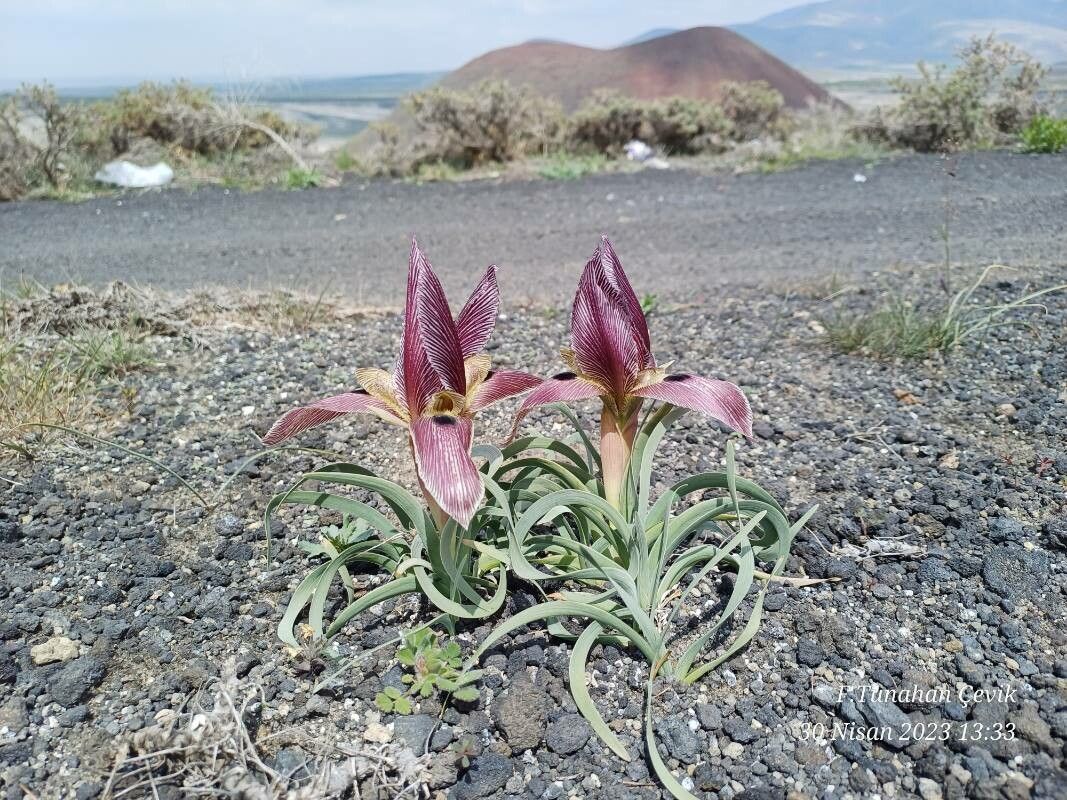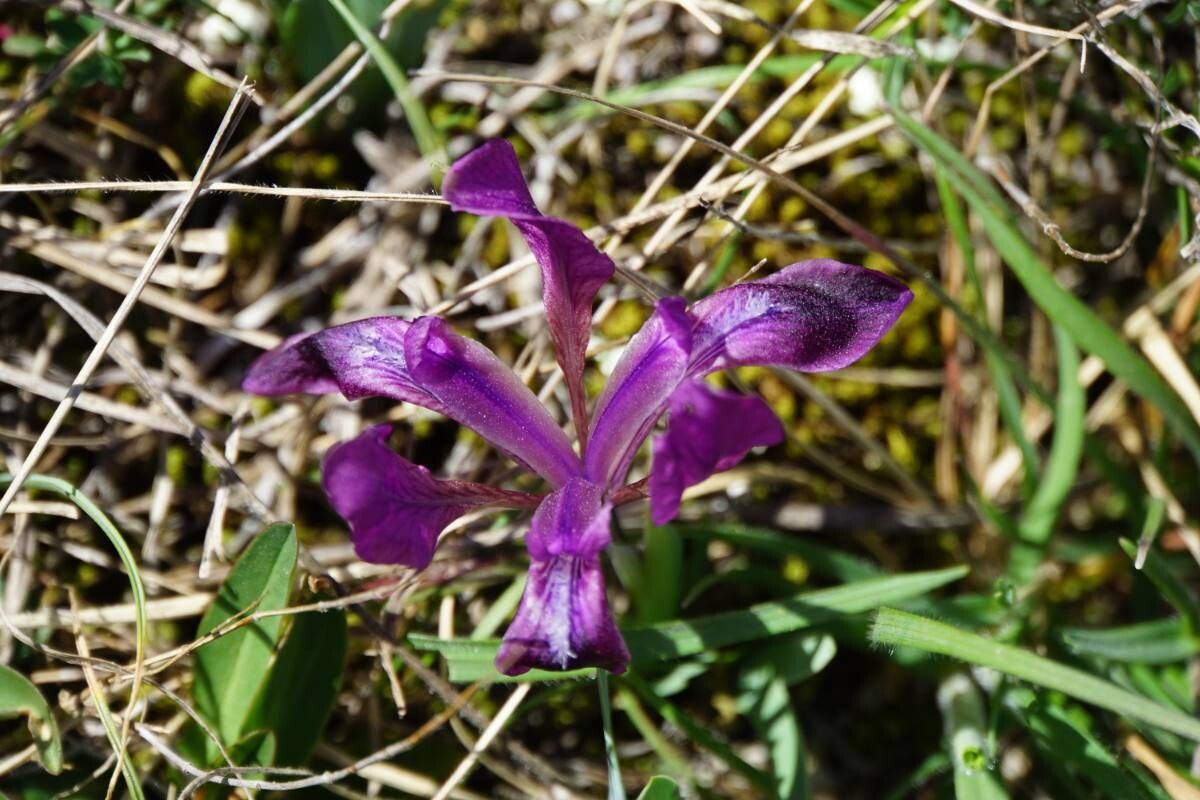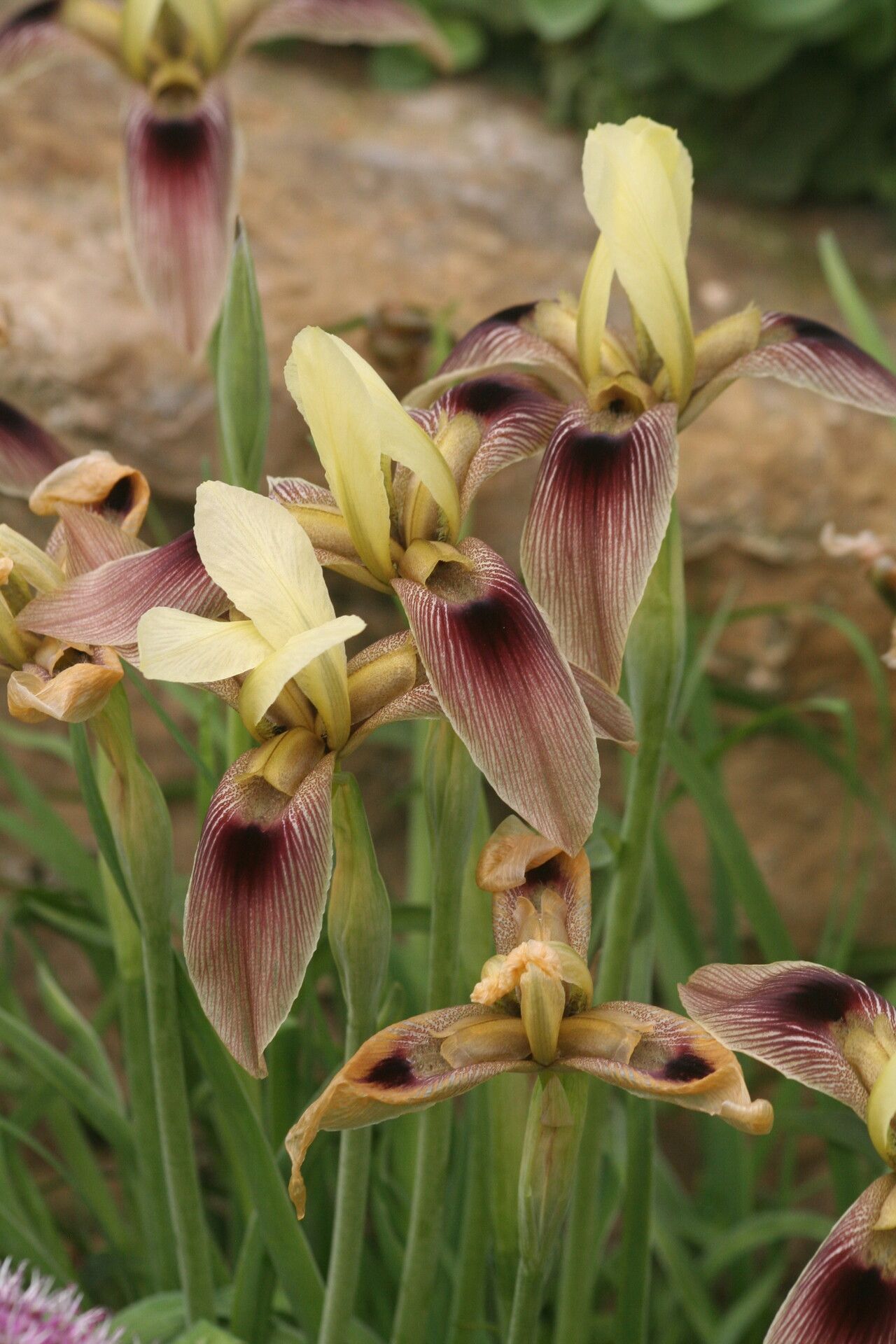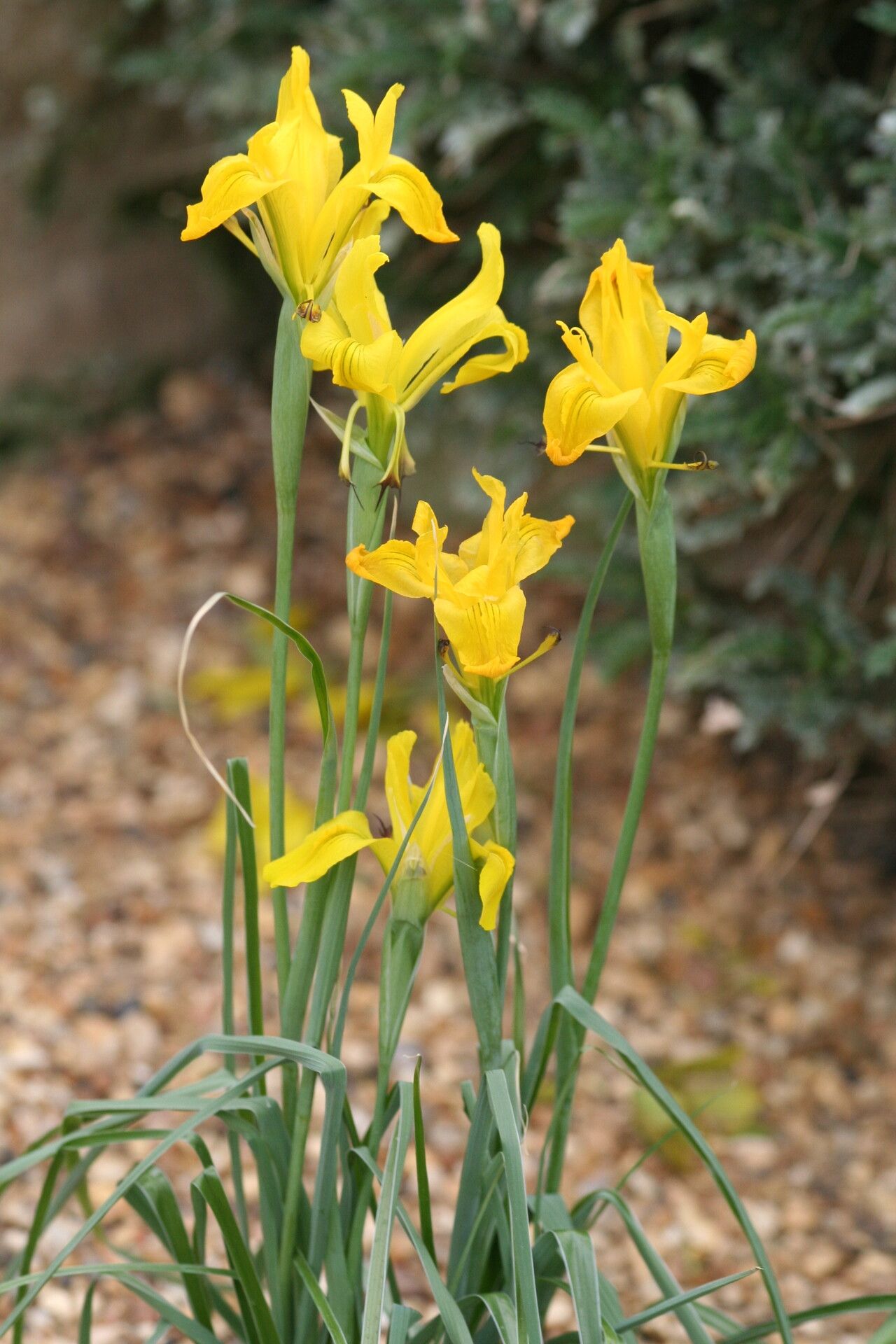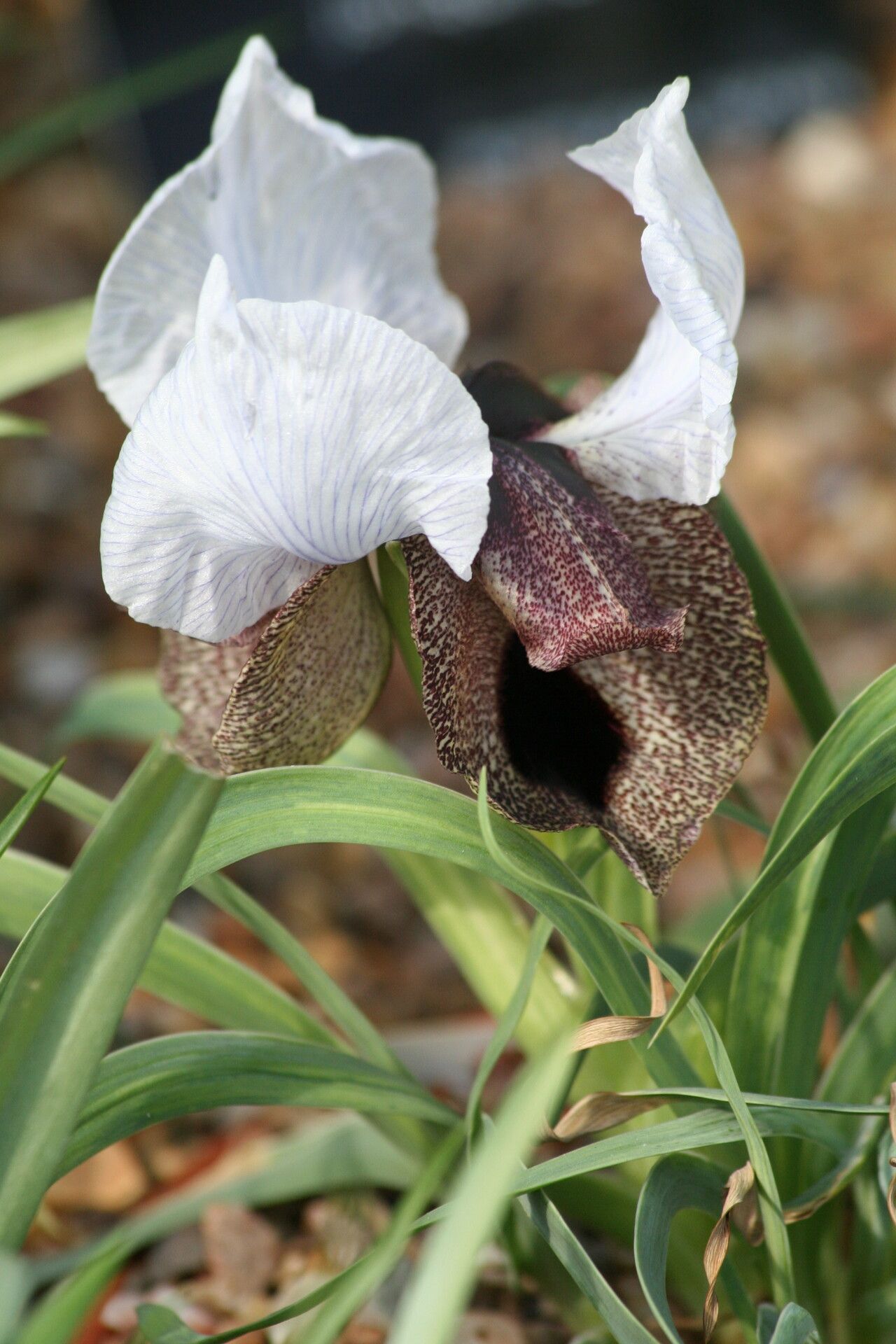
Iris iberica is a plant species in the genus Iris, it is also in the subgenus Iris and in the section Oncocyclus. It is a rhizomatous perennial, from the Caucasus Mountains of Armenia, eastern Georgia, and western Azerbaijan. It has narrow, glaucous, gray-green and sickle shaped leaves, short stem holding a single flower in late spring. Which has a pale background covered with heavy veining in pale mauve, violet, dark purple, maroon or purple-brown. It has a black or dark purple signal patch and a brown or purple-brown beard. Although, it has many hybrid forms dues to its variability and has 2 known subspecies of Iris iberica subsp. elegantissima and Iris iberica subsp. lycotis. It is cultivated as an ornamental plant in temperate regions, as it is hardier than other Oncocyclus species.
The Iberian flag is fairly disease-resistant and generally not prone to illnesses. However, it can be vulnerable to pests and diseases present in its surroundings, and these problems are usually mild. In terms of care, the plant requires moderate maintenance. It should be pruned regularly to preserve an attractive appearance and healthy growth. Fertilizing can also help encourage flowering. The Iberian flag is suitable for anyone with outdoor space, such as a garden or patio, and does not demand extensive gardening experience. It may need extra care when grown indoors.
How to keep Iris Iberica.
Light
Iberian flag is a perennial, herbaceous species that thrives in sunny locations and comes from open habitats, often found in meadows and grasslands. It prefers full sun but can also endure partial sun conditions.
Water
Iberian flag plants have different watering needs depending on the species. The bearded Iberian flag requires minimal watering and should only be watered when the soil is dry. In contrast, the Siberian Iberian flag needs the soil to remain consistently moist. It's important to note that most Iberian flag species cannot tolerate standing water, and poorly drained soil can lead to root rot.
Temperature
Iberian flag can tolerate a wide range of temperatures, but its distribution may still be restricted by different combinations of moisture and heat. It grows best in warm summer conditions with sufficient rainfall or watering. Extended periods of cloudy, rainy weather, as well as prolonged high temperatures, can raise the likelihood of Iberian flag dying. In winter, protecting it from the cold can increase the plant's chances of survival.
Fertilizer
The primary time to fertilize Iberian flag is in early spring while the flowers are forming. Using the right fertilizer promotes better blooms and helps Iberian flag produce attractive flowers. Fertilizing in early spring ensures strong flowering during the season and supplies energy for dormant growth phases.
Pruning
The Iberian flag plant is known for its striking sword-shaped leaves and large, vibrant flowers. To keep the plant healthy, it's best to prune it in early spring. This involves removing any dead foliage and spent flowers, which encourages new growth. It's important to avoid heavy pruning while the plant is flowering. Regular maintenance helps maintain the plant's shape, prevents disease, and increases its vigor, ensuring a lush and blooming Iberian flag throughout the season.
Botanical profile.
- Plant Type
- Herb
- Life Cycle
- Perennial
- Genus
- Iris
- Family
- Iridaceae
- Hardiness Zone
- 5-9
- Mature Height
- 20 cm to 30 cm
- Mature Spread
- 15 cm to 25 cm
- Leaf Color
- Light Green, Gray
- Leaf Type
- Deciduous
- Flower Color
- White, Purple
- Flower Size
- 7.62 cm to 10.16 cm
- Bloom Time
- Mid spring, Late spring
- Planting Time
- Spring, Summer
- Harvest Time
- Early summer, Mid summer