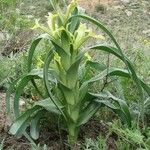
Iris magnifica
Description
Source: wikipedia (CC BY-SA)Iris magnifica is a bulbous flowering plant in the genus Iris, in the subgenus Scorpiris. It is native to the mountains of Central Asia, including the Zarafshan Range in Uzbekistan. It is cultivated as an ornamental plant in temperate regions – growing to 60 centimetres (24 in), and producing pale lilac and white flowers in spring.
Care Guide
💧 Water
The Juno beardless iris originates from mountainous regions and thrives in well-drained conditions with moderate moisture. To mimic its natural environment, water the Juno beardless iris weekly. This outdoor plant is resilient during the growing season, making efficient use of available water and requiring minimal rainfall.
☀️ Light Full sun
The Juno beardless iris does best in strong sunlight. It can also grow well in varying light conditions, though full sun is preferred. Native to an environment with abundant sunshine, these plants do poorly in low-light situations. Excessive shade or insufficient light exposure can impair their growth.
🌡️ Temperature 15–32.2°C
Juno beardless iris is native to temperate regions and is best suited to temperatures from 59 to 90 °F (15 to 32 ℃). It prospers in cooler climates and requires appropriate measures, such as shade and insulation, during extreme heat or cold.
💨 Humidity
🪴 Soil 6-7
🌱 Fertilizer
For Juno beardless iris, the primary time to fertilize is in early spring when the flowers begin to form. The appropriate fertilizer promotes better blooms and helps the Juno beardless iris produce attractive flowers. Fertilizing in early spring ensures strong flowering during the season and supplies energy for dormant growth periods.
🪴 Pot & Repot
✂️ Pruning
The Juno beardless iris benefits from pruning in early to late spring. Focus on removing dead leaves and spent stems to encourage healthy growth and new blooms. Prune before new shoots appear to improve air circulation, maintain an appealing shape, and reduce the risk of disease. For personalized advice, consult reliable horticultural sources.
🌿 Propagating
🐛 Diseases & pets
☠️ Toxicity
Characteristics
- Plant Type
- Herb
- Life Cycle
- Perennial
- Genus
- Iris
- Family
- Iridaceae
- Hardiness Zone
- 7
- Mature Height
- 61 cm
- Mature Spread
- 30 cm
- Leaf Color
- Green
- Leaf Type
- Deciduous
- Flower Color
- White, Lavender
- Flower Size
- 7.62 cm
- Bloom Time
- Early spring, Mid spring
- Planting Time
- Summer, Autumn
- Harvest Time
- Late spring, Early summer
- Native Area
- Uzbekistan, Tajikistan