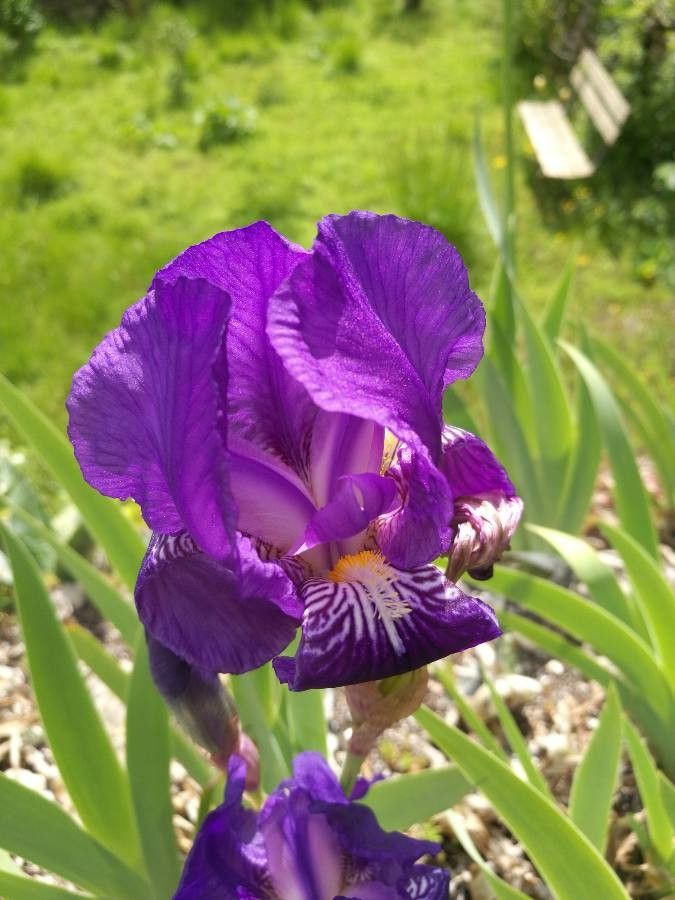
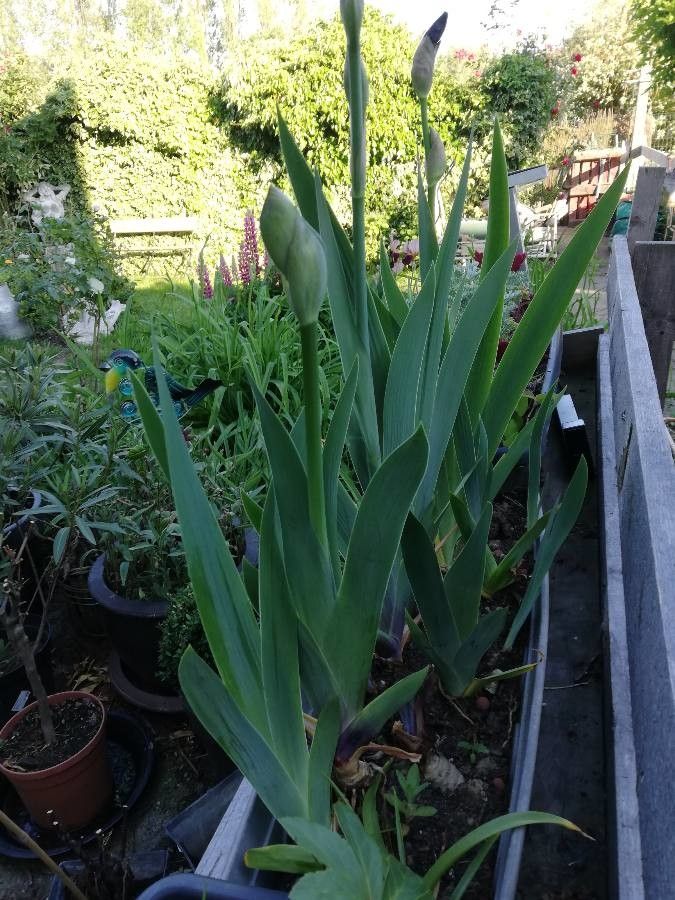
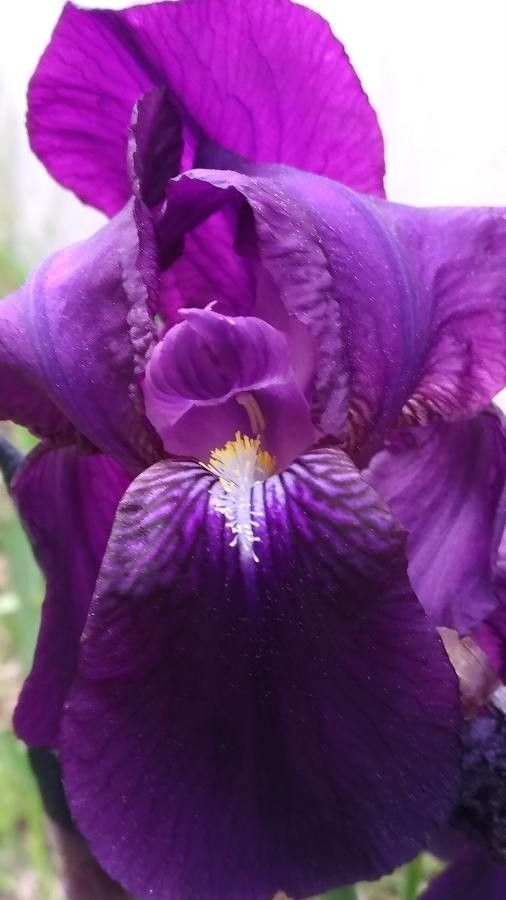
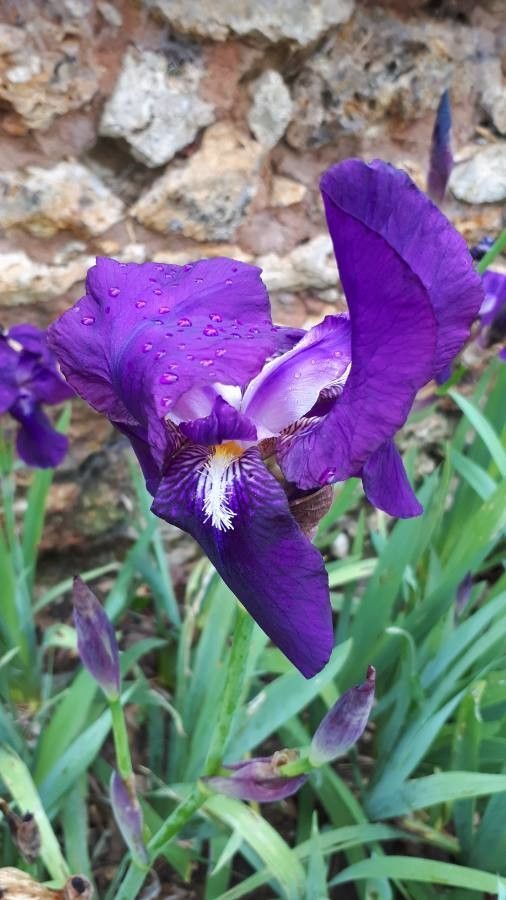
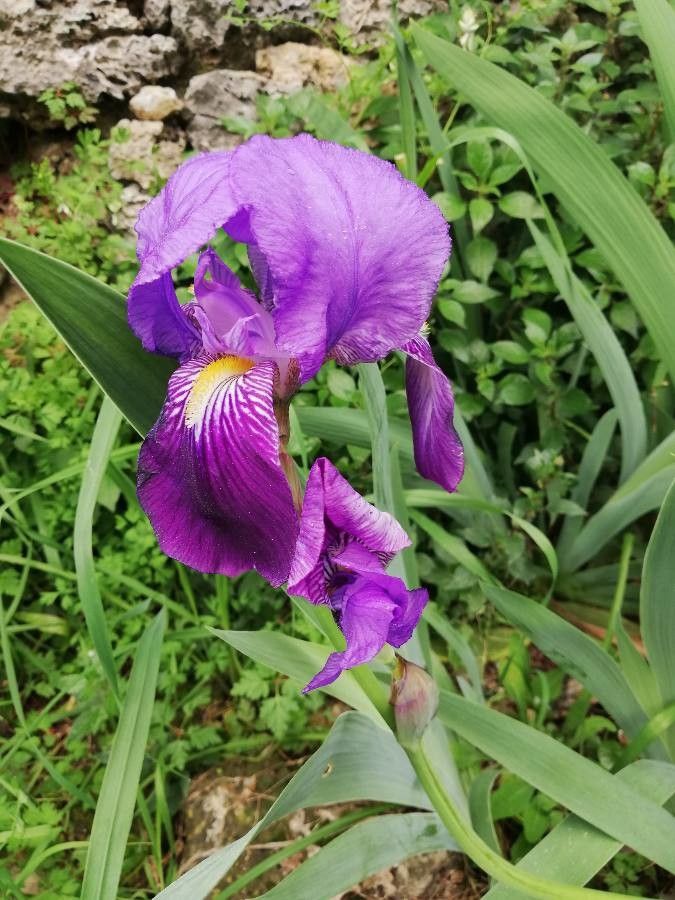
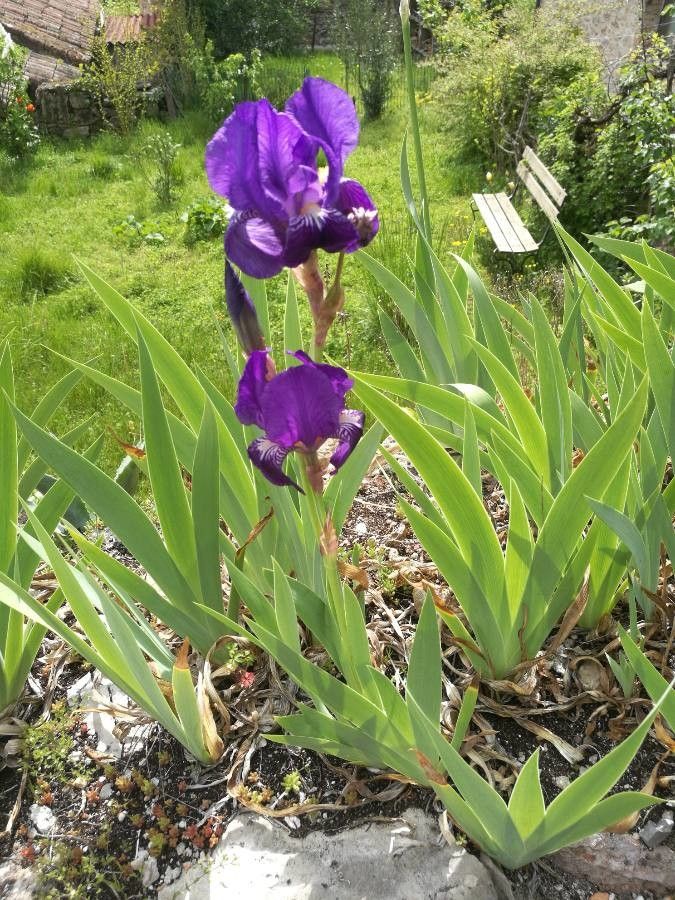
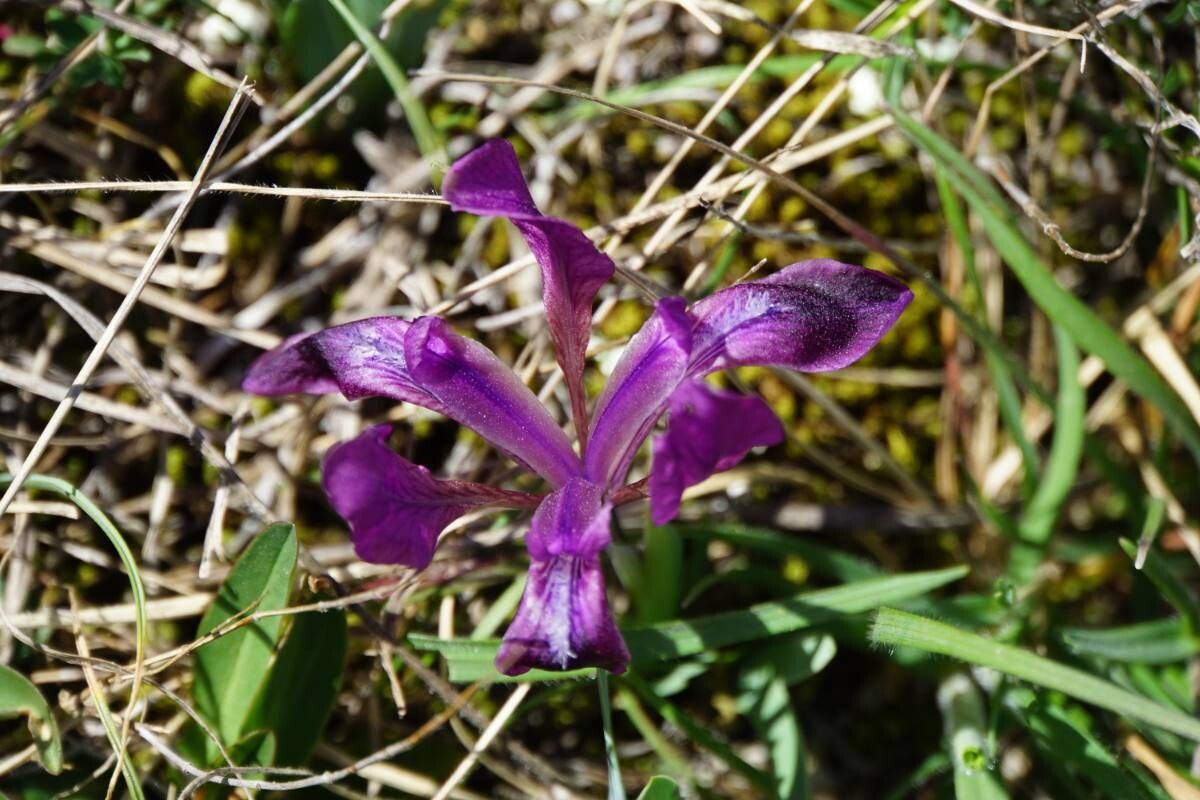
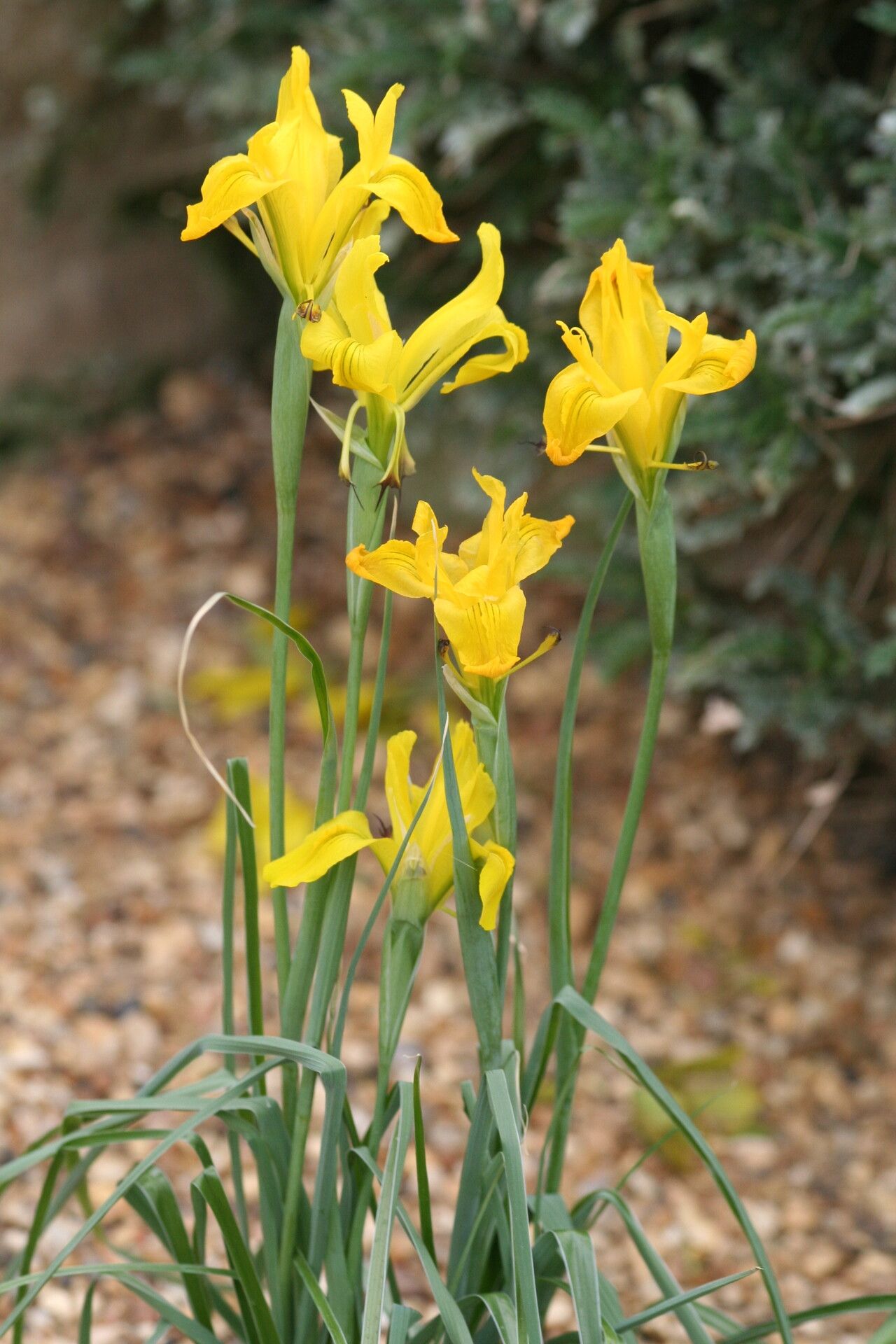
Iris perrieri is a plant species in the genus Iris; it is also in the subgenus Iris. It is a rhizomatous perennial, from the Savoy Alps in southern France and recently in Italy. It has green, deeply ribbed, sickle shaped leaves, a slender stem with a branch (from the middle), 1–3 scented flowers that are violet or purple, with a white or pale blue beard. It is rarely cultivated as an ornamental plant in temperate regions, due to its rarity in the wild. It was once thought to be a form of Iris aphylla, before cell (chromosome) analysis determined it to be a separate species.
Stool iris is fairly resistant to disease and typically not prone to illnesses. Still, it can be affected by pests and diseases present in its environment, though these problems are generally mild. Regarding care, the plant needs moderate maintenance. It should be pruned regularly to maintain an attractive appearance and healthy growth. Applying fertilizer can also encourage flowering. Stool iris is appropriate for anyone with outdoor space, such as a garden or patio, and does not require extensive care experience. Grown indoors, it may demand more attention.
How to keep Iris Perrieri.
Temperature
Stool iris can tolerate a wide range of temperatures, but its distribution may still be restricted by certain combinations of moisture and heat. It does best in warm summer climates with sufficient rainfall or watering. Extended periods of cloudy, rainy weather or prolonged high temperatures can increase the likelihood of Stool iris dying. In winter, appropriate protection from cold can improve the plant’s survival rate.
Fertilizer
For Stool iris, one fertilizer application in spring is generally enough, although multiple feedings can optimize growth. Feed about once every one to one and a half months. Fertilizing improves the leaves' appearance and function, helping them keep an even color and healthy texture. It also encourages root growth and better nutrient uptake, supporting long-term plant health.
Botanical profile.
Other names.