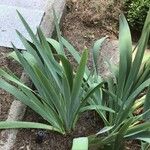
Iris × germanica
Bearded Iris · Flags · German Iris · Garden Iris · Bearded Flag
Description
Source: leafsnapThe Iris plant is a perennial flowering species that belongs to the Iridaceae family. It is native to Europe, Asia, and North America and is renowned for its striking blooms, which come in a variety of colors including purple, blue, yellow, white, and pink. Each flower features three petals and three sepals, commonly referred to as falls or standards. Iris plants boast long, narrow leaves that grow in a fan-like shape from the base of the stem. While the leaves are typically green, they can also be variegated with yellow or white stripes. These plants thrive in well-drained soil with full sun exposure, although they can also tolerate partial shade. Depending on the variety, they bloom in late spring or early summer. Historically, Iris plants have been used for their medicinal properties, particularly their anti-inflammatory benefits. They are also prized for ornamental purposes, making them popular garden choices due to their beautiful flowers. Overall, Iris plants are easy-to-grow perennials that add both color and beauty to any garden landscape, while also offering potential health benefits.
Care Guide
💧 Water Every 7 days
☀️ Light
🌡️ Temperature
The Bearded Iris will thrive in a hardy environment, as well as in an area that has an averagely high humidity level. For best results, keep this plant in temperatures of +35°C to -20°C. An ideal nighttime temperature will be between 40° and 50°F (4° and 10°C). Since they are humidity loving plants, ensure to keep them well in the range of 60-75%.
💨 Humidity
🪴 Soil
🌱 Fertilizer
🪴 Pot & Repot
✂️ Pruning
The Bearded Iris needs pruning as required. To prune, use a pair of sharp pruning shears to trim off the entire flower stalk at the end of bloom. Remove the spent flower stalks by following the stem all the way down to the base of the plant where it meets the rhizome and trim it off there. Also remove all withered and dying leaves as this helps keep the plant clean and free from fungal infection.
🌿 Propagating
🐛 Diseases & pets
☠️ Toxicity
The Bearded Iris plant, especially the roots, is toxic to cats, dogs and horses. It contains a combination of resinous purgative irisin and cytotoxic terpenoids which can cause a burning sensation of the mouth and throat, abdominal pain, nausea and diarrhoea. The sap from the leaves may also cause dermatitis, so it is best to keep this plant away from animals(dogs, cats, horses) and contact a veterinarian immediately if any of them comes in direct contact with or consumes this plant.
Characteristics
- Plant Type
- Hardy rhizomatous perennial
- Genus
- Iris
- Family
- Iridaceae
- Hardiness Zone
- 3 to 9, USDA
- Bloom Time
- Spring
- Native Area
- Southern Europe and the Mediterranean