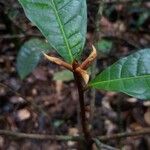
Iryanthera hostmannii
Care Guide
💧 Water
☀️ Light Full shade
Iryanthera hostmannii comes from the understory of tropical forests, does well in full shade with occasional dappled sunlight, and can tolerate environments that receive very little direct sun.
What are the sunlight requirements for Iryanthera hostmannii?
Iryanthera hostmannii is a plant that originates from the understory of tropical forests, which means it thrives in full shade conditions with dappled sunlight. It can also tolerate partial sun, making it adaptable to different lighting conditions. Full shade indicates the plant receives less than 3 hours of sunlight a day, while partial sun refers to about 3-6 hours of sunlight. It's important to observe the movement of sunlight through your garden to choose spots that offer the ideal balance of light and shade, ensuring your plant's health and happiness.
How do I use artificial lighting for Iryanthera hostmannii indoors?
When natural sunlight is insufficient, artificial lights can provide the necessary spectrum of light to support the growth of Iryanthera hostmannii indoors. LED lights are recommended due to their ability to offer specific wavelengths needed by plants. For full sun plants, 30-50W per sq ft is required, partial sun plants need 20-30W per sq ft, and full shade plants require 10-20W per sq ft. The light source should be placed 12-36 inches above the plant to simulate natural sunlight and should be kept on for 8-12 hours a day to mimic natural daylight hours, supporting faster and healthier growth.
What are the symptoms of inadequate light for Iryanthera hostmannii?
Iryanthera hostmannii may exhibit several symptoms when exposed to inadequate light. Key indicators include the growth of smaller new leaves, leggy or sparse growth, faster leaf drop, slower or ceased new growth, and lighter-colored or chlorotic new leaves. Additional symptoms of incorrect light exposure can range from sunscald, indicated by damaged plant tissues, to leaf curling, wilting, and leaf scorching, all of which negatively affect the plant's health and appearance. Monitoring these symptoms closely can help determine if the light conditions need adjustment.
How can I address light-related issues for Iryanthera hostmannii?
Addressing light-related issues for Iryanthera hostmannii involves strategic positioning and potential use of artificial lighting. For indoor plants, ensure they receive filtered light, including brief direct morning sun, by placing them 1-2 meters away from a window. For plants that are large or not easily movable, consider using artificial lighting, keeping a lamp on for at least 8 hours daily or investing in grow lights. For outdoor plants, gradually adjust them to sunnier spots to prevent sunburn. Pruning obstructions or transplanting to sunnier locations can also help outdoor and ground-planted specimens receive ample sunlight. Remember, while affected parts may not recover, new growth should be healthy with improved light conditions.
🌡️ Temperature 20–37.8°C
Iryanthera hostmannii comes from tropical areas, where the climate is generally warm and humid. Therefore it is well-suited to high temperatures and moisture. It does not tolerate sudden temperature shifts and prefers a consistent thermal environment, so avoiding temperature fluctuations indoors is important. It usually cannot withstand cold and needs higher temperatures to grow. If the ambient temperature falls too low, the plant may stop growing or even die.
💨 Humidity
🪴 Soil 6-7
🌱 Fertilizer
Fertilization is essential in caring for Iryanthera hostmannii. Regular feeding during the growing season helps maintain the vigor that produces its showy leaves and supports overall growth. Neglecting fertilization can lead to unhealthy leaves, reduced ornamental appeal, and stunted or weak growth prone to breakage.
🪴 Pot & Repot
✂️ Pruning
Iryanthera hostmannii is an evergreen plant known for its aromatic properties. To maintain its health and appearance, prune it from early to late winter. Focus on removing dead branches and lightly thinning the foliage to improve air circulation. This timing minimizes stress during the plant's dormant period, promoting growth and reducing the risk of disease. This approach ensures both optimal vitality and aesthetic appeal.
🌿 Propagating
🐛 Diseases & pets
☠️ Toxicity
Characteristics
- Plant Type
- Tree
- Life Cycle
- Perennial
- Genus
- Iryanthera
- Family
- Myristicaceae
- Hardiness Zone
- 10-12
- Mature Height
- 14.94 m to 24.99 m
- Mature Spread
- 4.88 m to 10.06 m
- Leaf Color
- Dark Green, Forest Green
- Leaf Type
- Evergreen
- Flower Color
- Yellow, Green
- Flower Size
- 0.25 cm to 0.51 cm
- Bloom Time
- All year round
- Planting Time
- Spring, Summer, Autumn
- Harvest Time
- All year round
- Native Area
- Colombia, Bolivia, Venezuela, Guyana, Brazil, Ecuador