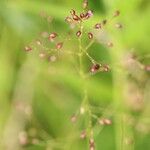
Isachne globosa
Swamp millet · Swamp bloodgrass
Description
Source: wikipedia (CC BY-SA)Isachne globosa, commonly known as swamp millet, is a species of plant in the true grass family. It is widespread throughout South East Asia, Japan, Australia, and New Zealand.
Care Guide
💧 Water
Globose twinball grass thrives in high-humidity, moist environments and needs to be watered weekly to maintain optimal health. Although it is usually grown outdoors, it experiences substantial growth during the rainy season by making use of the natural moisture available.
☀️ Light Partial sun
Globose twinball grass is native to habitats such as forest understories and rocky areas, where it grows in natural shade. It prefers partial sun but can adapt to full sun or full shade, reflecting its versatile and hardy nature.
🌡️ Temperature 15–37.8°C
Globose twinball grass comes from tropical areas, where the weather is typically warm and humid. As a result, it is adapted to high temperatures and moisture. It is sensitive to sudden temperature changes and prefers a steady thermal environment, so avoiding temperature fluctuations indoors is important. It generally cannot tolerate cold and requires warmer conditions to grow. If the surrounding temperature falls too low, the plant may stop growing or even die.
💨 Humidity
🪴 Soil 6-7
🌱 Fertilizer
Globose twinball grass needs extra nutrients to encourage healthy new growth. In spring, applying compost around the base of the plant can effectively supply the nutrition it requires. Fertilizing helps support vigorous growth and improves the plant’s resistance to diseases and pests.
🪴 Pot & Repot
✂️ Pruning
To care for globose twinball grass, it is important to prune it in early spring. This helps remove dead foliage and promotes healthy growth. In addition, thinning out dense areas improves air circulation and light penetration, which helps prevent disease. Regular pruning also maintains the plant's shape and size. Always use clean, sharp tools to minimize stress on the grass during cutting.
🌿 Propagating
🐛 Diseases & pets
☠️ Toxicity
Characteristics
- Plant Type
- Grass
- Life Cycle
- Perennial
- Genus
- Isachne
- Family
- Poaceae
- Hardiness Zone
- 8-11
- Mature Height
- 30 cm to 61 cm
- Mature Spread
- 3.05 m
- Leaf Color
- Green, Dark Green
- Leaf Type
- Evergreen
- Flower Color
- Pink, Purple
- Flower Size
- 4.06 cm to 15.24 cm
- Bloom Time
- Summer, Early fall, Mid fall
- Planting Time
- Spring, Summer
- Harvest Time
- Late summer, Fall, Early winter
- Native Area
- Nepal, Sri Lanka, India, Malaysia, Philippines, Bangladesh, New Zealand, China, Indonesia, Cambodia, Vietnam, Myanmar, Japan, Koppen, Oman, Bhutan, Singapore, South Korea, Thailand