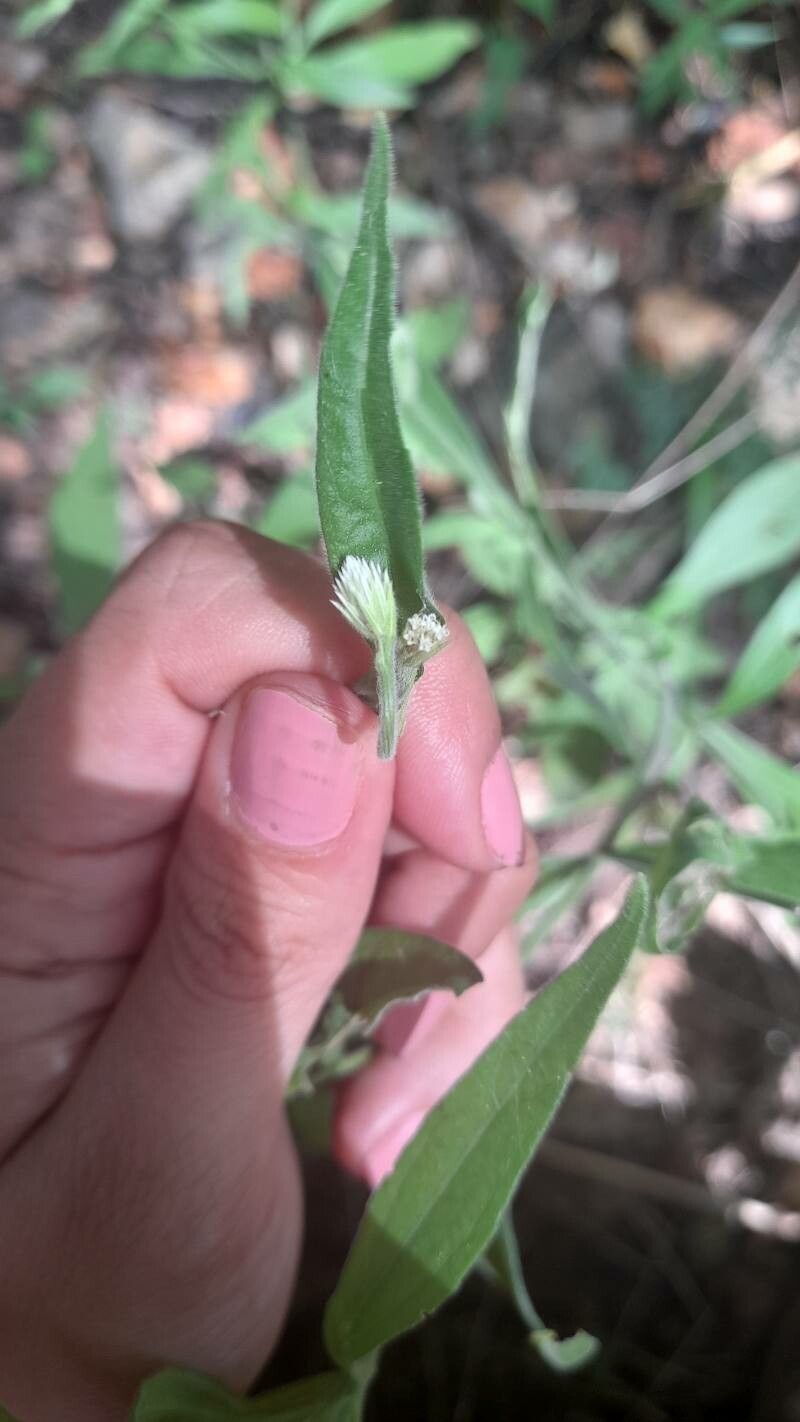
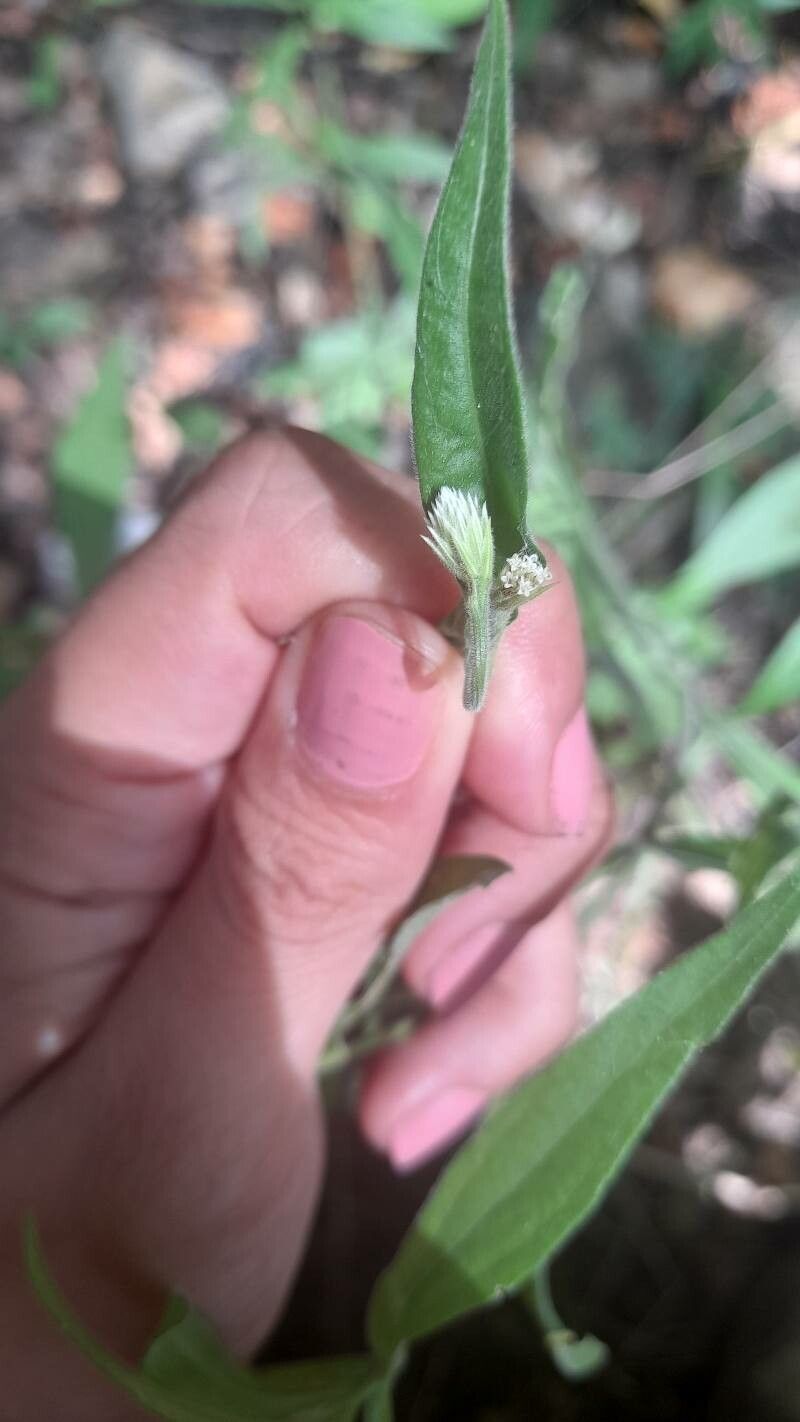
Isocarpha oppositifolia, the Rio Grande pearlhead, is a New World species of plants in the family Asteraceae. It is widely distributed in eastern and southern Mexico, Central America, the West Indies (Cuba, Jamaica, Bahamas, Caymans, Trinidad), and northern South America (Colombia, Venezuela). The range extends northward, just barely crossing to the north side of the Río Grande in the two southernmost counties in Texas (Cameron + Hidalgo).Isocarpha oppositifolia is an herb or subshrub up to 150 cm (4.9 ft) tall. Leaves are up to 15 cm (5.9 in) long, usually narrow but sometimes egg-shaped. One plant produces several flower heads, each a long flower stalk, each head with 60-150 disc flowers but no ray flowers.
Rio grande pearlhead has strong disease resistance and is generally not prone to illness. However, it can be affected by pests and diseases present in its environment. Those infections are typically not severe. Care-wise, the plant needs moderate maintenance. It should be pruned regularly to preserve an attractive appearance and support healthy growth. Applying fertilizer can also encourage flowering. Rio grande pearlhead is appropriate for anyone with outdoor space, such as a garden or patio, and does not demand extensive care experience. It may need extra attention when grown indoors.
How to keep Isocarpha Oppositifolia.
Light
Rio grande pearlhead comes from bright, open habitats and thrives in full sun. It will tolerate partial sun but favors direct sunlight for optimal growth. This plant, which can be annual or biennial, is known for its sun-loving nature.
Temperature
Rio grande pearlhead can tolerate a wide range of temperatures, but its range may still be restricted by particular combinations of water and heat. It does best in warm summer conditions with sufficient rainfall or watering. Extended periods of cloudy, rainy weather or prolonged high temperatures increase the chance of Rio grande pearlhead dying. In winter, protecting the plant from cold can raise its survival rate.
Fertilizer
Rio grande pearlhead benefits from regular, low-strength fertilizer applications to encourage healthy leaf growth. You should feed Rio grande pearlhead roughly once a month throughout the summer months. Nitrogen is vital for foliage, and adding nitrogen-rich sources helps the Rio grande pearlhead prosper.
Botanical profile.
- Plant Type
- Herb
- Life Cycle
- Annual
- Genus
- Isocarpha
- Family
- Asteraceae
- Hardiness Zone
- 10-12
- Mature Height
- 30 cm to 61 cm
- Mature Spread
- 20 cm to 40 cm
- Leaf Color
- Green
- Leaf Type
- Deciduous
- Flower Size
- 0.51 cm to 0.76 cm
- Bloom Time
- All year round
- Planting Time
- Spring, Summer, Autumn
- Harvest Time
- All year round
- Native Area
- Colombia, Bahamas, Cuba, Honduras, Mexico, Guatemala, Venezuela, El Salvador, Nicaragua, Costa Rica, Panama, Jamaica
Other names.