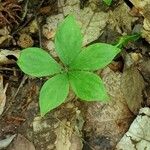
Isotria medeoloides
Small whorl pogonia · Small whorled pogonia orchid · Green Five-Leaf Orchid · Small whorled pogonia · Lesser Five Leaves Orchid
Description
Source: leafsnapIsotria medeoloides, commonly known as small whorled pogonia or little five leaves, is a terrestrial orchid found in temperate Eastern North America.
Care Guide
💧 Water
The small whorled pogonia thrives in moist, well-drained soil and requires consistent moisture, so weekly watering is necessary. Although it can tolerate moderate drought, it prefers higher humidity levels, which mimic its natural understory habitat. Its ornamental leaves make it an excellent choice for indoor cultivation.
☀️ Light Full shade
Small whorled pogonia is native to habitats such as forest understories or rocky areas that offer natural shade. It favors Full Shade but can tolerate Partial Sun.
🌡️ Temperature 5–32.2°C
Small whorled pogonia does well in cold climates and at high elevations. It favors cool temperatures, good air circulation, and a consistently moist environment. In summer, steps should be taken to keep it cool, since it is very sensitive to heat and can easily die from it. Dry conditions can also be damaging to the plant. In winter, no special cold protection is necessary, but the soil should be kept moist.
What are the essential care requirements for Small whorled pogonia?
The Small whorled pogonia, or Isotria medeoloides, flourishes in cold regions and high-altitude areas, favoring cool temperatures, ample ventilation, and moist environments. In the summer, it's crucial to implement cooling measures due to its high susceptibility to heat, which can be fatal. A dry atmosphere can also pose a risk to the plant's well-being. During the winter, while it shows a remarkable tolerance to cold and does not need extra frost protection, maintaining soil moisture is vital. It's recommended to water the plant generously before the first autumn freeze to ensure the soil remains moist when entering a frozen state, aiding in drought and water scarcity prevention during the colder months.
How does Small whorled pogonia react to low temperatures?
Small whorled pogonia is extremely resistant to cold, capable of enduring winters without special frost protection. However, it's important that the winter temperature remains above -25°C. If temperatures fall below this point, the plant may not exhibit immediate distress, but its ability to sprout in spring could be significantly impacted, leading to decreased sprouting or failure to sprout at all. If this occurs, the recommended approach is to remove any parts of the plant that have not sprouted by spring.
What should be done if Small whorled pogonia is exposed to high temperatures?
Small whorled pogonia struggles in high-temperature conditions, specifically when temperatures rise above 32°C. Under such conditions, the plant's growth will halt, and it becomes much more vulnerable to rot. To mitigate damage from excessive heat, it's advisable to trim away any sunburned or dried-up parts of the plant. Moving the plant to a shaded location or employing a shade cloth to protect it from midday and afternoon sun is beneficial. Additionally, watering the plant in the morning and evening can help maintain the necessary soil moisture levels.
💨 Humidity
🪴 Soil 6-7
🌱 Fertilizer
Fertilizing a small whorled pogonia is best done in early spring, as it comes out of dormancy and begins active growth. Fertilizer supplies essential nutrients for healthy development. Although the small whorled pogonia has relatively low fertilizer requirements, applying fertilizer annually can improve its survival and encourage better, longer-lasting flowers.
🪴 Pot & Repot
✂️ Pruning
The small whorled pogonia, known for its distinctive whorled leaves and yellow-green flowers, requires minimal pruning. To maintain this plant, carry out maintenance between early and late spring. This helps remove unhealthy growth, improves air circulation, and prevents disease, all while preserving the plant's natural shape. Careful pruning is essential for encouraging healthier foliage and more vibrant blooms.
🌿 Propagating
🐛 Diseases & pets
☠️ Toxicity
Characteristics
- Plant Type
- Herb
- Life Cycle
- Perennial
- Genus
- Isotria
- Family
- Orchidaceae
- Hardiness Zone
- 5-7
- Mature Height
- 15 cm to 30 cm
- Mature Spread
- 10 cm to 20 cm
- Leaf Color
- Green, Dark Green
- Leaf Type
- Deciduous
- Flower Color
- Green, White
- Flower Size
- 1.02 cm to 2.03 cm
- Bloom Time
- Mid spring, Late spring
- Planting Time
- Spring, Summer
- Harvest Time
- Early summer, Mid summer