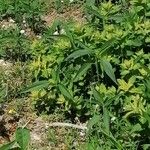
Iva annua
Marsh-elder · Pelocote · Rough marsh-elder · Sumpweed · Annual marsh elder
Description
Source: leafsnapIva annua, the annual marsh elder or sumpweed, is a North American herbaceous annual plant in the family Asteraceae that was historically cultivated by Native Americans for its edible seed.
🌳 Annual Marsh Elder appears promising as a bioindicator, providing clues about soil health and quality. Although often overlooked, its presence can signal the occurrence of certain metals or particular soil conditions. Its hardiness also makes Annual Marsh Elder a potential candidate for phytoremediation, helping with pollution control and ecosystem restoration.
Care Guide
💧 Water
The Annual Marsh Elder flourishes in moist environments, where it necessitates consistent moisture and can tolerate moderate droughts. For optimal growth, it's best to water it weekly to prevent waterlogging. As an annual plant, the Marsh Elder thrives outdoors, reaching its peak vitality during the rainy season when water is plentiful.
How should I water my Annual Marsh Elder?
To water Annual Marsh Elder, you have several options. You can use a garden hose with a spray nozzle, a watering can, or any other common watering tool. This plant is not very particular about the type of water it receives, so you can use rainwater, tap water, or filtered water. However, it is recommended not to water this plant from above as it can damage the leaves and flowers and cause diseases. A drip irrigation system is often the best method as it ensures even and direct watering to the soil. If you have a container-grown Annual Marsh Elder, you can use a cup, watering can, or tap to water it directly on the soil.
What should I do if I give my Annual Marsh Elder too much or too little water?
To remedy underwatering for your Annual Marsh Elder, simply water it more regularly when you notice it lacks moisture. However, overwatering can be a serious problem if not caught early. Overwatering can lead to diseases that cause the plant to decline and die. To prevent this, choose a proper growing location with plenty of sunlight to dry the soil and good drainage to avoid waterlogged soil. If your potted Annual Marsh Elder is overwatered, consider changing it to a new pot with better drainage. When repotting, use loose soil and an efficiently draining pot.
How much water does my Annual Marsh Elder need?
Annual Marsh Elder requires regular watering throughout the growing season. In spring, water the plant once a week. As the season progresses and it gets warmer, increase the watering frequency to two to three times a week. However, be cautious not to exceed this rate as it can harm the plant. Regardless of the watering frequency, ensure that the soil remains moist but not overly wet. When watering an Annual Marsh Elder in a pot, the soil tends to dry out faster compared to ground soil. Thus, water a potted plant a few times a week, whereas an in-ground plant only needs watering once a week.
How much water does my Annual Marsh Elder require?
There are a few ways to decide how much water to give your Annual Marsh Elder. Some gardeners feel the soil to determine its moisture level. They suggest watering until the top six inches of soil feel damp. Alternatively, you can use a fixed amount of water. Generally, providing around two gallons per week should suffice, depending on the temperature and how quickly the soil dries out. However, sticking to those guidelines too strictly could lead to overwatering if your plant needs less water. When growing Annual Marsh Elder in a container, a different approach is necessary. You should water enough to moisten all dry layers of soil. To check, simply stick your finger in the soil or wait for excess water to drain from the pot.
How do I know if I am giving enough water to my Annual Marsh Elder?
Avoiding overwatering your Annual Marsh Elder can be somewhat difficult. On one hand, these plants have deep roots that require weekly soil moisture. However, they are also highly prone to root rot, which can cause browning of the plant. It is less likely for your Annual Marsh Elder to be underwatered as they can survive for a while without supplemental watering. However, if you go too long without watering, the plant will likely wilt and exhibit dry leaves.
☀️ Light Full sun
Annual Marsh Elder performs best with abundant sunlight, where it can spend much of the day in light. A setting that provides considerable daily sun supports its healthy growth. Too little light can limit the plant's development or cause poor health, while too much light has little effect.
What are the sunlight requirements for Annual Marsh Elder?
Annual Marsh Elder requires above 6 hours of sunlight daily to thrive, showcasing the importance of full sun exposure for its growth and health. Observing how sunlight moves through your garden helps in choosing spots that ensure a balance of light and shade, enhancing your plants' well-being.
What are the essentials for growing Annual Marsh Elder?
To support healthy growth, Annual Marsh Elder needs ample exposure to sunlight throughout the day. This exposure is crucial as insufficient light might stunt growth or affect the plant’s health, while overexposure has minimal adverse effects. For indoor plants, when natural light is lacking, especially during winter, artificial lighting becomes essential. LED lights are recommended because they can be tailored to provide specific light wavelengths needed by plants. Appropriate artificial light setting involves 30-50W/sq ft for full sun plants, adjusting the light source 12-36 inches above the plant, and ensuring 8-12 hours of light per day to mimic natural daylight hours.
What are the signs of light deficiency or overexposure in Annual Marsh Elder?
When Annual Marsh Elder receives inadequate light, it may show signs such as smaller new leaves, leggy growth, faster leaf drop, slower or no new growth, and lighter-colored leaves, indicating poor health or insufficient sunlight. Overexposure to sunlight can result in chlorosis, sunscald, leaf curling, wilting, and leaf scorching, which are harmful to the plant's health and ability to photosynthesize. Observing these symptoms helps in identifying and adjusting the plant's exposure to sunlight.
How can I address insufficient sunlight or light-related stress in Annual Marsh Elder?
To address light deficiency in Annual Marsh Elder, gradually move the plants to a location with at least 6 hours of direct sunlight daily. For indoor plants, use south-facing windows or artificial light, such as desk lamps or plant grow lights, for at least 8 hours daily. For outdoor plants, ensure a gradual transition to sunnier spots to prevent sunburn. If obstructions like trees block sunlight, consider pruning or transplanting smaller plants to sunnier locations with good drainage. Notably, parts of the plant already affected by insufficient light might not recover, but improving light exposure can promote healthy new growth.
🌡️ Temperature 5–35°C
Annual Marsh Elder can tolerate a wide range of temperatures, but its distribution may still be restricted by particular combinations of moisture and heat. It performs best in warm summer climates with sufficient rainfall or irrigation. Extended periods of cloudy, rainy weather or prolonged high temperatures can raise the risk of Annual Marsh Elder dying. In winter, providing adequate protection from cold can increase the plant's chances of survival.
What is the botanical name of the Annual Marsh Elder?
The botanical name of the Annual Marsh Elder is Iva annua. This classification helps in accurately identifying the plant apart from its common name, providing a universal nomenclature for botanists and plant enthusiasts alike.
💨 Humidity
🪴 Soil 6-7
🌱 Fertilizer
Annual Marsh Elder responds well to regular, light applications of fertilizer to encourage healthy leaf development. You should apply fertilizer about once a month during the summer months. Nitrogen is important for foliage, and providing nitrogen-rich sources helps Annual Marsh Elder thrive.
🪴 Pot & Repot
✂️ Pruning
🌿 Propagating
🐛 Diseases & pets
☠️ Toxicity
Characteristics
- Plant Type
- Herb
- Life Cycle
- Annual
- Genus
- Iva
- Family
- Asteraceae
- Hardiness Zone
- 4-10
- Mature Height
- 1.52 m
- Mature Spread
- 61 cm
- Leaf Type
- Semi-evergreen
- Flower Color
- Green, Yellow
- Flower Size
- 2.54 cm
- Bloom Time
- Mid summer
- Planting Time
- Spring, Summer, Autumn
- Harvest Time
- Mid summer
- Native Area
- Mexico