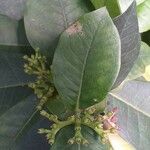
Ixora chinensis
Chinese ixora · রঙ্গন · Flame of the woods · Jungle flame · Jungle geranium
Description
Source: leafsnapIxora chinensis, commonly known as Chinese ixora or Chinese holly, is a flowering evergreen shrub that belongs to the Rubiaceae family. Native to China and Southeast Asia, it is widely cultivated as an ornamental plant in tropical and subtropical regions around the world. This shrub typically grows to a height of 2-3 meters with a spread of 1-2 meters. It features glossy, dark green leaves that are oval-shaped with pointed tips. The small, tubular-shaped flowers are densely clustered at the ends of branches and come in vibrant shades of red, pink, orange, or yellow. Ixora chinensis thrives in well-drained soil with moderate moisture levels but can tolerate drought conditions once established. For optimal growth, it requires full sun to partial shade exposure, though it can also grow well under filtered light. The plant is commonly used in landscaping due to its attractive foliage and vibrant blooms, making it an excellent choice for hedges or borders around gardens or pathways. Additionally, it attracts butterflies, adding an extra layer of beauty to any garden setting. Regular pruning is necessary after the flowering season ends, as the plant tends to become leggy if left unpruned for extended periods. Overall, Ixora chinensis makes a wonderful addition to any garden due to its year-round vibrant blooms. It is an excellent choice for those looking to add color to their landscape design while also attracting butterflies.
💡 The Ishtha people of Myanmar are known for their romantic and intriguing marriage customs. Traditionally, they have lived near bodies of water. Families with daughters would construct a floating garden from bamboo and wood close to their homes, planting Chinese ixora on it and securing it with ropes. On the daughter's wedding day, she would be beautifully dressed and seated in the floating garden, which is then set adrift by cutting the ropes, allowing it to float down the river. Early in the morning, the groom waits downstream on the riverbank, ready to receive the floating garden carrying his bride. When the garden arrives, he pulls it ashore by the rope and escorts the bride home for the wedding ceremony.
🌳 Chinese ixora has an unexpected role beyond its ornamental value. It acts as a bioindicator for certain metals in the soil. Researchers have found that Chinese ixora’s capacity to accumulate metals in its tissues can reflect contamination levels, making it a natural monitor of environmental health.
🎭 Rush to the forefront
Care Guide
💧 Water Every 7 days
Chinese ixora thrives in moist, well-drained soil and benefits from regular watering every two weeks. Once established, it becomes somewhat drought-tolerant. To help retain soil moisture and protect the roots in dry or hot climates, applying mulch is recommended.
How should I water my Chinese ixora plant?
Your Chinese ixora plant is not too picky when it comes to watering methods. Any common watering tool, such as a watering can, hose, or cup, will work well for moistening the plant's soil. Regardless of the tool you use, it is important to water the plant directly on the soil, ensuring that all parts of the root system receive equal amounts of water. Using filtered water is recommended, as tap water may contain harmful particles for the plant. It is also best to use water at or slightly above room temperature, as extremely cold or hot water can be a shock to the Chinese ixora. However, generally speaking, the Chinese ixora is usually responsive to any type of water you give it.
What should I do if I give too much or too little water to my Chinese ixora plant?
Outdoor plants, especially newly planted ones or seedlings, can be prone to drought if not watered properly. It is important to consistently water these plants for the first few months, especially when they are small or just planted. Once the roots have established, Chinese ixora plants can rely on rainwater most of the time. When Chinese ixora plants are in pots, overwatering is more likely to occur. If you accidentally overwater your Chinese ixora, you should take immediate action to address the issue. First, stop watering the plant to minimize the impact of overwatering. Then, remove the Chinese ixora from its pot to inspect the roots. If there are no signs of root rot, you can place the plant back in its container. However, if root rot is present, trim affected roots and consider applying a fungicide to prevent further damage. Finally, repot the Chinese ixora in well-draining soil. In the case of underwatering, simply water the Chinese ixora more frequently. This is a relatively easy fix. If you notice drooping, dried out, or falling leaves, watering the plant adequately should quickly restore its fullness. It is important to adjust your watering frequency as soon as you observe signs of underwatering.
How often do I need to water my Chinese ixora plant?
Most outdoor plants can rely on rainfall for water. However, if your area doesn't get much rain, you should water your plants every two weeks in the spring and fall. In the summer, they'll need more frequent watering. During the slower-growing winter months, you can water them less often or not at all. Young or newly planted Chinese ixora plants need more watering to help them establish and become drought-tolerant. For potted Chinese ixora plants, there are two ways to determine how often to water them. One is to follow a set watering schedule of about once a week or every other week. However, this may not always be suitable for your specific growing conditions. Another option is to check the soil moisture. Wait until the first two to four inches of soil have completely dried out before watering again. This approach may be more effective, especially during the high-water needs of summer.
How much water does my Chinese ixora plant need?
When watering your Chinese ixora, it's important to remember that it doesn't always require a large amount of water. Instead, if only a few inches of the soil have dried since the last watering, giving it about five to ten ounces of water should be sufficient for healthy growth. You can also gauge the water volume based on the moisture of the soil. Take note of how many inches of soil have dried out between waterings. To ensure your Chinese ixora receives adequate moisture, water enough to moisten all the dry soil layers since the previous watering. If more than half of the soil has dried, consider giving it more water than usual, and continue watering until you see excess water draining from the pot's holes. If your Chinese ixora is planted in an area with regular rain, additional watering may not be necessary. For young or newly established plants, ensure they receive 1-2 inches of rain per week. As the plant grows and establishes, it can rely on rainwater alone. Only when there is a prolonged period of hot weather with no rainfall for 2-3 weeks should you consider giving your Chinese ixora a thorough watering to prevent stress.
How do I know if I am giving enough water to my Chinese ixora plant?
The Chinese ixora is often overwatered, which can be easily identified through certain signs. Typically, overwatering leads to yellowing leaves and potential leaf loss. Additionally, the plant may shrivel and experience root rot. Conversely, an underwatered Chinese ixora will start to wilt and may have brown or brittle leaves. Regardless of whether you observe signs of overwatering or underwatering, it is important to take action promptly to revive the health of your Chinese ixora.
☀️ Light Full sun
For optimal growth and health, chinese ixora does best with full sun during the day. It can also tolerate areas with filtered light. It comes from habitats where sunlight is largely unobstructed. Insufficient light can result in stunted growth, while too much can cause leaf burn.
What are the sunlight requirements for Chinese ixora?
Chinese ixora thrives best in full sunlight, requiring more than 6 hours of sunlight daily for optimal growth and health. It can also manage in partial sun, which is about 3-6 hours of sunlight. Originating from areas with strong sunlight, it is crucial for the plant’s development to have access to sufficient sunlight. When choosing locations for your plants, observe the movement of sunlight through your garden to find spots that offer a good balance of light and shade, ensuring the plants' well-being.
How does insufficient or excessive sunlight affect Chinese ixora?
Insufficient sunlight can lead to several problems for Chinese ixora, including stunted growth, small and pale new leaves, leggy or sparse growth, faster leaf drop, delayed growth or no new growth at all, and chlorosis. Excessive sunlight, on the other hand, can cause issues like sunscald, leaf curling, wilting, and leaf scorching. It's essential to monitor the plant’s exposure to light and adjust its location or the light source as needed to prevent these symptoms.
What are the solutions for providing adequate light to Chinese ixora?
To ensure your Chinese ixora receives adequate light, gradually increase its sun exposure to at least 6 hours of direct sunlight daily. If indoors, use south-facing windows for natural light and consider artificial lights such as LED grow lights, ensuring they're placed 12-36 inches above the plant for 8-12 hours per day. Outdoors, gradually move the plants to sunnier spots to prevent sunburn. Additionally, for ground-planted ixoras, prune any obstructions like tree branches to allow more sunlight and consider transplanting to a better-lit location during the plant's dormant period.
Can Chinese ixora benefit from artificial lighting?
Yes, Chinese ixora can significantly benefit from artificial lighting, particularly when natural sunlight is insufficient, like in winter or less sunny locations. Artificial lighting, such as LED lights, can be customized to provide specific wavelengths needed by the plant. For full sun plants, aim for 30-50W/sq ft, for partial sun plants 20-30W/sq ft, and for full shade plants 10-20W/sq ft. Ensure the artificial light is placed appropriately and for the correct duration to mimic natural sunlight as closely as possible.
🌡️ Temperature 20–37.8°C
Chinese ixora originates from a climate with temperatures ranging from 68 to 100 °F (20 to 38 ℃). The shrub favors the warmer side of that range and can have trouble in cold winters. Seasonal care involves moving it to a sunnier, warmer location during the cooler months.
What is the ideal climate for Chinese ixora?
Chinese ixora thrives in a climate where temperatures range between 68 to 100 °F (20 to 38 °C), preferring the warmer end of this spectrum. It is a heat-loving shrub and struggles during cold winters. To support its growth, it is recommended to move it to sunnier, warmer spots during cooler months. Especially during autumn, Chinese ixora should be brought indoors if previously outside, and placed near a bright window but kept at a distance from heaters to avoid harm. It is essential to maintain temperatures above 20°C during winter, as temperatures nearing 0°C can be detrimental to the plant.
How does low temperature affect Chinese ixora, and what are the solutions?
Chinese ixora is not tolerant of low temperatures and thrives best above 20°C. In winter, it's crucial to keep the environment above 0°C. Exposure to temperatures below -5°C can cause the leaves to lighten in color, eventually turning brown or black after frost damage, accompanied by wilting and drooping. The solution involves trimming off the frost-damaged parts and moving the plant to a warmer environment indoors immediately. Positioning it near a south-facing window can ensure ample sunlight, and it's advisable to avoid placing it near heaters or air conditioning vents to prevent air dryness.
What should be done when Chinese ixora is exposed to high temperatures?
During the summer, it's crucial to keep the temperature below 38°C for Chinese ixora. Exposure to temperatures over 43°C can lighten the color of the leaves and increase susceptibility to sunburn. To mitigate this, trim away the sunburned and dried-up parts of the plant. Moving the plant to a shaded location, especially away from the midday and afternoon sun, can protect it. Additionally, watering the plant in the morning and evening helps keep the soil moist and supports the plant's health during high temperatures.
💨 Humidity
🪴 Soil 5-6
🌱 Fertilizer
The best time to fertilize a Chinese ixora is in early spring as it breaks dormancy. This encourages overall growth and flower development. Fertilizing improves the foliage, stems, and branches, while encouraging flowers that are large, colorful, and long-lasting. It helps transfer nutrients from the roots to the blooms and enhances the plant’s health and resistance to disease.
Why should I put fertilizer on my Chinese ixora plant?
Fertilization plays a crucial role in maintaining the overall health and well-being of your Chinese ixora. It supplies the necessary energy and nutrients for the development of lush foliage, sturdy stems, and branches. While these aspects are important, the flowers of the Chinese ixora hold particular value for gardeners. Thankfully, the process of fertilization also contributes to the production of large, vibrant, and long-lasting flowers. This is because the right type of fertilizer facilitates the efficient transfer of fuel from the plant's roots to its flowers through its stems. In addition to promoting flower growth, proper fertilization helps keep the plant in good general condition, enabling it to better defend against diseases.
When should I fertilize my Chinese ixora for the best results?
To properly fertilize a Chinese ixora, the ideal time is during early spring when the plant is coming out of its dormant phase and preparing to bloom. This feeding will provide ample energy for overall growth and flower development. However, it is not the only suitable time for fertilization. Another feeding at the end of the season in the fall can also be beneficial, albeit a smaller dosage compared to the first feeding. Some gardeners opt to fertilize their Chinese ixora during planting, but it is not always required.
When is the best time to not fertilize my Chinese ixora?
During the winter, Chinese ixora plants enter a dormant phase where they don't require much energy from the soil for new growth. Therefore, fertilization during this period increases the risk of overfertilization. The best times to feed a Chinese ixora are in the early spring and fall. This means that during most of the spring and summer, fertilizer is not necessary. It is also advisable to refrain from feeding the plant if it's exposed to extremely hot or dry conditions.
Which fertilizer should I use for my Chinese ixora plant?
Chinese ixora plants often thrive when given a specific type of fertilizer. While general-purpose fertilizers with equal amounts of nitrogen, phosphorus, and potassium are generally acceptable, Chinese ixora plants thrive with higher levels of nitrogen and phosphorus compared to potassium. Using a fertilizer with an N-P-K ratio of 10-10-8 or something similar is recommended. Additionally, incorporating organic materials like compost during one of the annual feedings can be beneficial. When it comes to fertilizer application, using granular fertilizer is the most common approach for Chinese ixora plants.
How should I fertilize my Chinese ixora plant?
Fertilizing your Chinese ixora is simple and can be done by any gardener, even if they have little experience. To feed your Chinese ixora with granular fertilizer, just sprinkle it on the soil after moistening it with water. You can also improve the soil by adding organic material like compost or manure. To do this, place some of the material on top of the soil and gently work it into the first few inches using a hand rake, being careful not to disturb the roots.
🪴 Pot & Repot 2-3 years
Repot your Chinese Ixora every 2-3 years during the spring. Choose a container that is 2 inches larger in diameter than the current one. After repotting, place the plant in bright, indirect light and keep the soil evenly moist, being careful to avoid waterlogging. This will help the plant recover healthily and encourage lush foliage growth.
✂️ Pruning
Chinese ixora is a flowering shrub known for its vibrant, star-shaped blooms. For optimal growth and shape, prune it in late spring, right after it finishes flowering. During pruning, remove any dead wood, trim back long stems, and thin out crowded areas to improve air circulation. Always use sanitized tools, and you might also consider light pruning during the growing season to maintain its shape and health.
🌿 Propagating
🐛 Diseases & pets
☠️ Toxicity
Characteristics
- Plant Type
- Shrub
- Life Cycle
- Perennial
- Genus
- Ixora
- Family
- Rubiaceae
- Hardiness Zone
- 9-11
- Mature Height
- 3.05 m to 4.57 m
- Mature Spread
- 0.91 m to 1.52 m
- Leaf Color
- Green
- Leaf Type
- Evergreen
- Flower Color
- Red, Orange, Yellow
- Flower Size
- 2.54 cm to 3.05 cm
- Bloom Time
- Mid summer
- Planting Time
- Spring, Autumn
- Harvest Time
- Mid summer, Late summer
- Native Area
- Nepal, Malaysia, Indonesia, Cambodia, Vietnam, Myanmar, Bangladesh, Laos, Thailand, China