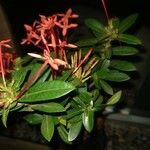
Ixora coccinea
Ixora · রঙ্গন · Scarlet jungleflame · Flame-of-the-woods · Jungle-geranium
Description
Source: leafsnapIxora coccinea, commonly known as the jungle geranium or flame of the woods, is a tropical evergreen shrub belonging to the Rubiaceae family. While it is native to Southeast Asia and India, it has been widely cultivated in various parts of the world due to its attractive flowers and ornamental value. This plant can grow up to 2 meters tall and features glossy, dark green leaves arranged in opposite pairs. The flowers are small, tubular-shaped, and grow in dense clusters at the ends of branches. They come in a variety of colors, including red, pink, orange, and yellow. Ixora coccinea thrives in warm temperatures ranging from 20-30°C (68-86°F) and prefers high humidity levels. It grows best in well-draining soil rich in organic matter but can tolerate a range of soil types as long as they are not waterlogged. Regular watering is essential during dry periods, but caution is needed to avoid root rot caused by overwatering or planting too deeply. Fertilization should be done every two weeks during active growth periods with a balanced fertilizer. Ixora coccinea has multiple uses, including ornamental applications such as hedges or indoor potted plants due to its attractive flowers and foliage. Traditionally, its leaves have been used to treat ailments like fever, diarrhea, and skin infections. Overall, Ixora coccinea is an easy-to-grow plant that adds color and beauty wherever it is planted, making it an excellent addition to any garden or landscape design project.
🌳 Flame of the woods shows promise as an environmentally friendly dye. Its bright red flowers could serve as a sustainable substitute for synthetic dyes in the textile sector. This untapped use offers a new way Flame of the woods might support eco-friendly practices, potentially lessening the environmental impact of the dye industry.
🎭 Ardor, sexuality
Care Guide
💧 Water Every 7 days
The Flame of the Woods thrives in high humidity by efficiently retaining moisture. It prefers soil that is consistently moist, but not waterlogged. Watering every 1 to 2 weeks is usually sufficient. Typically grown outdoors, this plant flourishes in warm climates with frequent rainfall, which supports its vibrant flowering.
When Should I Water My Flame Of The Woods?
Watering your Flame of the Woods is integral to its health, growth, and flowering. The ideal time to water is when the top inch of the soil feels dry. You can check this by pushing a finger into the soil; if it's dry, it's time to water. Look out for signs like dry soil, droopy or discolored leaves, and cracked soil surface, which all suggest the plant needs water. However, be cautious not to overwater or underwater your plant, as both can have detrimental effects. Adjust watering frequency more during the warmer months when the plant is actively growing.
How Should I Water My Flame Of The Woods?
To properly water Flame of the Woods, maintain a moist but well-drained soil condition. Overwatering and waterlogged soil can be harmful, thus ensure you water the plant when the top soil layer feels dry. Employ bottom-watering to encourage root moisture without saturating the soil's surface or wetting the foliage and flowers. Use a moisture meter to gauge the right watering amount and avoid watering directly onto the foliage and flowers to prevent fungal diseases.
How Much Water Does Flame Of The Woods Really Need?
The Flame of the Woods, native to humid and tropical regions, thrives in consistently moist soil but is averse to waterlogging. The required water amount depends on several factors including the pot size and the plant size. Generally, water until excess drains from the pot, with 500-700 milliliters being the average for a mature plant per session. Signs of adequate hydration include vibrant leaves and abundant flowering, whereas yellowing leaves and wilting indicate overwatering or underwatering, respectively. Regular misting can simulate the high humidity this plant loves.
What Kind of Water is Best for Flame Of The Woods?
Flame of the Woods does best with distilled water due to its purity. Rainwater is also a good choice as it is natural and free of chemicals. While filtered water is acceptable, tap water should be used cautiously as it may contain chlorine and fluoride, to which the plant is sensitive. Letting tap water stand for 24 hours reduces chlorine content, making it safer. The plant prefers room temperature water, with a slight acidic to neutral pH, and moderate water hardness. Regular but not excessive watering is key.
How Do Flame Of The Woods's Watering Needs Change with the Seasons?
Seasonal changes affect how you should water your Flame of the Woods. In spring, as it enters a growth phase, its water needs increase, requiring even moisture but avoiding overwatering. The summer heat necessitates more frequent watering. Come autumn, reduce watering as growth slows, but ensure the soil remains slightly moist. During winter, the plant's dormancy means significantly less watering is needed, letting the soil dry out fully between waterings to prevent root rot.
☀️ Light Full sun
Flame of the woods grows best when it receives a plentiful amount of sunlight, reflecting the traits of its native habitat, which is typically brightly lit. Insufficient light can restrict its growth, while too much exposure may cause damage. Its light requirements can change slightly at different stages of development.
What are the sunlight requirements for Flame of the Woods (Ixora coccinea)?
Flame of the Woods requires a generous amount of sunlight to thrive, reflecting its natural habitat that is typically rich in sunlight. To ensure optimal growth, the plant should be placed in locations where it can receive more than 6 hours of sunlight daily (full sun), though it can also tolerate about 3-6 hours of sunlight (partial sun). Monitoring the movement of sunlight through your garden is crucial; the right balance of light and shade will contribute significantly to the plant's health. However, excessive exposure to sunlight or insufficient light can have adverse effects, including potential harm or hindered growth, respectively.
How does artificial lighting support Flame of the Woods growth indoors?
Indoor Flame of the Woods plants require adequate lighting, especially when natural sunlight is insufficient, such as during winter or in less sunny locations. Artificial lights, particularly LED lights, are a vital solution for promoting faster, healthier growth. These lights can be customized to provide specific wavelengths needed by plants. The required intensity varies with plant type: full sun plants need 30-50W/sq ft, partial sun plants need 20-30W/sq ft, and full shade plants need 10-20W/sq ft. Place the light source 12-36 inches above the plant to mimic natural sunlight and ensure it receives 8-12 hours of light per day to mimic natural daylight hours.
What are the symptoms of improper lighting for Flame of the Woods?
Symptoms of inadequate lighting for Flame of the Woods include new leaves growing smaller than previous ones, leggy or sparse growth with longer spaces between leaves or stems, faster leaf drop, delayed growth or total cessation of new growth, lighter-colored or chlorotic new leaves, sunscald, leaf curling, wilting, and leaf scorching. Chlorosis indicates a breakdown of chlorophyll due to excessive sunlight, affecting photosynthesis. Leaf curling can occur under extreme sunlight conditions as a protective measure, while wilting and leaf scorching result from excessive water loss and sunlight overexposure, respectively.
What are the solutions for addressing insufficient sunlight for Flame of the Woods?
To address insufficient sunlight, gradually move the plant to a sunnier location each week until it receives at least 6 hours of direct sunlight daily. For indoor plants that are large or not easily movable, consider using artificial light, such as keeping a desk or ceiling lamp on for at least 8 hours daily or investing in professional plant grow lights. For outdoor plants, avoid sudden changes in light intensity to prevent sunburn. If your plant suffers from insufficient sunlight, focus on encouraging healthy new growth after improving light exposure. Additionally, reducing obstructions like pruning trees and transplanting smaller plants during their dormant periods to locations with ample sunlight and good drainage can significantly improve sunlight access.
🌡️ Temperature 20–37.8°C
The natural growing conditions for flame of the woods are warm and humid. It prefers temperatures between 68 and 100 ℉ (20 to 38 ℃). In winter it can tolerate temperatures as low as 50 ℉ (10 ℃). In summer, providing some shade is recommended to avoid heat stress.
What is the ideal growth environment for Flame of the Woods?
Flame of the Woods thrives in a warm and humid environment, with optimal temperatures ranging from 68 to 100°F (20 to 38°C). It can tolerate temperatures as low as 50°F (10°C) during winter. To prevent heat stress in summer, it's advisable to provide some shade. The plant is extremely heat-loving, and exposure to cold can harm it. It is recommended to bring outdoor-grown Flame of the Woods indoors during autumn, placing it near a bright window but away from heaters. Keeping the temperature above 20°C in winter promotes plant growth, and temperatures near 0°C are harmful.
How should you care for Flame of the Woods in low temperatures?
Flame of the Woods is sensitive to low temperatures and thrives best above 20°C. During winter, ensure it's kept above 0°C. Exposure to temperatures below -5°C may cause the leaves to lighten in color, and after frost damage, leaves can turn brown or black, showing wilting and drooping. To care for it in such conditions, trim off frost-damaged parts and move the plant indoors to a warm spot, preferably near a south-facing window for ample sunlight. Avoid placing the plant near heaters or air conditioning vents to maintain air moisture.
What are the symptoms and solutions for Flame of the Woods under high temperature?
During summer, it's vital to keep Flame of the Woods below 38°C to avoid stress. Temperatures above 43°C can lighten the leaves' color and increase susceptibility to sunburn. If this occurs, trim away the sunburned and dried-up parts and relocate the plant to a shaded area during the midday and afternoon sun. It's also helpful to water the plant in the morning and evening to keep the soil moist, aiding in its recovery and health.
💨 Humidity normal (40-60%)
This plant will thrive in moderate humidity, which is probably the level in your home. However, misting it a few times a week can be very beneficial. Make sure the room has good ventilation.
🪴 Soil 5-6
🌱 Fertilizer
The best time to fertilize a Flame of the woods is in early spring, as it comes out of dormancy. This supports overall growth and flower development. Fertilization improves foliage, stems, and branches, and encourages flowers that are large, vibrant, and long-lasting. It also helps transfer nutrients from the roots to the flowers and enhances the plant's health and resistance to disease.
Why should I put fertilizer on my Flame of the woods plant?
Fertilization plays a crucial role in maintaining the overall health and well-being of the Flame of the woods. Providing the right amount of energy and nutrients ensures the development of lush foliage and strong stems and branches. Gardeners particularly value the flowers of this plant, and luckily, fertilization contributes to their beauty and longevity. The correct fertilizer enables efficient transportation of nutrients from the roots to the flowers, resulting in large, vibrant blooms. Additionally, proper fertilization promotes the plant's overall health, enhancing its ability to resist diseases.
When is the best time to not fertilize my Flame of the woods?
During the winter, your Flame of the woods enters a dormant phase and doesn't require much energy from the soil for new growth. It's best not to fertilize during this time to avoid overfertilization issues. Instead, the optimal times to feed your Flame of the woods are early spring and fall. This means that for most of the spring and summer, fertilizing is not necessary. Additionally, if your plant is exposed to excessive heat or dryness, it's best to hold off on feedings.
What kind of fertilizer does my Flame of the woods plant need?
Flame of the woods plants often require a specific type of fertilizer, unlike general-purpose fertilizers with equal amounts of nitrogen, phosphorus, and potassium. The key nutrients for these plants are nitrogen and phosphorus, so the fertilizer you choose should have higher levels of these two elements compared to potassium. A fertilizer with an N-P-K ratio of 10-10-8 or similar should be suitable. Additionally, using organic materials like compost for at least one yearly feeding can be beneficial. Granular fertilizer is commonly used for Flame of the woods plants.
How should I add fertilizer to my Flame of the woods plant?
Applying fertilizer to your Flame of the woods is easy, even for inexperienced gardeners. To feed your plant, simply sprinkle granular fertilizer on the soil after moistening it with water. You can also improve the soil by adding organic material like compost or manure. To do this, place the material on top of the soil and use a hand rake to gently blend it into the top few inches of soil without disturbing the roots.
What will happen if I use too much fertilizer on my Flame of the woods plant?
Overfertilizing your Flame of the woods can have several negative outcomes. First, it can cause leaf discoloration and wilting. Additionally, excessive fertilization can lead to fertilizer burn, which dries out the roots and renders them ineffective. However, the negative effects of overfertilization don't stop there. It can also result in a lack of flowers or lackluster blooms. Furthermore, an overfertilized Flame of the woods will be weaker overall, exhibit stunted growth, and become more susceptible to diseases and pests.
🪴 Pot & Repot 2-3 years
When repotting Flame of the woods, select a pot 1-2 inches (2.5–5.1 cm) larger with good drainage. Use a well-draining potting mix. Repot in spring or fall, making sure the root ball sits slightly below the rim of the flower pot. Water thoroughly after repotting and move it to a warm spot with indirect sunlight.
✂️ Pruning
Flame of the Woods benefits from pruning in late spring, right after it has finished flowering. This promotes bushier growth and ensures healthy blooms. To maintain the plant's shape and improve air circulation, trim any overgrown stems. However, be careful not to over-prune. Always use sharp, sanitized tools to prevent infections and boost the plant's health.
🌿 Propagating
🐛 Diseases & pets
☠️ Toxicity
Characteristics
- Plant Type
- Shrub
- Life Cycle
- Perennial
- Genus
- Ixora
- Family
- Rubiaceae
- Hardiness Zone
- 9-11
- Mature Height
- 1.22 m to 3.66 m
- Mature Spread
- 0.91 m to 1.52 m
- Leaf Color
- Green
- Leaf Type
- Evergreen
- Flower Color
- Red
- Flower Size
- 5.08 cm to 12.70 cm
- Bloom Time
- Summer, Early fall
- Planting Time
- Spring, Autumn
- Harvest Time
- All year round
- Native Area
- Sri Lanka, Afghanistan, India, Cambodia, Vietnam, Myanmar, Mozambique, Brazil, Bhutan, Bangladesh, Thailand