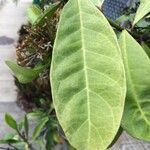
Ixora finlaysoniana
Fragrant ixora · Siamese white ixora · White jungle flame · తెల్ల నూరువరహాలు
Description
Source: leafsnapIxora finlaysoniana is a species of shrub in the family Rubiaceae. It is native to Southeast Asia, China, NE India and Philippines.
Care Guide
💧 Water
The Siamese white ixora originates from tropical regions and thrives in high humidity and consistent moisture levels. To care for it, water the plant every 2-3 weeks, allowing the soil to dry slightly between waterings. Typically grown outdoors, this evergreen plant enjoys lush foliage when exposed to the ambient moisture of its native climate.
How should I water my white Siamese ixora plant?
Your Siamese white ixora is not picky about how you water it, so you can use any common watering tool. This includes watering cans, hoses, or even cups. Regardless of the tool you choose, it's important to water directly onto the soil and make sure all areas are evenly moistened. Using filtered water is better than tap water, as tap water may contain harmful particles. Additionally, it's best to use water that is at or slightly above room temperature, as hot or cold water may shock the Siamese white ixora. However, this plant generally responds well to any type of water.
What should I do if I give my Siamese white ixora plant too much or too little water?
Protect your outdoor plants, especially newly planted ones or seedlings, from lack of water. Make sure to water them consistently for the first few months until their roots are established and they can rely on rain. When planting Siamese white ixora in pots, be mindful of overwatering. If you accidentally overwater, take immediate action. Stop watering and inspect the roots by removing the plant from its pot. Trim any affected roots and apply a fungicide if necessary. Repot the plant in well-draining soil. On the other hand, if your Siamese white ixora is underwatered, water it more frequently. Underwatering can be easily corrected as the leaves will droop and dry out, but will recover quickly after sufficient watering. Adjust your watering schedule promptly to avoid underwatering.
How frequently should I water my Siamese white ixora?
If your area lacks rainfall, it's important to water your outdoor plants regularly. During spring and fall, watering every 2 weeks should be sufficient. In the summer, you'll need to water more frequently. However, in the winter when growth slows down, you can reduce watering. For Siamese white ixora plants that are young or newly planted, more frequent watering is necessary to help them establish and grow. When it comes to potted plants, there are two ways to determine watering frequency for Siamese white ixora. One option is to stick to a predetermined schedule, such as once a week or every other week. However, this may not always work as it doesn't take into account the specific growing conditions of the plant. Another approach is to monitor the soil moisture. Wait until the top two to four inches of soil have completely dried out before watering again. This method allows you to adjust watering frequency based on the season, as the plant's water needs are highest in summer.
How much water does my white Siamese ixora plant need?
Watering your Siamese white ixora may not require a large amount of water. If only a few inches of soil have dried since your last watering, giving it about five to ten ounces of water will promote healthy growth. You can also determine the water volume based on the soil moisture. To ensure adequate hydration, water all the soil layers that have dried since the last watering. If over half of the soil is dry, consider giving more water until it drains from the pot's holes. If your Siamese white ixora receives enough rain outdoors, additional watering may not be necessary. However, when it is young or establishing, aim for 1-2 inches of rain per week. As it matures, it can rely on rainwater, only requiring additional watering in extremely hot and rainless conditions for 2-3 weeks to prevent stress.
How can I know if I am giving enough water to my Siamese white ixora?
The Siamese white ixora is often overwatered, which is a common problem. There are signs you can look for when this happens. Typically, an overwatered Siamese white ixora will have yellowing leaves and may drop some leaves. Overwatering can also cause the plant's structure to shrivel and lead to root rot. On the other hand, an underwatered Siamese white ixora will wilt and may have brown or brittle leaves. In either case, it's important to act and restore the plant's health.
☀️ Light Full sun
The siamese white ixora grows best in full sun but can also tolerate places with moderate sunlight. The plant comes from environments that receive substantial sun exposure. Too much or too little light can harm the plant and interfere with its healthy growth.
What are the sunlight requirements for Siamese white ixora?
Siamese white ixora thrives best under full sunlight, requiring above 6 hours of sunlight daily for optimal growth. However, it can also manage well in partial sun environments, needing about 3-6 hours of sunlight. It's crucial to monitor the movement of sunlight in your garden to ensure that your plant receives the right balance of light and shade, as both excessive and insufficient light can hinder its growth. The plant originates from regions with significant sun exposure, so mimicking these conditions as closely as possible will help maintain its health and vibrancy.
How can artificial light benefit indoor Siamese white ixora, and what are the guidelines for using it?
Indoor Siamese white ixora plants require adequate lighting for optimal growth, especially when natural sunlight is insufficient. Artificial lights, such as LED lights, can be an excellent solution to provide the necessary wavelengths for healthy development. For plants that thrive in full sun, 30-50W per square foot of artificial light is recommended, while partial sun plants need 20-30W, and full shade plants require 10-20W. The light source should be placed 12-36 inches above the plant to mimic natural sunlight, and the duration should match the natural daylight hours for the specific species, generally between 8-12 hours per day.
What are the common symptoms of insufficient or excessive light in Siamese white ixora, and how can they be addressed?
Siamese white ixora, when exposed to suboptimal lighting, may exhibit several symptoms. Insufficient light can lead to small, pale leaves, leggy growth, faster leaf drop, slower or halted growth, and chlorosis. Excessive light can cause sunscald, leaf curling, wilting, and leaf scorching. To address these issues, gradually introduce the plant to more sunlight if it's experiencing light deficiency, ensuring it receives at least 6 hours of direct sunlight daily. If the plant is large or not easily moved, artificial lighting can supplement its light requirements. Avoid sudden changes in lighting conditions to prevent stress. For outdoor plants, finding the ideal spot with sufficient sunlight while avoiding abrupt exposure is key. Inadequate sunlight areas can be improved by reducing obstructions or transplanting the plant to a sunnier location, especially during its dormant period for minimal stress.
🌡️ Temperature 20–37.8°C
Siamese white ixora is native to tropical regions, where the climate is generally warm and humid. Therefore, it is well suited to high temperatures and humidity. It does not tolerate sudden shifts in temperature and prefers a consistent thermal environment, so avoiding temperature fluctuations indoors is important. It typically cannot withstand cold conditions and needs relatively high temperatures for growth. If the environmental temperature becomes too low, the plant may stop growing or even die.
💨 Humidity normal (40-60%)
This plant will thrive in moderate humidity, which is probably the level in your home. However, misting it a few times a week can be very beneficial. Make sure the room has good ventilation.
🪴 Soil 5-6
🌱 Fertilizer
The best time to fertilize a Siamese white ixora is in early spring as it comes out of dormancy. This supports overall growth and the development of flowers. Fertilizing improves the foliage, stems, and branches and encourages flowers that are large, vibrant, and long-lasting. It helps move nutrients from the roots to the flowers and strengthens the plant's health and resistance to disease.
🪴 Pot & Repot
✂️ Pruning
The Siamese white ixora is characterized by its dense clusters of white flowers and lush green leaves. To promote growth and flowering, it's best to prune during the winter months from early to late winter. Thinning crowded branches not only enhances growth and flowering but also helps manage the plant's size and improves its overall health.
🌿 Propagating
🐛 Diseases & pets
☠️ Toxicity
Characteristics
- Plant Type
- Shrub
- Life Cycle
- Perennial
- Genus
- Ixora
- Family
- Rubiaceae
- Hardiness Zone
- 10-11
- Mature Height
- 4.88 m to 6.1 m
- Mature Spread
- 0.91 m to 2.13 m
- Leaf Color
- Green
- Leaf Type
- Evergreen
- Flower Color
- White, Pink
- Flower Size
- 1.52 cm to 1.78 cm
- Bloom Time
- All year round
- Planting Time
- Spring, Summer, Autumn
- Harvest Time
- All year round
- Native Area
- India, Cambodia, Vietnam, Myanmar, Philippines, Bangladesh, Laos, Thailand, China